

The standard “DIN 53842-1 Textile tests - Knot pull test for single and multi-ply yarns”, published by the German Institute for Standardization (DIN), describes the procedure for knot pull tests on single and multi-ply yarns. This standard is used as a reference and remains valid in many textile testing laboratories and equipment specifications worldwide, especially in European countries.
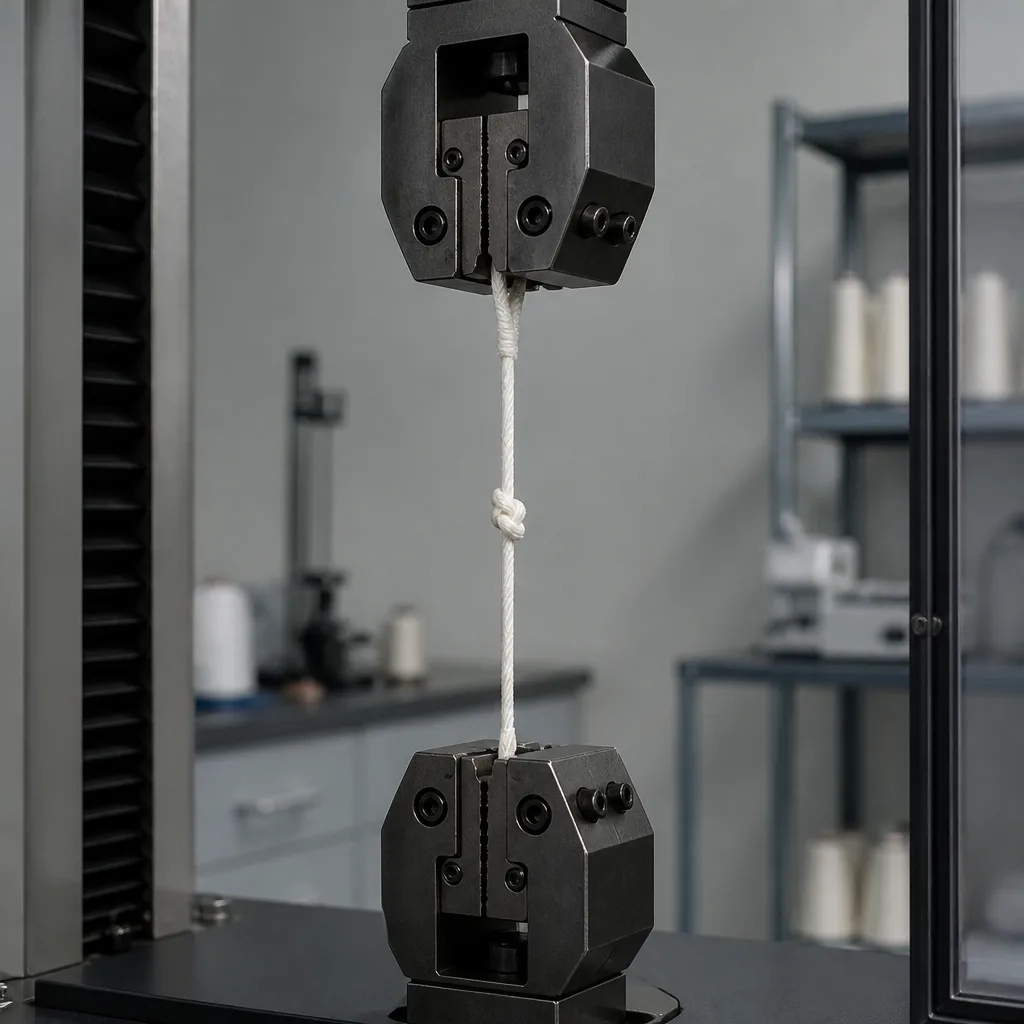
The knot pull test determines the maximum tensile strength (breaking strength) of a yarn when a knot is tied in the test section. This test evaluates how the yarn performs under tension when weakened by the knot. This is a common scenario in textile processing, weaving, knitting, sewing, or end-use applications where yarns may contain knots or loops.
This method is particularly useful in evaluating the following aspects:
The relevant standard, “DIN 53843-1 Textile tests - Loop tensile test - Yarns”, covers the loop tensile test for yarns, while the standard “DIN 53842-2 Textile tests - Knot tensile test of knitting yarns for fishing nets” specifically addresses the knot tensile test for netting yarns used in fishing nets.
The basic aspects of the DIN 53842-1 standard test method are as follows:
This method helps determine the nodal strength, which is generally lower than the straight-line rupture strength due to bending and compressive stresses at the nodal point.
Laboratories typically perform this test on conditioned samples (standard atmosphere for textiles) and report the results, along with linear density to calculate toughness if necessary.
Textile testing laboratories, yarn manufacturers, and machinery manufacturers routinely use the DIN 53842-1 standard along with other yarn tests such as the following:
This standard is included in the service manuals of testing institutes and university laboratories, as well as in equipment brochures from some manufacturers.
In short, the DIN 53842-1 standard outlines a methodology for testing textiles, particularly determining the elastic behavior of fabrics under tensile loads. This standard is widely used in textile engineering, quality control, and research laboratories.
The DIN 53842-1 standard defines a method specifically for measuring the elastic properties of textile materials:
This standard applies in particular to:
The described method involves subjecting a fabric sample to a controlled tensile force and observing its behavior over time. The method generally follows these steps:
The main parameters measured using this method are as follows:
These values help determine how a fabric behaves under repeated use or stress.
The necessary equipment used in the tests includes:
The DIN 53842-1 standard is widely used in the following areas:
The importance of the DIN 53842-1 standard stems from its ability to ensure that textile materials with elastic properties perform reliably, consistently, and safely in real-world applications. Without such a standard, stretch and recovery assessments would vary greatly among manufacturers, leading to inconsistent product quality. This standard is considered important for the following reasons:
This standard ensures that fabrics stretch sufficiently while also recovering properly, preventing sagging or deformation.
This standard facilitates the following by creating a common technical language:
In conclusion, the DIN 53842-1 standard is a critical standard for evaluating the elastic performance of textile materials. By defining a consistent and repeatable test method, it helps industries ensure that fabrics not only stretch effectively but also retain their shape and functionality over time.
For many years, our organization, with its competent and experienced staff, has been understanding the needs of its clients, providing the advanced testing services they require, and assisting them in the establishment, implementation, and improvement of management systems. Within this framework, we also provide testing services in accordance with the DIN 53842-1 standard.
To get an appointment, to get more detailed information or to request an evaluation, you can ask us to fill in our form and reach you.

