

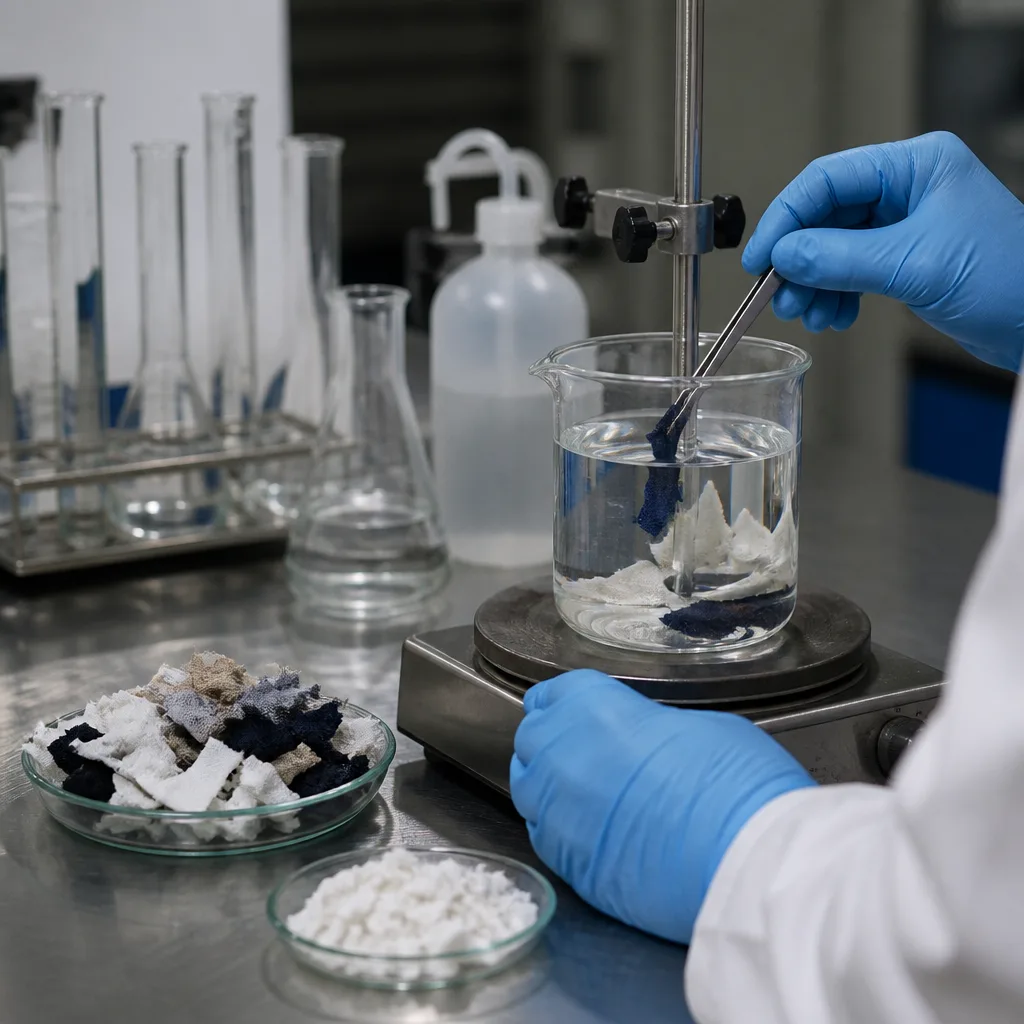
The standard “DIN 54201 Textile tests - Quantitative analysis of fiber blends - Working instructions”, published by the German Institute for Standardization (DIN), describes general instructions (working instructions) for the quantitative determination of different fiber ratios in textile fiber blends. This standard serves as a fundamental guide for laboratories performing chemical separation and analysis of blended textiles (e.g., cotton/polyester, wool/acrylic blends). Specific methods for binary or multi-fiber blends generally refer to or are built upon this general framework.
In general, DIN standards in the 54xxx range have historically covered textile chemical and physical testing. The DIN 54201 standard is part of a family of methods for fiber composition analysis that is critical for the following:
The DIN 54201 standard was later withdrawn, and modern testing is based on the “ISO 1833-1 Textiles - Quantitative chemical analysis - Part 1: General principles of testing” standard, which provides detailed procedures for quantitative chemical analysis of various fiber blends using selective dissolution or other separation techniques. However, some testing service providers still refer to the DIN 54201 standard for color fastness to friction (abrasion).
In short, DIN 54201 is an industry standard focused on testing textiles for harmful substances and chemical residues. Like many standards in the DIN 54xxx series, it supports quality assurance in textile production by defining consistent laboratory methods for evaluating material safety and performance.
The main purpose of the DIN 54201 standard is to create a uniform test procedure so that laboratories, manufacturers, suppliers, and regulators can evaluate textile materials under the same conditions. Without standardized methods, test results can vary significantly depending on equipment, operators, or local procedures.
The DIN 54201 standard helps to ensure the following:
This is especially important in the following sectors:
DIN 54201 typically includes the following:
The DIN 54201 standard helps manufacturers identify problems early before products are released to the market. The main benefits of this standard are:
The following industries use the DIN 54201 standard:
The DIN 54201 standard is necessary because laboratories may use different sample sizes, preparation methods, temperatures, or chemical concentrations, leading to inconsistent results and difficult comparison. The main reasons why this standard is important are as follows:
In short, the DIN 54201 standard is essential because it establishes a reliable, repeatable, and universally understood method for textile testing. It protects consumers, supports manufacturers and laboratories, and makes textile quality decisions more objective rather than dependent on local testing practices.
In conclusion, the DIN 54201 standard is a key textile testing standard that supports consistent quality, safety, and reliability in textile products. By defining clear laboratory procedures, it minimizes test variability and helps manufacturers meet both customer expectations and regulatory requirements. It ensures that textile products are tested consistently, making results reliable and internationally comparable.
For many years, our organization, with its competent and experienced staff, has been understanding the needs of its clients, providing the advanced testing services they require, and assisting them in the establishment, implementation, and improvement of management systems. Within this framework, we also provide testing services in accordance with the DIN 54201 standard.
To get an appointment, to get more detailed information or to request an evaluation, you can ask us to fill in our form and reach you.

