

The standard “DIN 54005 Color fastness of textiles - Determination of color fastness of dyes and prints to water (light)”, published by the German Institute for Standardization (DIN), describes a method for evaluating the resistance of dyes and prints on textiles to the effects of light water exposure. This method assesses how well the colors hold up when the fabric is wet under mild conditions, without strong mechanical impact or high temperatures.
This standard belongs to the broader DIN 54000 series of standards, which covers various color fastness tests for textiles (essentially similar to some parts of the ISO 105 series of standards).
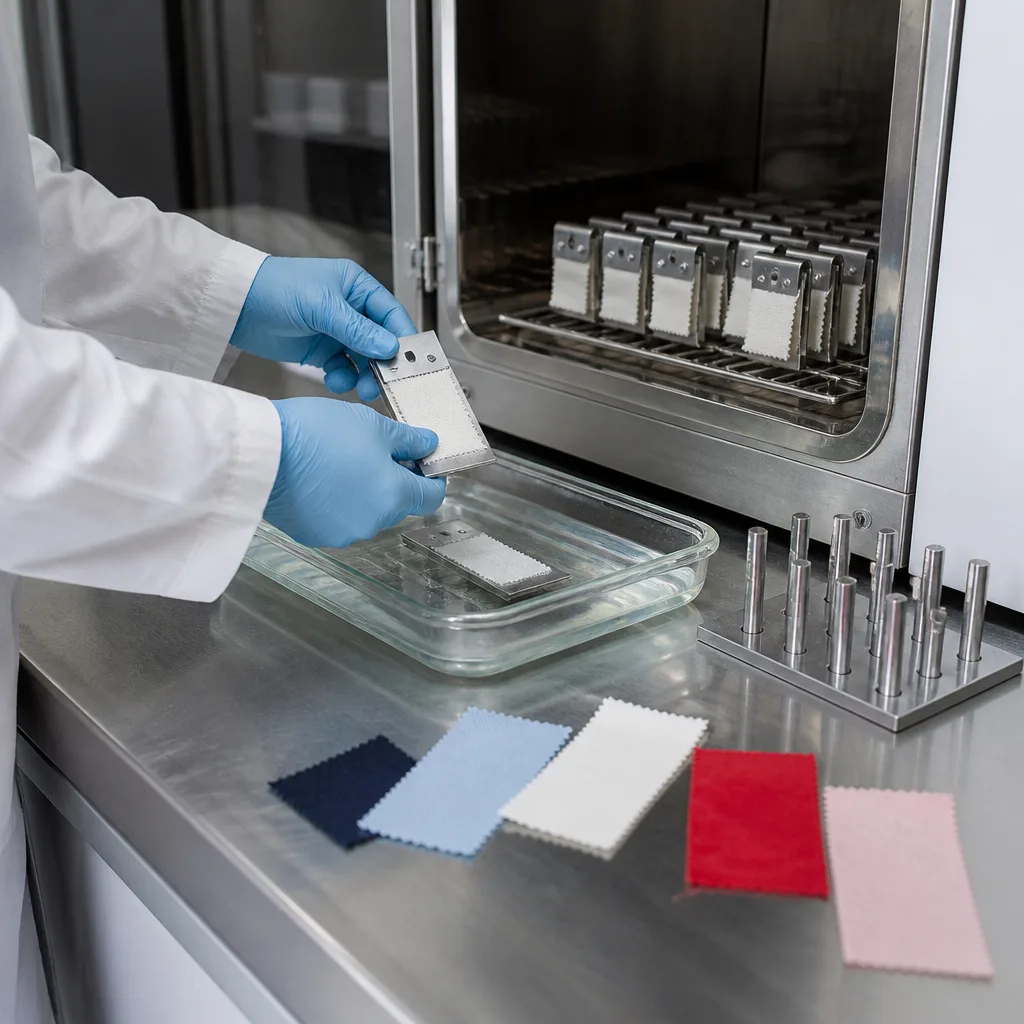
The described method determines (slight) color fastness to water by exposing dyed or printed textile samples to water under controlled conditions and then evaluating them.
This method simulates scenarios where textiles come into contact with water during everyday use, such as light wetting, humidity, or accidental water exposure (unlike more aggressive tests such as washing or heavy sweating).
The DIN 54005 standard is closely related to its international equivalents, including:
Commonly used testing equipment includes sweat meters or sweat testers (stainless steel frames, usually with a 5 kg load capacity, that hold samples between plates). These devices are also suitable for related tests such as color fastness to sweat, seawater, or saliva.
In the textile and apparel industry, compliance with the DIN 54005 standard ensures product quality and durability. Poor water fastness can lead to color bleeding, fading, or staining during use, storage, or light washing. These problems affect consumer satisfaction and brand reputation. Advanced laboratories and manufacturers frequently refer to DIN standards in addition to ISO and AATCC methods.
In short, the DIN 54005 standard includes methods for evaluating the color fastness of textiles to friction (abrasion). This standard is widely used in textile testing laboratories and quality control processes to assess how well a dyed or printed fabric resists color transfer when exposed to friction.
The main purpose of the DIN 54005 standard is to determine the resistance of textile materials to color transfer when rubbed against another surface. This is particularly important for:
Color transfer can lead to staining, aesthetic deterioration, and reduced product quality, therefore this test is crucial for manufacturers and suppliers.
This standard evaluates color fastness by rubbing a test sample against a standardized white test cloth under controlled conditions. The test is performed using two main methods:
After the rubbing process, the degree of staining on the white cloth is assessed using a standard gray scale.
The test is typically performed using a device called a crockmeter, which consistently measures pressure, rubbing motion, and number of cycles. The stained cloth is then compared visually or instrumentally to reference scales.
The degree of spotting is usually graded using a gray spotting scale, which is typically within this range:
The DIN 54005 standard is applied in various sectors, including:
The DIN 54005 standard is essential because it provides a standardized, repeatable method for evaluating how well dyed or printed textiles resist color change and staining when exposed to mild water conditions (such as mild wetting, humidity, damp storage, or accidental contact with water without mechanical agitation or high heat). This standard is considered important for the following reasons:
In conclusion, the DIN 54005 standard plays a crucial role in textile testing by providing a reliable method for evaluating color fastness to friction. The application of this standard ensures that textile products maintain their appearance and performance in real-world use. For these reasons, this standard becomes indispensable in both production and quality control environments.
For many years, our organization, with its competent and experienced staff, has been understanding the needs of its clients, providing the advanced testing services they require, and assisting them in the establishment, implementation, and improvement of management systems. Within this framework, we also provide testing services in accordance with the DIN 54005 standard.
To get an appointment, to get more detailed information or to request an evaluation, you can ask us to fill in our form and reach you.

