

The standard “DIN 53923 Textile tests - Determination of water absorption properties of textile fabrics”, published by the German Institute for Standardization (DIN), describes a test method for measuring how well textile fabrics absorb water. This standard is particularly relevant for textile fabrics expected to have a high water absorption capacity, such as cleaning cloths, mops, towels, and other absorbent materials used in household or industrial applications. It focuses on fabrics designed to absorb water quickly and in large quantities.
However, this standard does not apply to wound dressing materials (e.g., medical gauze or bandages). For such cases, simpler methods are used, such as measuring the submersion time of the sample in water (standards such as DIN EN 14079 or DIN 61631).
The DIN 53923 standard specifies procedures for determining two main characteristics:
These properties are influenced by factors such as fabric texture, density, yarn twist, fiber type (natural and synthetic blends), and the physical structure of the fibers.
This standard's tenth update modernizes the methodology while focusing on reliable and repeatable water absorption measurement for highly absorbent textiles.
In product development and quality control for absorbent textiles (e.g., microfiber cleaning cloths, bath towels, or industrial wipes), consistent water absorption performance is critical for functionality, customer satisfaction, and compliance with performance claims. Laboratories use this standard to test and certify products to ensure materials meet expected absorbency levels under standardized conditions.
In short, the DIN 53923 standard includes a test method for determining the water absorption capacity of textile fabrics designed to absorb significant amounts of liquid. This standard describes a laboratory procedure used to evaluate how much water a textile fabric can absorb and retain under controlled conditions.
This standard applies primarily to the following types of highly absorbent textile materials:
This does not apply to some medical gauze or dressing materials that fall under other standards.
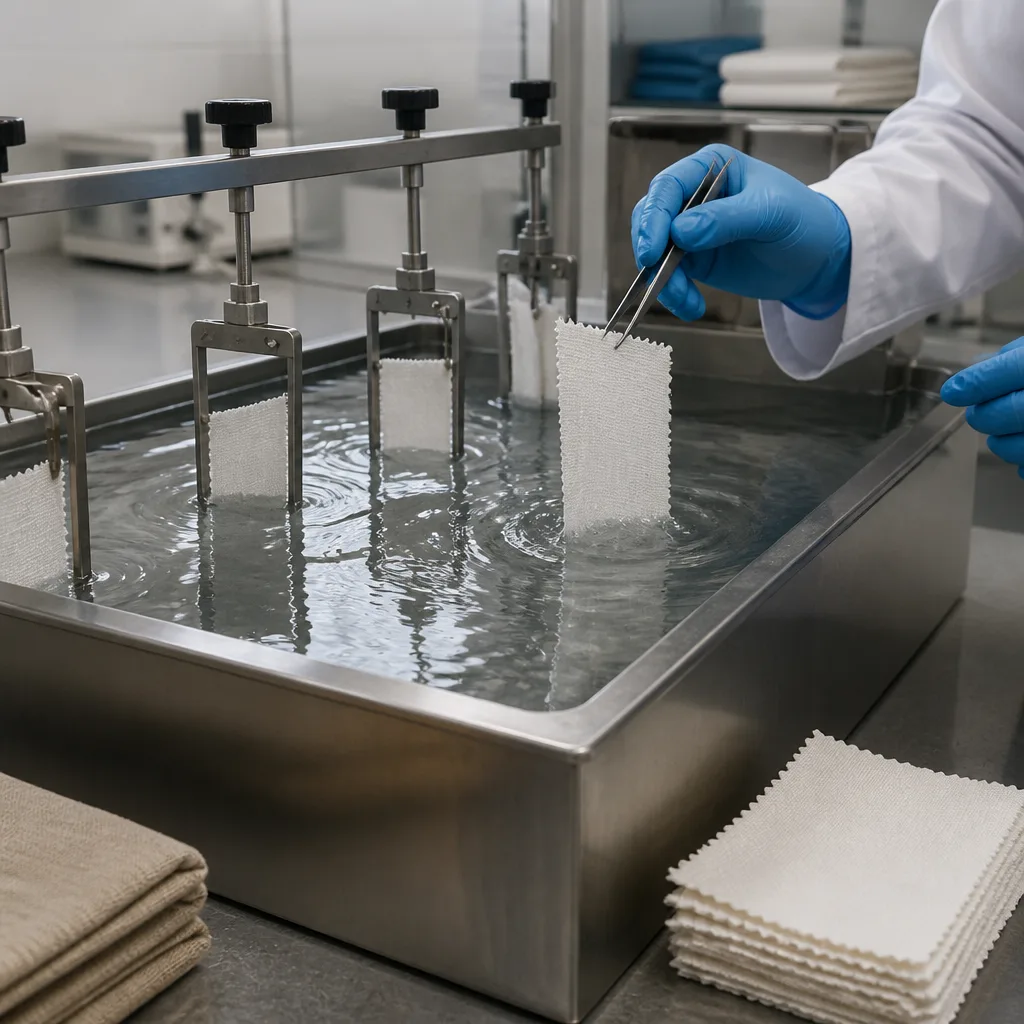
This method, which focuses on how much water a fabric can absorb and retain, generally follows these steps:
This method evaluates both suction capacity and post-gliding retention ability. These aspects are critical for real-world performance.
The DIN 53923 standard is widely used in the following areas:
Examples of applications include:
Manufacturers typically specify product performance (e.g., absorption percentage) based on this testing method.
Without a standard like DIN 53923, the results would be inconsistent, misleading, and often impractical. The main reasons why this standard is necessary are as follows:
All these factors significantly influence the results. This standard defines the precise conditions under which two companies obtain comparable data when testing the same fabric.
This standard incorporates controlled drainage, which better simulates real-world use (e.g., wiping, cleaning, or medical application).
Without a standardized method, quality control procedures can vary, and products can perform unpredictably.
It provides a common criterion that is critically important when selecting materials.
In conclusion, the DIN 53923 standard is a crucial textile testing standard that defines how to measure the water absorption capacity of fabrics. It plays a vital role in evaluating and comparing absorbent materials, ensuring reliability across various sectors from cleaning products to technical textiles.
For many years, our organization, with its competent and experienced staff, has been understanding the needs of its clients, providing the advanced testing services they require, and assisting them in the establishment, implementation, and improvement of management systems. Within this framework, we also provide testing services in accordance with the DIN 53923 standard.
To get an appointment, to get more detailed information or to request an evaluation, you can ask us to fill in our form and reach you.

