

The standard “ASTM D5237-14 Standard Guide for Evaluating Fabric Softeners” developed by the American Society for Testing and Materials (ASTM) describes a guide for evaluating the performance characteristics of fabric softener products. It provides guidance for evaluating the effectiveness of process chemicals on fabrics dosed into the wash, rinse, or dry cycle of a household washing machine or dryer. This guide can be used to screen fabric softener products or to evaluate products over multiple cumulative cycles.
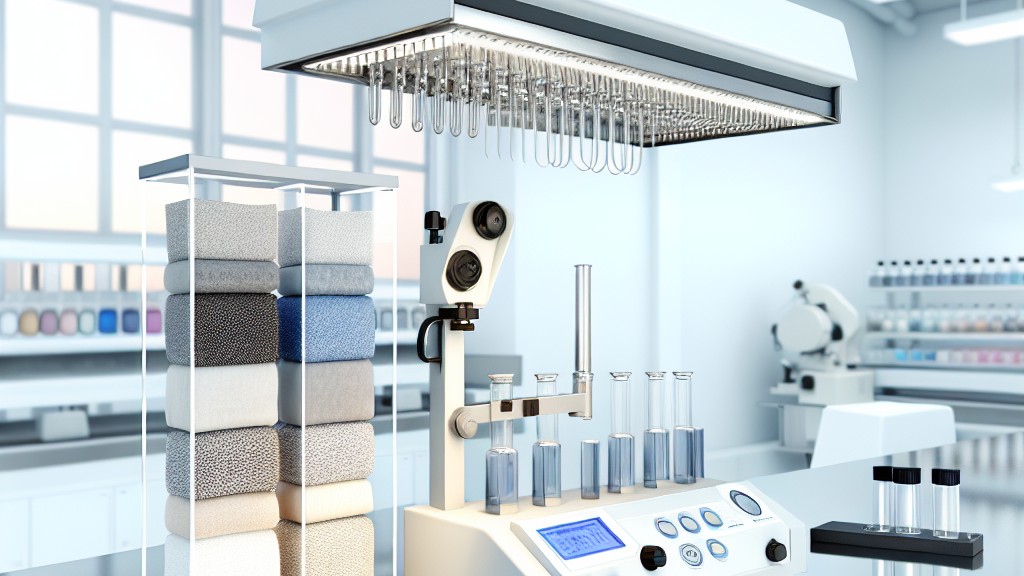
The relative ranking of products evaluated by these procedures may be affected by factors such as machine type and settings, fabric load composition, and washing and drying procedures used.
For the purposes of this standard, the following terms and definitions apply:
These washing machines use significantly less water and energy during the washing process than traditional deep-loading washing machines.
These washing machines use significantly less water and energy during the washing process than traditional deep-loading washing machines.
Fabrics are evaluated using test panels or instrumental methods for the effect of softener products applied in the wash, rinse or dry cycle on softness, whiteness retention, rewet or water absorbency, static control or odor, or a combination of these.
The methods in this guide can be used to screen fabric softener products or to evaluate their performance against an established reference product or comparative products, either through a single cycle or multiple cumulative cycles.
A single evaluation of each of the product properties tested by these methods will not determine the overall performance of the softener product. A single test run under the constant conditions specified cannot be expected to reflect comparative performance under a wide range of other possible conditions of use.
During testing, all new fabrics, whether received directly from the factory or purchased from vendors, must be free of factory conditioners and processing aids. Test fabrics will be used for a single evaluation only, while ballast used for the load volume can be reused indefinitely if purged between each evaluation.
Our organization has a strong staff that closely follows the developments in the world in the field of science and technology and constantly improves itself. Among the numerous test, measurement, analysis and evaluation studies provided for businesses in various sectors, there are also testing services in accordance with the "ASTM D5237-14 Standard Guide for Evaluating Fabric Softeners" standard.
To get an appointment, to get more detailed information or to request an evaluation, you can ask us to fill in our form and reach you.

