

The standard “DIN 53351 Testing of artificial leather and similar closed materials – Behavior under repeated folding (flexometer method)”, published by the German Institute for Standardization (DIN), describes a test method for evaluating the bending fatigue resistance and behavior of artificial leather (synthetic leather), coated fabrics, and similar flexible sheet materials under repeated folding. This standard focuses on how these materials withstand continuous folding without cracking, delamination, or other surface damage.
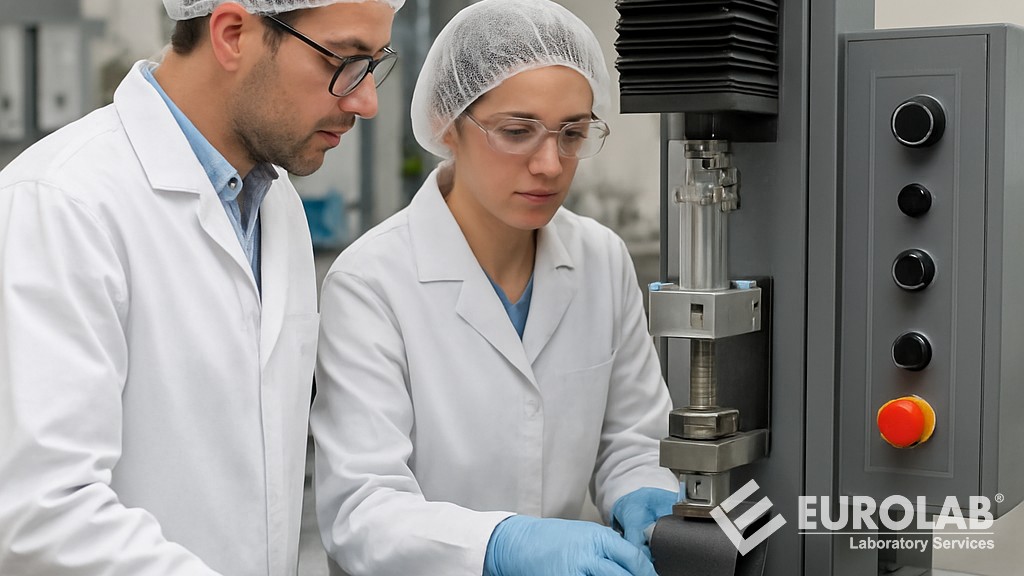
Materials like synthetic leather used in footwear (upper parts, linings), upholstery, bags, apparel, and automotive interiors must withstand repeated bending and folding during use. This test evaluates durability, crack resistance, and coating adhesion under cyclic folding by simulating real-world tensile stresses. Poor performance can lead to visible cracks, peeling, or loss of elasticity, impacting product lifespan and quality.
The test uses a flexometer, a machine that repeatedly folds and unfolds the samples. The basic steps of this method are as follows:
Modern flexometers are typically multi-station machines (e.g., 6, 12, or 24 stations), allowing for simultaneous testing of multiple samples. Popular models include flexometers that can operate at ambient temperature or in cold conditions.
A flexometer device generally includes the following:
The flexometer ensures that results are reproducible across laboratories by providing consistent folding angles and frequencies.
The DIN 53351 standard is widely applied in sectors where flexible coated materials are used, such as those listed below:
This test helps ensure that materials will maintain their durability and appearance over long-term use.
Material data sheets often use ratings such as “DIN 53351: At least 20.000 folds - Excellent” or similar to indicate superior bending strength.
This standard is material-specific (primarily for artificial leather according to DIN 16922 definitions) and does not directly apply to all leather or textile products. Results depend heavily on precise test conditions, sample preparation, and subjective visual assessment.
In short, the DIN 53351 standard includes a method for evaluating the bending strength of artificial leather and similar sheet materials. This test determines how well the material can withstand repeated folding under controlled conditions without visible damage such as cracks, delamination, or surface degradation.
This method is commonly used in automotive interiors, furniture upholstery, footwear, and apparel for materials such as synthetic leather, coated fabrics, and polymeric sheet materials. These materials are frequently subjected to repeated bending and folding during use. The DIN 53351 standard flexometer test simulates these stresses to evaluate long-term performance and durability.
The primary purpose of this standard is to measure the resistance of flexible sheet materials to permanent folding. This test helps manufacturers and quality control laboratories determine whether a material can maintain its structural integrity and appearance when subjected to repeated bending. The results are used for the following purposes:
In the DIN 53351 test, a sample made of artificial leather or similar material is placed in a flexometer machine that repeatedly folds the sample along a defined line.
Damage that occurs during testing may include:
The results are reported as follows:
The DIN 53351 standard flexometer method is an important tool for evaluating the performance of artificial leather materials by providing a reliable simulation of real-life bending stresses. Its main benefits include:
Many laboratories, particularly in Europe, use the DIN 53351 standard alongside equivalent standards for synthetic materials (while the ISO 5402 standard is more common for genuine leather).
In summary, the DIN 53351 standard defines a standardized flexometer test method used to determine the resistance of artificial leather and similar materials to repeated folding. By simulating real-life bending conditions, the test helps manufacturers ensure the durability and long-term performance of coated sheet materials.
For many years, our organization, with its competent and experienced staff, has been understanding the needs of its clients, providing the advanced testing services they require, and assisting them in the establishment, implementation, and improvement of management systems. Within this framework, we also provide testing services in accordance with the DIN 53351 standard.
To get an appointment, to get more detailed information or to request an evaluation, you can ask us to fill in our form and reach you.

