

The standard “DIN 54301 Textile tests - Determination of needle tear resistance of nonwoven textiles”, published by the German Institute for Standardization (DIN), describes a test method for determining the resistance of nonwoven textiles (and similar materials such as felts and bonded fiber fabrics) to tearing when a needle or stitch is pulled through the material. This is commonly referred to as seam end tear resistance, needle pull resistance, or, in the context of stitching, seam slippage.
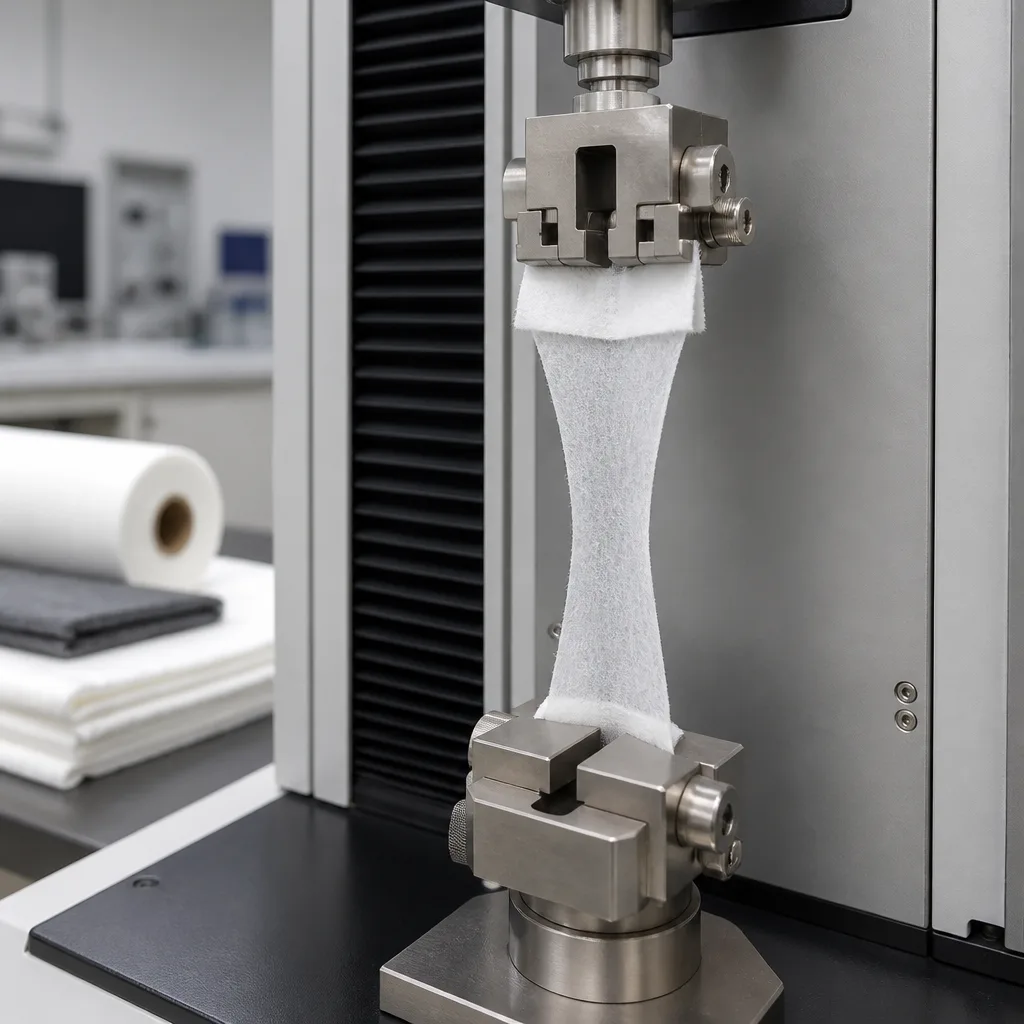
This standard is particularly important for evaluating how well nonwoven materials hold seams or joints without the material tearing or the seams breaking under force. This property is critical for applications where nonwoven fabrics are sewn, fringed, or mechanically fastened.
The main applications of this method are as follows:
Test results are typically reported in units of force (e.g., Newton) for both warp and weft directions.
The DIN 54301 standard is used worldwide as a reference in material specifications and test reports, particularly in European and automotive supply chains. This standard is often used in conjunction with other textile and sewing tests (e.g., seam strength, tensile properties, or delamination tests like DIN 54310).
In short, DIN 54301 is an industry standard that includes specific test methods used in textile analysis and quality control. Like many DIN textile standards, this standard was developed to provide consistent, repeatable, and scientifically reliable test procedures for textile materials and finished products.
The DIN 54301 standard focuses on standardized procedures for evaluating specific textile properties under controlled laboratory conditions. This standard helps laboratories, manufacturers, suppliers, and certification bodies to assess textile performance in a uniform manner and allows for direct comparison of results obtained from different laboratories.
The DIN 54301 standard is applicable in a variety of sectors, including the following:
The use of the described test method offers several operational benefits:
The DIN 54301 standard is necessary because textile materials can exhibit very different behaviors depending on fiber composition, finishing processes, and environmental factors. Without a standardized method, two laboratories could test the same fabric and obtain conflicting results. The main reasons why this standard is necessary are as follows:
More specifically, the DIN 54301 standard is necessary to establish a consistent and technically reliable method for evaluating textile properties. Textiles are sensitive materials: factors such as fiber type, moisture content, finishing chemicals, yarn structure, and test conditions can significantly affect the results. Even small variations in use or environment can lead to different outcomes.
In conclusion, the DIN 54301 standard plays a significant role in textile testing by establishing a reliable and consistent framework for evaluating textile properties. In an industry where fiber composition, finishing processes, and environmental factors greatly influence material behavior, DIN 54301 and similar standards help ensure consistency, technical accuracy, and quality assurance across the textile supply chain.
For many years, our organization, with its competent and experienced staff, has been understanding the needs of its clients, providing the advanced testing services they require, and assisting them in the establishment, implementation, and improvement of management systems. Within this framework, we also provide testing services in accordance with the DIN 54301 standard.
To get an appointment, to get more detailed information or to request an evaluation, you can ask us to fill in our form and reach you.

