

The standard “SAE J855 Tensile and Clumping Test Method for Textiles and Plastics” developed by the American Society of Automotive Engineers (SAE) describes a test method used to measure the elastic and recovery properties of materials after being subjected to low static load.
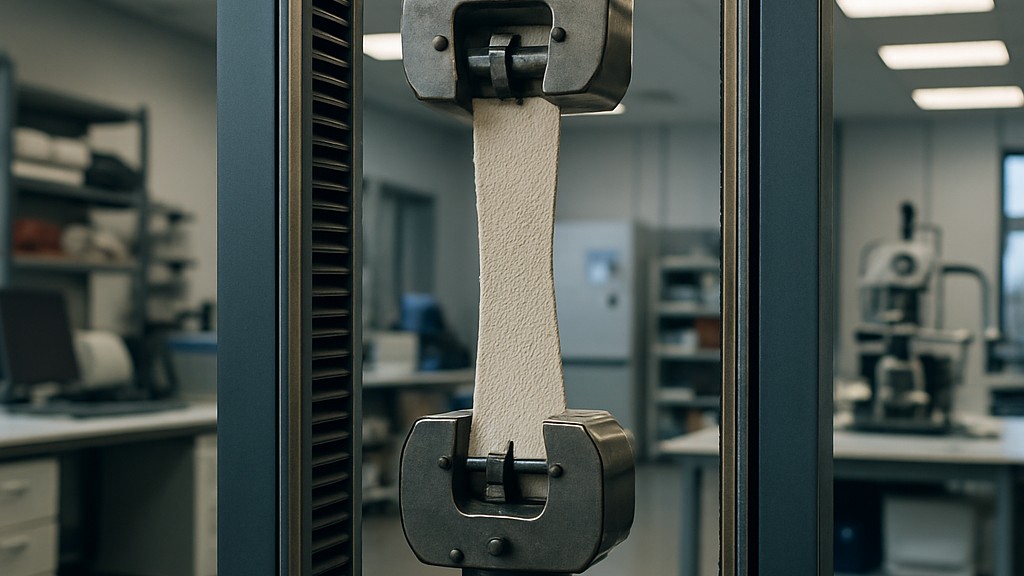
This test method is intended to determine the elastic and recovery properties (stretch and set) of textiles and plastics after exposure to low static loads. This method is used to evaluate how materials critical to applications such as automotive upholstery or flexible components behave under tension.
This standard applies to materials testing, focusing on properties such as elasticity, recovery, and deformation. This standard, which has been revised several times, applies to industries dealing with fabrics, fibers, and flexible plastics. It is widely used by engineers and manufacturers in automotive and industrial environments to ensure material durability and performance.
The SAE J855 standard is materials-focused. In the automotive industry, this standard is a standardized test method for measuring the stretching (elastic elongation) and stiffening (permanent deformation) of textiles and flexible plastics when subjected to low static loads. This is critical for evaluating materials used in automotive applications such as upholstery, seat covers, interior trim, or other flexible components. The goal is to ensure that materials can withstand stress and recover their shape, maintaining their durability and appearance in automotive interiors.
During testing, a controlled static load is applied to a material sample, the elongation (stretch) under the load is measured, and the remaining deformation (hardening) is evaluated after the load is removed. This test method is applicable to woven, knitted, or nonwoven textiles used in automotive manufacturing, as well as flexible plastics.
The main applications of this standard in the automotive industry are:
This standard helps manufacturers select materials that meet performance and aesthetic requirements under repeated stress, while also improving vehicle quality and longevity.
This standard is widely used by automotive engineers and suppliers to evaluate textiles (woven, knitted, non-woven) and flexible plastics to ensure compliance with durability and quality specifications, particularly for components such as upholstery, interior trim, and safety features. This standard ensures that materials can stretch under stress and recover to their original shape without significant permanent deformation.
Essentially, this testing method measures two key characteristics:
While all parameters (e.g., load values, sample dimensions, or test duration) vary depending on the material and application, the general process is as follows: A standardized sample of textile or plastic is cut to specified dimensions (e.g., a rectangular strip). The sample is conditioned under controlled environmental conditions (e.g., temperature and humidity) to ensure consistent results. A low static load is applied to the sample using a tensile testing machine or similar equipment. The load is typically light to simulate real-world stresses (e.g., sitting on a chair or stretching trim materials). The sample is held under the load for a specified period of time.
When measuring stretch, the material's extension under load is measured and expressed as a percentage of the original length. When measuring deformation, the load is removed and the sample is allowed to recover for a specified period. The remaining elongation (if any) is measured, and the deformation is calculated as a percentage of the original length. Multiple samples can be tested to ensure repeatability.
This standard specifies low loads to mimic typical automotive use, as opposed to high-stress tensile tests. Test conditions are tailored to the material type (e.g., woven fabrics vs. flexible plastics).
Ultimately, the SAE J855 standard is critical to ensuring the performance, durability, and aesthetic quality of materials in automotive interiors and components. Specific applications include:
Our organization, which has been supporting businesses across all sectors for years through a wide range of testing, measurement, analysis, and evaluation activities, has a strong team of employees who closely follow global developments in science and technology and are constantly improving themselves. In this context, we also provide testing services in accordance with the "SAE J855 Textile and Plastics Tensile and Cluster Test Method" standard.
To get an appointment, to get more detailed information or to request an evaluation, you can ask us to fill in our form and reach you.

