

The standard “DIN 53360 Testing of artificial leather and similar sheet materials - Determination of total elongation (static elongation) and irreversible elongation”, published by the German Institute for Standardization (DIN), describes a test method for evaluating how much a material elongates under a continuous (static) load and how much of this elongation remains permanently after the load is removed. These properties are fundamental for evaluating the elastic recovery and dimensional stability of flexible sheet materials.
This method is primarily applicable to the following:
This standard is not designed for genuine leather or hard materials. For genuine leather, the DIN EN ISO 17236 standard applies.
This standard measures the following values:
These values help predict long-term performance: materials with high permanent elongation can sag, shrink, or lose their shape over time under continuous stress (for example, car seat covers, sofa upholstery, or shoe uppers).
In general, the testing process follows these steps:
Several standardized instruments are required for the test:
To obtain reliable results, the tensile testing machine must provide a consistent tensile speed and accurate force measurement.
The DIN 53360 standard has been withdrawn, but it is still used as a reference in product specifications, test laboratories, and automotive supplier requirements. Accredited test laboratories also continue to offer this standard as an accredited methodology.
Similar properties exist in related standards for broader textile/coated fabric testing, but this standard has not been formally withdrawn from public records or replaced by a newer DIN version. Companies use this standard alongside, or as a basis for, internal or original equipment manufacturer-specific protocols.
For manufacturers and quality control in the artificial leather industry, compliance with the DIN 53360 standard helps ensure that products maintain their appearance and functionality under long-term, real-world stress. This prevents customer complaints about stretched upholstery or deformed coverings after extended use.
In short, the DIN 53360 standard focuses on evaluating how much a material elongates under tensile force before fracturing and how it behaves during deformation. These properties are critical for materials that need to maintain durability, flexibility, and structural integrity throughout use.
The primary purpose of the DIN 53360 standard is to measure the following:
Artificial leather, used in applications such as car seats, instrument panels, furniture upholstery, and handbags, is frequently subjected to tensile forces during assembly and daily use. This standard helps ensure that such materials can withstand these stresses without tearing or permanently deforming.
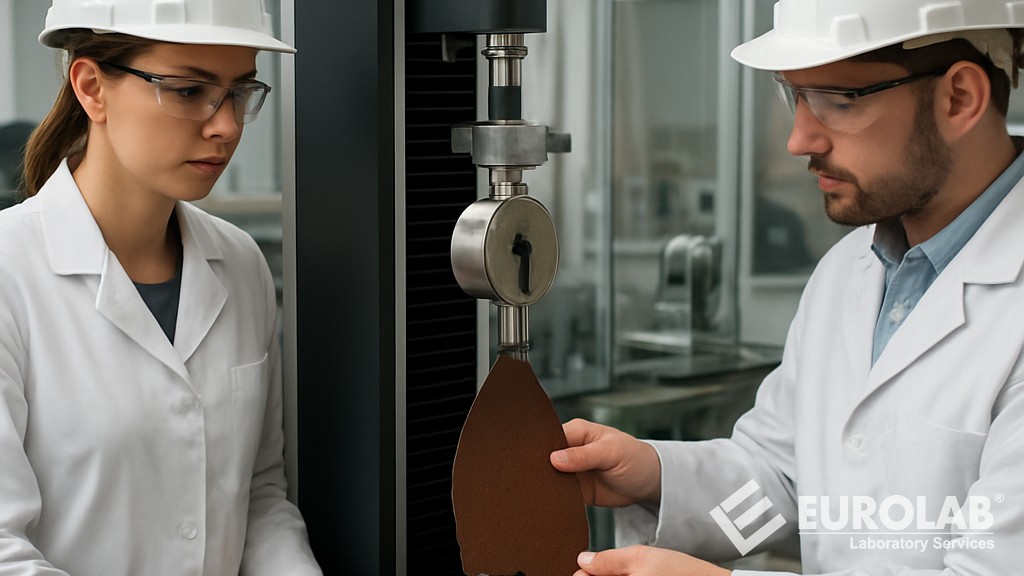
The DIN 53360 standard test method is based on a uniaxial tensile test where a sample of artificial leather is stretched on a testing machine until it breaks. Testing in different directions is important because coated fabrics and synthetic leathers can have anisotropic mechanical properties. Before testing, samples are usually conditioned in a standard atmosphere (typically 23 degrees Celsius and 50 percent relative humidity).
The DIN 53360 standard provides various measurable parameters:
These results provide valuable information about the material's flexibility, stretchability, and durability.
DIN 53360 is widely used in industries where synthetic leather and coated textiles need to withstand repeated deformation. Typical applications include:
Manufacturers rely on this test to verify that materials meet performance and durability requirements.
The main advantages of the DIN 53360 standard are as follows:
These features make the DIN 53360 standard an important tool for manufacturers, testing laboratories, and product developers.
In conclusion, the DIN 53360 standard is designed to determine the elongation properties of artificial leather and similar sheet materials. By measuring how materials stretch and behave under tension, this standard helps products used in demanding applications maintain their flexibility, strength, and durability throughout their service life.
For many years, our organization, with its competent and experienced staff, has been understanding the needs of its clients, providing the advanced testing services they require, and assisting them in the establishment, implementation, and improvement of management systems. Within this framework, we also provide testing services in accordance with the DIN 53360 standard.
To get an appointment, to get more detailed information or to request an evaluation, you can ask us to fill in our form and reach you.

