

ASTM D4533/D4533M Trapezoidal Tear Strength of Geotextiles
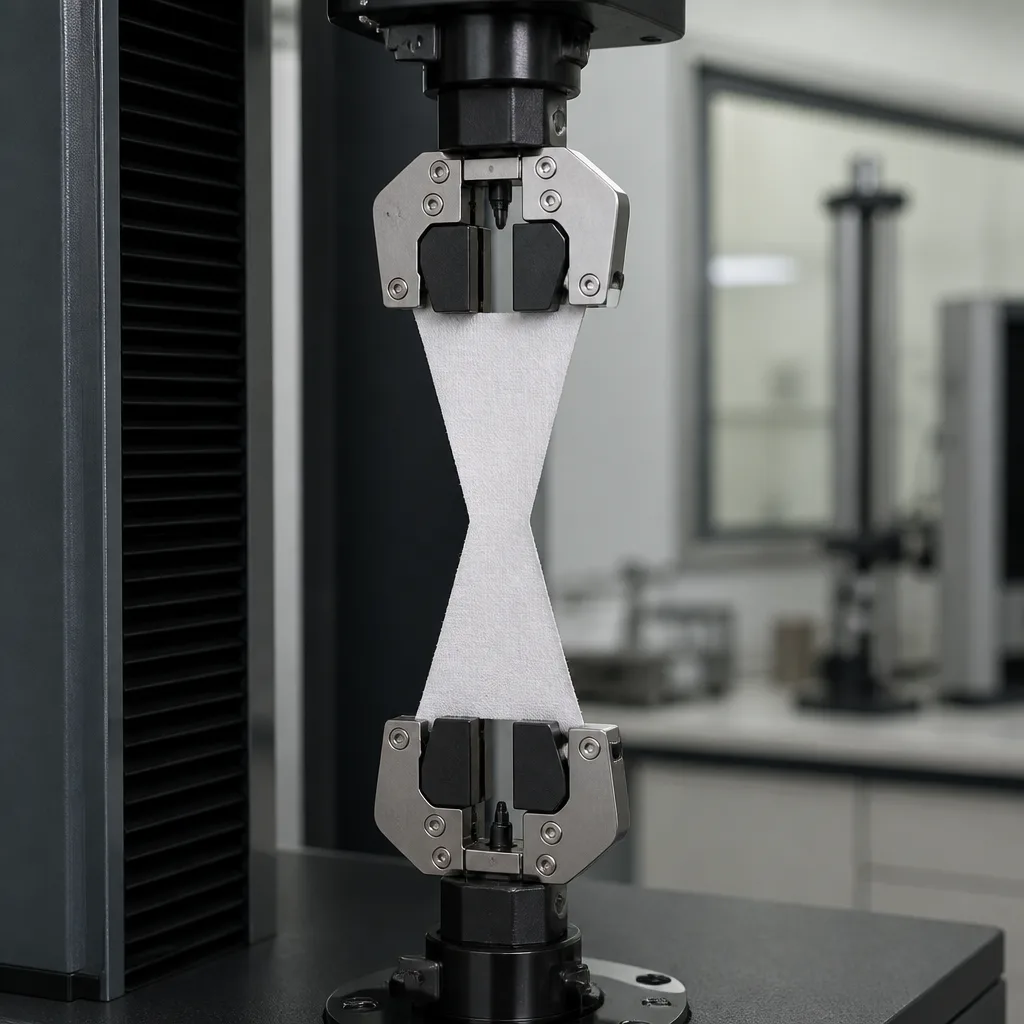
The ASTM D4533/D4533M standard test method for trapezoidal tear strength of geotextiles, developed by the American Society for Testing and Materials (ASTM), describes a test method used to measure the force required for sustained or propagating tearing in woven or nonwoven geotextiles using the trapezoidal method. While this method is useful for quality control and acceptance testing, the trapezoidal tear test does not provide all the necessary information for all design applications, and other test methods should be used.
This testing method is applicable to most geotextiles used in geotextile applications, including woven fabrics, nonwoven fabrics, layered fabrics, knitted fabrics, and felts.
The trapezoid tear method is a testing method that generates stress along a reasonably defined path, allowing the tear to propagate across the width of the sample. For woven fabrics, trapezoid tear strength depends primarily on the properties of the yarns held in the clamps. In nonwoven fabrics, since individual fibers are more or less randomly oriented and possess some ability to reorient themselves in the direction of the applied load, maximum trapezoid tear strength is achieved when resistance to further reorientation is greater than the force required to tear one or more fibers simultaneously.
The trapezoidal tear strength method is useful for estimating the relative tear resistance of different fabrics or different aspects of the same fabric. This test method can be used in acceptance testing of commercial shipments; however, caution is advised due to a lack of information regarding inter-laboratory accuracy.
In short, the ASTM D4533/D4533M standard is a widely used test standard that determines the trapezoidal tear strength of geotextiles. This test measures the force required to sustain or propagate an existing tear in a geotextile sample and provides an index indicating the material's resistance to tearing under field conditions. It is applicable to woven, nonwoven, knitted, felted, and layered geotextile materials used in civil engineering and environmental applications.
Geotextiles are frequently subjected to mechanical stresses during transportation, installation, and throughout their service life. Small cuts or holes can develop into larger tears, potentially compromising the structure's performance. The ASTM D4533/D4533M standard provides a standardized method for evaluating a geotextile's resistance to tear propagation. This standard is commonly used in the following areas:
The test is performed using a rectangular specimen marked with an isosceles trapezoid. A small cut is made in the specimen to initiate tearing. The specimen is then secured to a tensile testing machine and pulled at a controlled speed until the tear propagates through the fabric. The maximum force recorded during tearing is reported as the trapezoidal tear strength.
The test typically requires the following equipment:
Essentially, constant elongation rate or constant feed rate machines may not produce directly comparable results, and in cases of disagreement, the constant elongation rate results take precedence.
For testing, a standard trapezoidal specimen is prepared from the geotextile sample. Individual specimens are typically tested in the following aspects:
Since many geotextiles exhibit anisotropic mechanical properties, testing in both directions is important.
In general, this test follows these steps:
Various material properties influence the tear strength results:
In nonwoven fabrics, fibers can be reoriented during loading, resulting in significantly different tearing behavior compared to woven materials.
The ASTM D4533/D4533M standard is widely used for geotextiles in the following areas:
The advantages of the ASTM D4533/D4533M standard are as follows:
The ASTM D4533/D4533M standard is considered an index test. While it provides valuable information about tear resistance, it does not fully predict field performance under all loading conditions. Engineers often use it in conjunction with other geotextile standards, such as those listed below, to obtain a comprehensive assessment of geotextile performance.
In conclusion, the ASTM D4533/D4533M standard is a significant geotextile testing standard that evaluates the resistance of geotextiles to tear propagation using the trapezoidal tear method. This test provides manufacturers, laboratories, contractors, and engineers with a reliable method for comparing materials and ensuring quality. Although not a complete design test, this method remains one of the fundamental mechanical property tests used worldwide for geotextile specification and acceptance.
For many years, our organization, with its competent and experienced team, has been understanding the needs of its clients, providing the advanced testing services they require, and assisting them in the establishment, implementation, and improvement of management systems. Within this framework, we also provide testing services in accordance with the ASTM D4533/D4533M standard.
To get an appointment, to get more detailed information or to request an evaluation, you can ask us to fill in our form and reach you.

