

The German Standards Institute (DIN) standard “DIN 53356 Testing of artificial leather and similar sheet materials - Tear growth test” describes a test method for determining the tear spread (tear growth) resistance of flexible sheet materials such as the following:
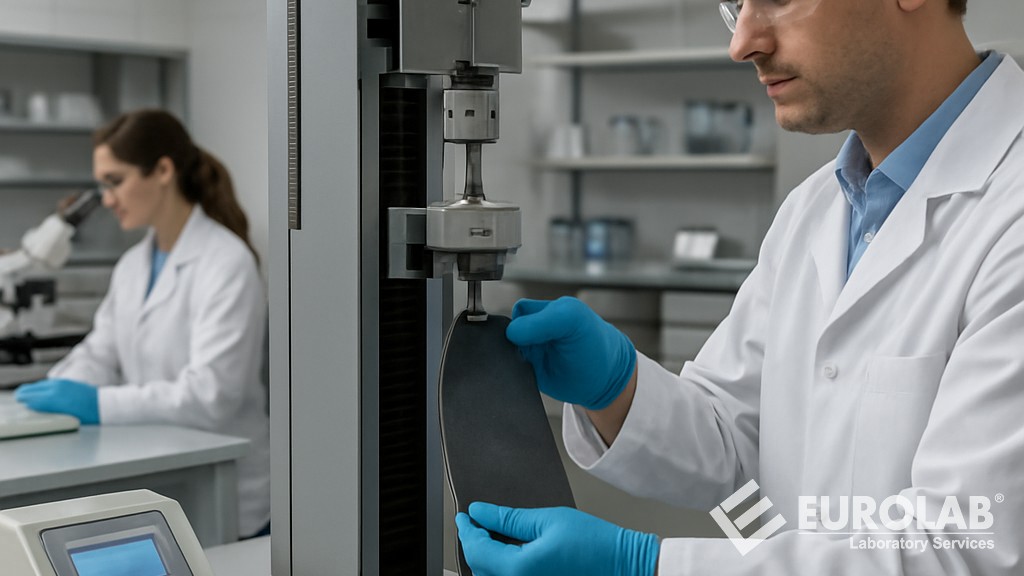
This testing method is particularly important in industries where these materials are used under mechanical stress, such as automotive upholstery, furniture, clothing, bags, footwear, technical textiles, banners, tarpaulins, and other coated or laminated products.
Tear growth testing measures how easily an existing tear or cut in a material propagates (grows) when force is applied. This property is important for evaluating durability, safety, and service life, especially in applications where materials may be subjected to punctures, cuts, or repeated bending.
Unlike initial tear strength (which measures the force required to initiate a tear), tear growth testing evaluates the spreading resistance after a tear has begun.
The key aspects of this testing method are as follows:
This method is conceptually similar to the following international standards:
Although discontinued, the DIN 53356 standard continues to be used as a reference in many technical data sheets, material specifications, and test reports, particularly in sectors such as automotive, technical textiles, and PVC/PU coated fabrics. Accredited laboratories offering testing still apply the DIN 53356 standard when required by customer specifications or legacy product approvals. Today, the “ISO 4674-1 Rubber or plastic coated fabrics – Determination of tear resistance – Part 1: Methods of constant tear rate” standard is recommended as a modern alternative. This new standard specifies two methods for determining the forces required to initiate and propagate a tear in a coated fabric using the constant tear rate method: Method A Tongue tear and Method B Trouser tear.
Today, product data sheets frequently include statements such as: “Tear strength (warp/weft): 170 N (DIN 53356)”. This indicates a conformity test for banner fabrics, truck tarpaulins, upholstery materials, or synthetic leather products.
In short, the DIN 53356 standard includes a test method for evaluating the tear growth resistance of artificial leather and similar sheet materials. This method provides important information about durability and resistance to mechanical damage by measuring how a tear initiated in a material propagates under tensile load.
The DIN 53356 standard is commonly used in the following artificial leather and coated products:
These materials can develop small cuts or holes during use. The DIN 53356 standard evaluates how easily such a tear propagates when the material is subjected to tensile forces.
This test helps manufacturers in the following ways:
This method measures the force required to propagate an existing tear in a prepared sample. The test generally follows these steps:
Test results are typically reported as follows:
Higher values indicate better resistance to tear propagation and improved material durability. The maximum or average force required for tear growth represents tear growth resistance.
The results help engineers determine whether materials can withstand mechanical stress, wear, and accidental damage during use.
The DIN 53356 standard specifies two sample shapes: Figure A and Figure B. These shapes differ primarily in geometry and tear initiation design, allowing the method to adapt to different types and thicknesses of synthetic leather constructions. Samples are typically cut so that the tear will propagate in a defined direction according to the material structure. This is important for materials reinforced with fabrics.
Consequently, the DIN 53356 standard defines a method for measuring the tear growth resistance of artificial leather and similar sheet materials by propagating a pre-cut tear under tensile load. This test has helped manufacturers evaluate the durability and mechanical integrity of coated textile and synthetic leather products.
For many years, our organization, with its competent and experienced staff, has been understanding the needs of its clients, providing the advanced testing services they require, and assisting them in the establishment, implementation, and improvement of management systems. Within this framework, we also provide testing services in accordance with the DIN 53356 standard.
To get an appointment, to get more detailed information or to request an evaluation, you can ask us to fill in our form and reach you.

