

The standard “DIN 53863-2 Textile tests - Abrasion test methods for textile fabrics - Rotary abrasion test”, published by the German Institute for Standardization (DIN), describes a method for evaluating the abrasion resistance of textile fabrics using rotary abrasion testing (also known as circular or rotational friction testing). This standard belongs to the broader DIN 53863 series of standards covering different abrasion test methods for textiles. DIN 53863-2 specifically focuses on the rotary (circular position) abrasion procedure.
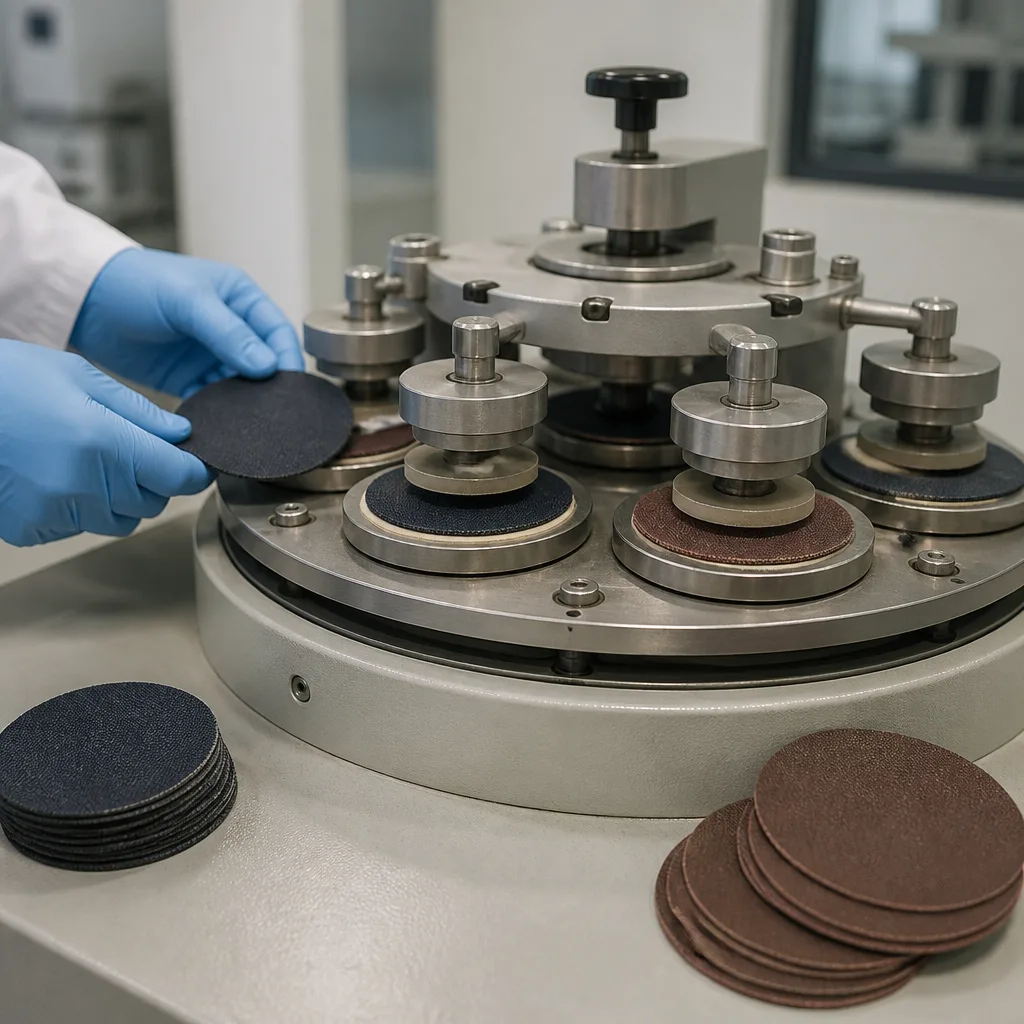
This standard determines how well a fabric resists surface abrasion caused by repeated friction or wear. It is particularly useful for evaluating durability in applications where textiles are subjected to mechanical stress. For example,
In the automotive industry, trim materials are sometimes evaluated using original equipment manufacturer specifications as a reference (e.g., GME 60345 or GMW 328 standards).
This method simulates real-world wear by rubbing a fabric sample against an abrasive medium (typically sandpaper or a standard abrasive) in a circular motion. The results help predict lifespan, identify weak points in the fabric structure, and compare different materials.
Rotary wear testing, or circular wear testing, generally follows these steps.
Basic measurements typically include the following:
The DIN 53863-2 standard provides detailed instructions on sample preparation (e.g., approximately 100 mm x 200 mm in the relevant DIN 53863 methods), conditioning, test apparatus setup, and evaluation.
This method differs from other common abrasion tests, such as the Martindale method, where the fabric is rubbed against itself or a standard wool abrasive. In the DIN 53863-2 standard, the sample is typically rubbed against sandpaper, which can result in more aggressive abrasion and is useful for more demanding evaluations.
The test is performed on specialized Schopper-type or rotary wear testing machines (sometimes also called circular locus wear testing machines). The characteristics of these machines are as follows:
Modern devices typically include touchscreen controls for manual or automatic operation.
In short, the DIN 53863-2 standard outlines a method for determining the abrasion resistance of textile fabrics using rotary abrasion testing. This standard defines a laboratory procedure for evaluating how textile materials behave when subjected to mechanical friction under controlled conditions. This standard applies to:
The aim is to simulate real-life wear conditions, such as friction caused by use, washing, or contact with other materials.
During testing, the fabric is subjected to controlled friction cycles and its resistance is evaluated according to the following:
Typical test parameters that are defined or controlled include:
These factors ensure reproducibility and comparability between different laboratories.
The results are interpreted according to the following criteria:
Higher resistance means better durability and a longer service life.
The DIN 53863-2 standard is widely used in industries where textile durability is critical:
This standard is also used by testing laboratories and quality control departments to verify product performance.
The DIN 53863-2 standard is considered important for the following reasons:
Without such a standard, wear results would vary significantly between laboratories, making quality assurance unreliable. This standard is vital for areas such as quality control, product development, compatibility, and benchmarking.
Each method described in different standards offers different abrasion simulation conditions, but together they provide a complete picture of fabric durability.
In conclusion, the DIN 53863-2 standard provides a reliable and standardized method for evaluating the abrasion resistance of textile fabrics using rotary motion. Remaining a valuable tool in textile engineering, this method ensures that materials meet the durability expectations required in real-world applications, from clothing to automotive interiors.
For many years, our organization, with its competent and experienced staff, has been understanding the needs of its clients, providing the advanced testing services they require, and assisting them in the establishment, implementation, and improvement of management systems. Within this framework, we also provide testing services in accordance with the DIN 53863-2 standard.
To get an appointment, to get more detailed information or to request an evaluation, you can ask us to fill in our form and reach you.

