DIN 54204 Textile Tests - Quantitative Analysis of Binary Blends - Blending of Wool with Other Fibers - Potassium Hydroxide Method
The standard “DIN 54204 Textile tests - Quantitative analysis of binary blends - Blending of wool with other fibers - Potassium hydroxide method,” published by the German Institute for Standardization (DIN), describes a consistent method for evaluating specific performance or quality characteristics of textile materials. This standard ensures reliable and reproducible test results across laboratories, manufacturers, and quality control environments.
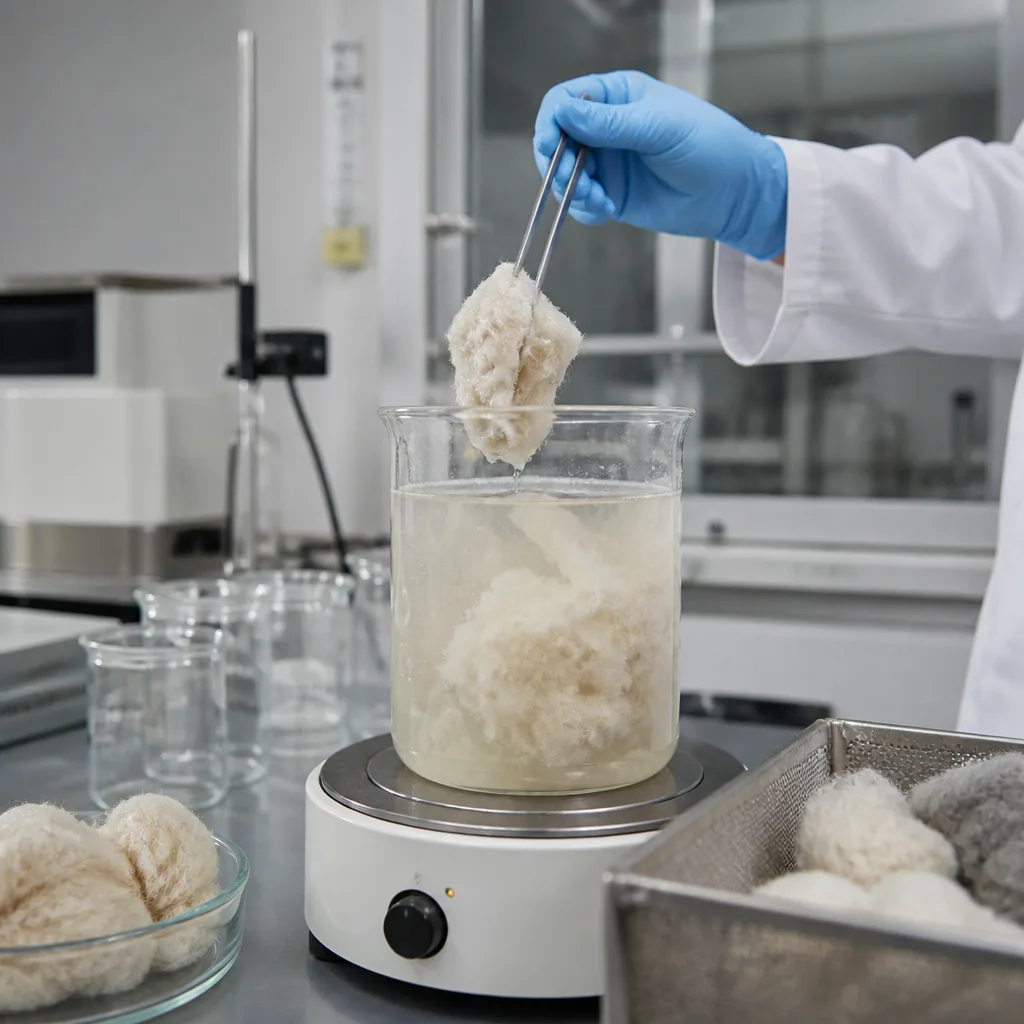
The primary goal of the DIN 54204 standard is to standardize testing procedures in the textile industry. Textile materials behave differently depending on fiber type, weave structure, finishing process, moisture content, and mechanical stress. Without a common testing method, manufacturers and buyers may produce inconsistent quality assessments.
The DIN 54204 standard helps with the following:
- It defines the requirements for standardized sample preparation.
- Specifies the test equipment and calibration conditions.
- It determines environmental conditioning requirements (such as temperature and humidity).
- It standardizes measurement procedures and result calculations.
- It improves comparability between test reports.
This makes it easier for suppliers, laboratories, brands, and regulators to clearly communicate their quality requirements.
The DIN 54204 standard is widely used by:
- Textile manufacturers conducting internal quality controls.
- Accredited material analysis testing laboratories
- Retail brands that verify supplier compliance.
- Import/export businesses requiring documented quality compliance.
- Research institutions that examine textile performance
By following the DIN 54204 standard, organizations can reduce product failures, increase consistency, and support compliance with contractual or technical specifications.
Organizations that use this standard gain several advantages:
- Reliable test results: A controlled and repeatable method reduces operator variability and measurement uncertainty.
- Improved quality assurance: Manufacturers can identify material problems in the early stages of production.
- Enhanced customer confidence: Standardized testing demonstrates a commitment to product quality.
- International trade support: Recognized standards simplify cross-border technical communication.
- Compliance with regulations: DIN standards generally support broader European or international compliance systems.
The potassium hydroxide solution method generally refers to using potassium hydroxide, a strong alkaline chemical, dissolved in water or alcohol for testing, cleaning, digestion, or chemical analysis. Because potassium hydroxide solution is one of chemistry's most versatile tools, the precise method depends largely on the field.
Common uses include:
- Chemical analysis and titration: A standardized potassium hydroxide solution is used as a reagent to determine acidity or neutralization values. For example,
- Acid number testing for oils, lubricants, and polymers.
- Determining the saponification value of oils and fats.
Typically, tests follow these steps:
- Potassium hydroxide is prepared at a known concentration.
- It is added to the sample or titrated against acidic components.
- The endpoint is measured using an indicator or pH meter.
- The acid content or related property is calculated.
An example reaction is: Potassium hydroxide + Hydrochloric acid = Potassium chloride + Water
- Textile and fiber testing: In textile standards, potassium hydroxide solution is often used to identify or distinguish fibers based on their chemical resistance or solubility. For example,
- Some natural and synthetic fibers react differently when exposed to potassium hydroxide.
- Microscopic changes, such as dissolution, swelling, or color changes, can help determine fiber composition.
This is important in textile testing standards, such as some DIN or ISO methods.
- Cleaning / surface treatment: Potassium hydroxide solutions are used industrially for the following:
- Degreasing of metals
- Surface abrasion
- Cleaning laboratory glassware.
- Removal of organic residues
- Security
Potassium hydroxide is highly corrosive and can cause serious burns.
The potassium hydroxide solution method is essential because it provides a controlled, repeatable chemical procedure for analysis or identification based on how substances react in the alkaline environment created by potassium hydroxide. The main reasons why the DIN 54204 standard is considered important are as follows:
- Standardized tests: Without a specific potassium hydroxide method, different laboratories might use different concentrations, temperatures, exposure times, or interpretations of results. This standard ensures:
- Same chemical concentration
- Same test conditions
- Comparable results between laboratories.
This increases consistency in quality control and certification.
- Material identification: Many materials react differently to alkaline solutions. For example, some textile fibers dissolve, swell, or remain stable in potassium hydroxide. Organic materials, on the other hand, decompose at varying rates. This helps in identifying unknown materials or verifying composition claims.
- Quality assurance: Manufacturers need reliable methods to detect defects, contamination, or incorrect material formulations. The potassium hydroxide method can help verify the following:
- Chemical purity
- Material resistance
- Processing quality
- Safety and performance verification: In some industries, material behavior under alkaline conditions is directly relevant to real-world use. Examples include textiles exposed to detergents, industrial materials exposed to chemicals, and biological samples requiring diagnostic preparation. Tests with potassium hydroxide can determine durability or reveal hidden problems.
- Regulatory and commercial compliance: This standard establishes a common technical language among manufacturers, suppliers, testing laboratories, customers, and regulators. This reduces disputes and supports international trade.
This is why the potassium hydroxide solution method is necessary, as it transforms a simple chemical reaction into a reproducible analytical tool. Organizations obtain measurable, documented, and comparable results.
In conclusion, the DIN 54204 standard plays a significant role in textile quality testing by establishing a clear, repeatable, and technically reliable testing framework. Despite being highly specialized, DIN 54204 and similar standards form the backbone of textile quality assurance systems, helping to ensure that fabrics and textile products meet expected performance and durability requirements before reaching the market.
For many years, our organization, with its competent and experienced staff, has been understanding the needs of its clients, providing the advanced testing services they require, and assisting them in the establishment, implementation, and improvement of management systems. Within this framework, we also provide testing services in accordance with the DIN 54204 standard.



