

DIN 54279 Textile Tests - Determination of the Solubility of Wool in Urea/Bisulfite Solution
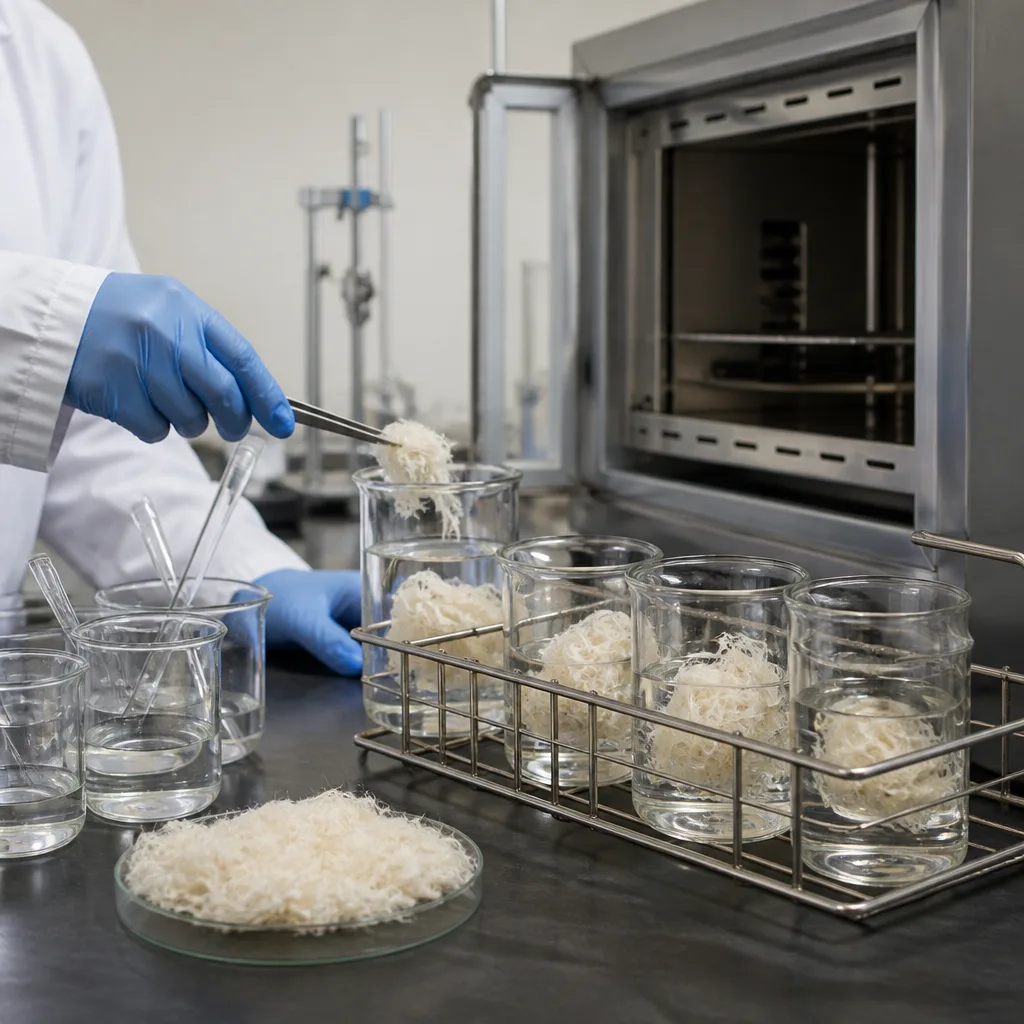
The standard “DIN 54279 Textile tests - Determination of solubility of wool in urea/bisulfite solution”, published by the German Institute for Standardization (DIN), describes a test method used to determine the solubility of wool fibers in a urea-bisulfite (or bisulfite) solution. This test method serves as an important indicator of chemical modifications, damage, or processing effects on the wool keratin structure.
Wool keratin contains many disulfide (cystine) cross-links. The urea-bisulfite reagent breaks hydrogen bonds (via urea) and disulfide bonds (via bisulfite), thus dissolving undamaged or lightly processed wool to a characteristic degree. Changes in solubility reveal the following:
Typical resolution for raw or undamaged wool is around 50 percent, while processed or damaged samples can show significantly different values. It is often used in conjunction with other wool damage tests, such as alkali solubility (e.g., DIN 54281 standard).
This standard was later repealed, but it is still used as a reference in textile testing literature and laboratories. Laboratories offering textile and automotive interior material testing (common for wool blends) still perform tests according to this standard. On the other hand, similar methods are also included in other standards such as BS 3584 or IS 3430, which reflects the widespread use of the urea-bisulfite solubility test in fiber science.
In general, this method follows these steps:
Common applications of this standard include:
Since the standard has been superseded, modern users may refer to updated equivalents, international adaptations, or laboratory-specific validated methods based on the same principle. This test remains a classic tool in keratin fiber analysis due to its sensitivity to changes in the molecular structure of wool.
In short, the DIN 54279 standard belongs to the DIN 54xxx series of standards, which covers test methods for textiles, leather, and related materials. Like many DIN textile standards, this standard provides a standardized laboratory procedure for evaluating a specific performance, safety, or material property under controlled conditions.
The primary aim of this standard is to ensure that tests of a defined textile or material property are performed consistently across laboratories, manufacturers, and certification bodies. Without a unified methodology, test results can vary significantly depending on:
The DIN 54279 standard improves upon the following by establishing common procedures:
The DIN 54279 standard is widely used in the following areas:
The DIN 54279 standard is necessary to establish a uniform test method for the material properties covered by this standard. Without this standard, different laboratories or manufacturers might use different sample sizes, environmental conditions, equipment settings, and measurement techniques. This would create inconsistent results and make it difficult to know whether a product truly meets quality or safety requirements.
More specifically, the DIN 54279 standard is required for the following:
In conclusion, the DIN 54279 standard is part of a structured approach to textile testing and quality assurance. By defining a repeatable and objective laboratory method, it reduces test variability and helps manufacturers, suppliers, and customers communicate material performance using a common technical language.
For many years, our organization, with its competent and experienced staff, has been understanding the needs of its clients, providing the advanced testing services they require, and assisting them in the establishment, implementation, and improvement of management systems. Within this framework, we also provide testing services in accordance with the DIN 54279 standard.
To get an appointment, to get more detailed information or to request an evaluation, you can ask us to fill in our form and reach you.

