

The standard "ASTM D2259, Standard Test Method for Shrinkage of Yarns," published by the American Society for Testing and Materials (ASTM), describes a test method for determining the shrinkage of yarns in skein form when treated with boiling water, dry heat, saturated steam, or solvents. This test method is applicable to yarns made from any fiber or fiber combination for which the texture of the yarn is known or can be determined. This test method is not recommended for, but has been used with, elastomeric yarns and yarns that stretch more than 5 percent under prescribed tensile loads. Procedures for determining the shrinkage and bulk properties of textured yarns are covered in ASTM D4031.
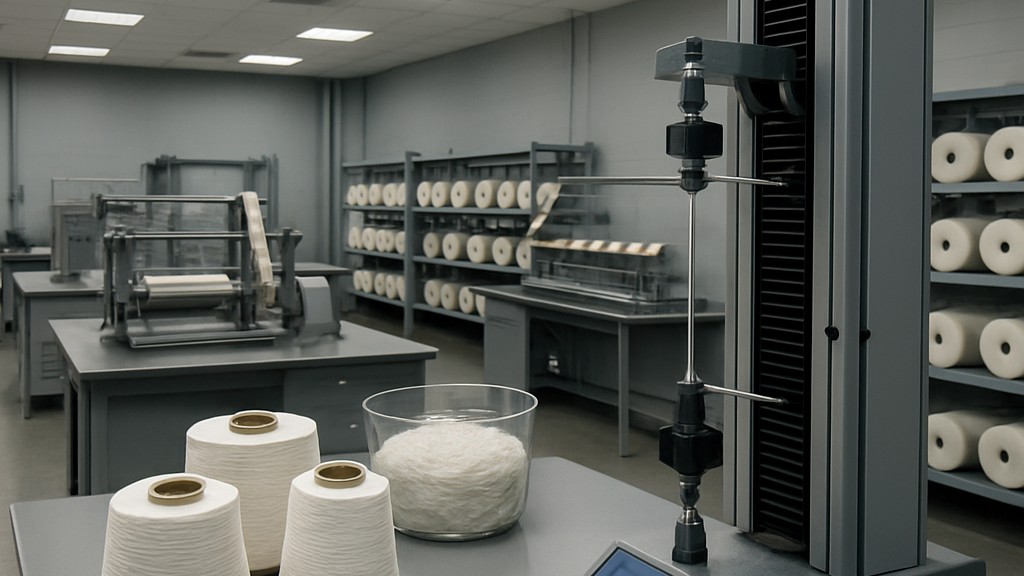
The ASTM D2259 standard test method for tensile testing in boiling water, saturated steam, dry heat, or solvents is considered adequate for acceptance testing of commercial yarn shipments because this test method has been widely used in the trade for this purpose.
The results obtained with this test method can be used for the following purposes:
The tensile medium to be used in the tests depends on the requirements of the parties involved.
The boiling water shrinkage procedure, dry heat shrinkage procedure, saturated steam shrinkage procedure, and solvent shrinkage procedure are described in the relevant sections of this standard. A 30-minute exposure time is prescribed for boiling water. The extent of change in yarn length during exposure to dry heat, saturated steam, or solvents depends on the fiber type and the exposure time and temperature. Fiber types vary in their response to high temperatures and the nature of the specific solvent, and the fiber's past history can have a significant impact on the yarn's heat and solvent shrinkage. Therefore, the time and temperature conditions to be used to determine dry heat or saturated steam shrinkage must be determined individually for the specific product. Furthermore, the time, temperature conditions, and solvent to be used to determine solvent shrinkage for the specific product must also be determined.
In the textile world, where precision and consistency are paramount, standardized testing methods play a crucial role in ensuring product quality and reliability. One of these fundamental standards is ASTM D2259. This method provides a reliable way to measure how yarns respond to various environmental stressors, such as heat, steam, and solvents. Today, this standard remains a benchmark for the textile industry.
ASTM D2259 is a procedure designed to measure dimensional changes (specifically shrinkage) in yarns when subjected to controlled conditions. Shrinkage refers to the reduction in yarn length caused by the relaxation of internal stresses or molecular rearrangements induced by heat or chemical exposure. This test is particularly important for yarns used in apparel, upholstery, or technical textiles, where unexpected shrinkage could lead to product failure or customer dissatisfaction.
This standard applies to yarns in skein form (a continuous loop of yarn wound onto a bobbin) and is versatile for a wide variety of fiber types, including natural fibers such as cotton and wool, synthetics such as polyester and nylon, and blends.
The primary purpose of the ASTM D2259 standard is to determine shrinkage under simulated real-world conditions, such as washing, ironing, or dry cleaning. This allows manufacturers to determine how yarns will behave in end-use applications and adjust processing parameters accordingly.
Its importance also extends to commercial transactions: this method is widely accepted for acceptance testing of yarn shipments. The ASTM D2259 test method, which uses tensile testing in boiling water, saturated steam, dry heat, or solvents, is considered satisfactory for acceptance testing of commercial yarn shipments because it has been widely used in trade for this purpose. This reliability increases trust between suppliers and buyers, reducing disputes and ensuring consistent quality across global supply chains.
Beyond trade, the ASTM D2259 standard also aids research and development. For example, it helps evaluate the effectiveness of yarn treatments, such as texturing or heatsetting, commonly used in the production of stretchy or dimensionally stable fabrics.
ASTM D2259 covers the testing of single or plied yarns of any fiber type, provided they can be skeined. It does not cover fabrics in non-skein form or continuous filaments. For these, ASTM D3512, Standard Test Method for Pilling Resistance and Other Related Surface Modifications of Textile Fabrics: Random Rotation Pilling Tester, applies. This method is applicable to:
Its main limitations include that it focuses only on linear shrinkage (not width or thickness) and that test conditions must be precisely controlled to avoid variability.
The beauty of the ASTM D2259 standard lies in its simple and repeatable protocol. The steps in the process are as follows:
Safety precautions include the use of protective equipment during heat or chemical exposures, and this standard emphasizes calibration of equipment such as ovens and strain gauges for accuracy.
The ASTM D2259 standard is a cornerstone of textile quality assurance. In apparel production, it helps select low-shrink yarns to meet care label claims such as "machine washable without shrinkage." In technical textiles such as automotive upholstery, it verifies performance under heat or steam cleaning from dashboards.
Ultimately, the ASTM D2259 standard demonstrates the rigorous science behind everyday textiles, combining laboratory precision with practical industry needs. By standardizing yarn tensile testing, it enables innovators to create durable, reliable products while maintaining consumer confidence.
Our organization, which has been operating for many years and meticulously follows global developments in science and technology, conducts testing, measurement, and analysis in a wide range of areas for businesses in every sector with a skilled team and extensive infrastructure. In this context, we also provide testing services in accordance with the ASTM D2259 Standard Test Method for Yarn Shrinkage.
To get an appointment, to get more detailed information or to request an evaluation, you can ask us to fill in our form and reach you.

