

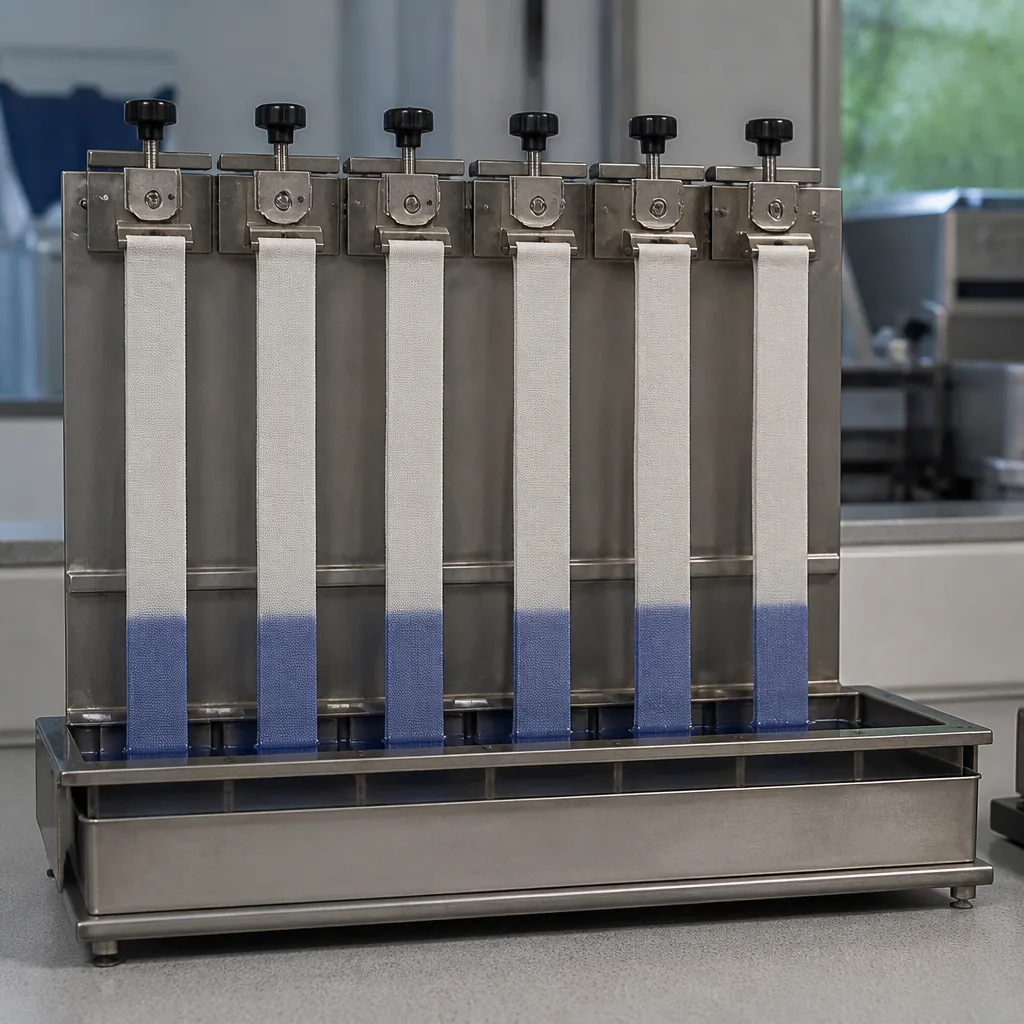
The standard “DIN 53924 Textile tests - Determination of water absorption rate of textile fabrics (method of determining rise height)”, published by the German Institute for Standardization (DIN), describes a method for determining the rate at which water is wicked away (capillary rise speed) in textile fabrics, yarns, or filaments. This method evaluates how quickly water is absorbed and transported vertically within the material via capillary action. This is an important characteristic for evaluating hydrophilicity (water absorption behavior) and overall absorption performance.
This is especially important for:
This standard is often used in conjunction with related standards such as DIN 53923 (determination of water absorption capacity) or DIN EN 14697 (specific to terry towels).
The test method described is a classic vertical wicking (rise height) test. This method simply follows these steps:
Higher and faster rising altitudes mean better absorption performance. The test is typically performed on conditioned samples (e.g., at 20 degrees Celsius and 65 percent relative humidity) and can be done on both untreated and treated fabrics.
In short, the DIN 53924 standard outlines a method for determining the color fastness of textiles to friction (abrasion). It evaluates how much dye is transferred from a colored textile surface to another material when subjected to friction. This property is critical for assessing the quality and durability of dyed or printed fabrics.
The main purpose of the DIN 53924 standard is to simulate real-life conditions where textiles come into contact with other surfaces (e.g., friction of clothing against skin, upholstery or other clothing) and to measure the following:
This standard applies to:
This test method involves rubbing a white test cloth against the surface of a sample under controlled conditions. The amount of color transferred is then evaluated.
The basic elements of this method are as follows:
The degree of staining on white fabric is assessed using a gray scale for staining. Results are generally rated from 1 (poor) to 5 (excellent):
Separate ratings are reported for dry friction and wet friction.
Typical applications of this standard include:
The DIN 53924 standard is technically compatible with international standards such as the following:
Although the procedures may differ significantly, there may be similar, minor differences in the test parameters or evaluation criteria.
The importance of the DIN 53924 standard is based on a simple fact: textiles are constantly subjected to friction in real life. If the behavior of dyes under friction is not controlled, products can quickly lose their quality or even become unusable. This standard is considered important for the following reasons:
This is critical in global supply chains.
In conclusion, the DIN 53924 standard plays a crucial role in evaluating the mechanical abrasion resistance of textile dyes. By providing a standardized, repeatable method, it helps manufacturers ensure that their products maintain their appearance and performance throughout their lifespan.
For many years, our organization, with its competent and experienced staff, has been understanding the needs of its clients, providing the advanced testing services they require, and assisting them in the establishment, implementation, and improvement of management systems. Within this framework, we also provide testing services in accordance with the DIN 53924 standard.
To get an appointment, to get more detailed information or to request an evaluation, you can ask us to fill in our form and reach you.

