

The standard “DIN 53860-1 Textile tests - Testing the tendency of textile fabrics to swell - Elbow test, static stress”, published by the German Institute for Standardization (DIN), describes a test method for evaluating the tendency of textile fabrics to swell (or bagge/outward deformation) under static stress. This method simulates real-world wear, particularly in high-stress areas such as elbows in clothing (hence the name elbow test).
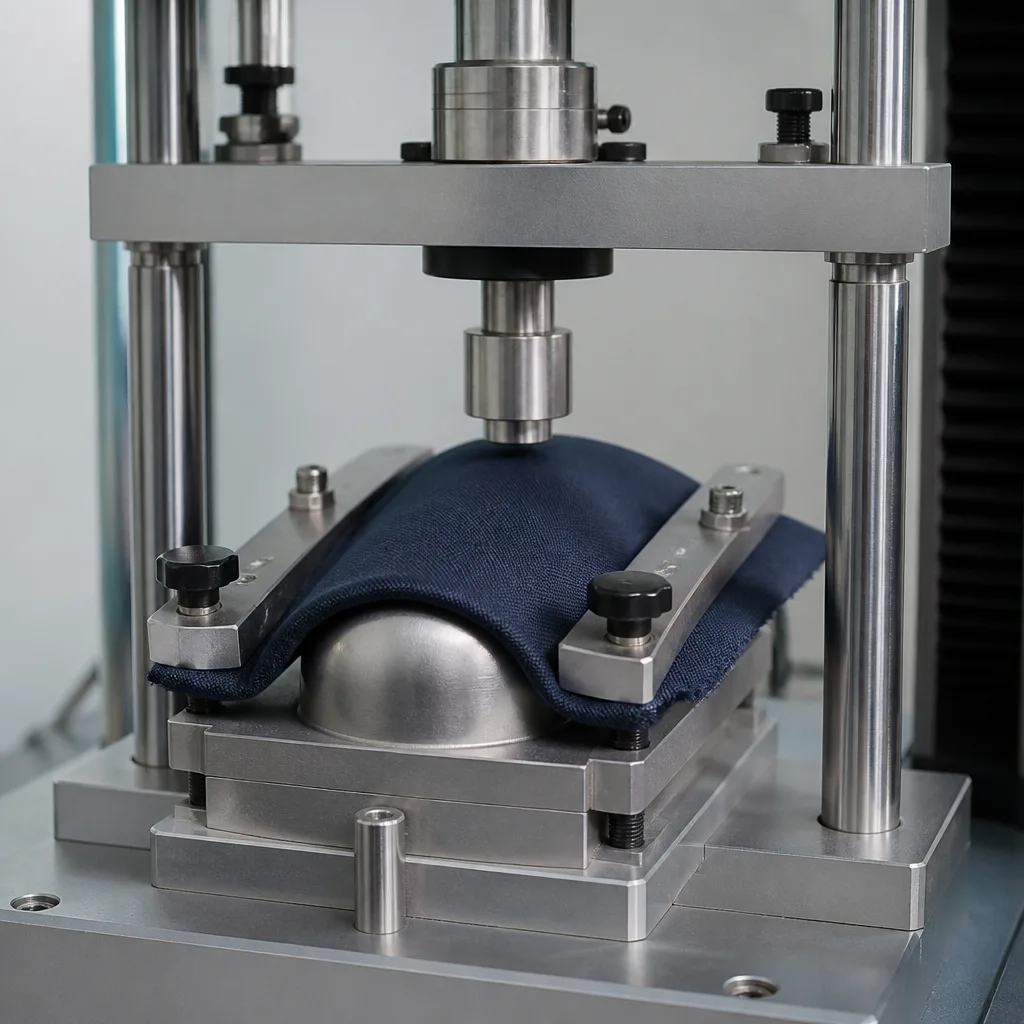
This method assesses how much a fabric swells or bags when subjected to prolonged static pressure or tension—critical for evaluating the durability, appearance, and comfort of garments made from woven or knitted materials. Excessive swelling can lead to unsightly deformation after repeated use or sitting/leaning.
In principle, during the test, a fabric sample is subjected to a static load similar to the pressure generated at the elbow (or a similar curved, high-stretch area). The test measures the degree of permanent or temporary swelling/deformation after a defined stress duration.
This method is primarily used in garment fabrics designed for jackets, shirts, blouses, or other clothing where the elbow and knee areas are subjected to repetitive stress. It is also referenced in automotive textile testing contexts (e.g., upholstery fabrics or interior materials).
This standard typically includes specialized fixtures or auxiliary tools for applying controlled static stress. Results may include visual assessment or quantitative measurement of swelling height/depth after recovery time.
Essentially, this standard is included alongside other textile tests such as abrasion (e.g., DIN 53863-2 standard), tear strength, or burst tests.
Today, this standard has been withdrawn, and similar assessments of fabric sagging or deformation are now generally met using the following updated methods:
Despite being withdrawn, the DIN 53860-1 standard is still referenced in older technical literature, test machine specifications, and in some industry contexts, particularly in European and automotive supply chains, for legacy compatibility.
In short, the DIN 53860-1 standard focuses specifically on methods used to evaluate color fastness to friction (abrasion). This standard includes a standardized test method to determine how resistant a textile material's color is to friction or abrasion. This is crucial for assessing whether dyes will leach from the fabric to other surfaces during use.
This method is applicable to the following:
In principle, this method evaluates color transfer under controlled friction conditions. The method generally follows these steps:
Equipment used in the tests includes:
Test strip staining is generally graded using a grey scale, usually according to the ISO 105-A03 standard. Grades typically fall within the following ranges:
The DIN 53860-1 standard is commonly used in the following areas:
The DIN 53860-1 standard exists because without a standardized way to measure color transfer by rubbing, textile quality would be inconsistent, difficult to compare, and often unacceptable in actual use. This standard is considered necessary for the following reasons:
Without standard-based testing, such as the DIN 53860-1 standard, manufacturers have no way of reliably predicting whether a fabric will bleed color during normal use.
This allows suppliers, manufacturers, and buyers to trust and compare data globally.
Without this standard, quality control relies on subjective judgments that are risky and inconsistent.
In conclusion, the DIN 53860-1 standard provides a reliable and standardized approach to testing the abrasion resistance of textile dyes. By simulating real-life abrasion conditions, it helps ensure that textile products maintain their appearance and do not transfer color during use. This makes it an important quality control tool in the textile industry.
For many years, our organization, with its competent and experienced staff, has been understanding the needs of its clients, providing the advanced testing services they require, and assisting them in the establishment, implementation, and improvement of management systems. Within this framework, we also provide testing services in accordance with the DIN 53860-1 standard.
To get an appointment, to get more detailed information or to request an evaluation, you can ask us to fill in our form and reach you.

