DIN 54217 Textile Tests - Quantitative Analysis of Binary Blends - Blends of Acrylic, Modacrylic and Certain Polyvinyl Chloride Fibers with Other Fibers - Dimethylformamide Method
The standard “DIN 54217 Textile tests - Quantitative analysis of binary blends - Mixture of acrylic, modacrylic and certain polyvinyl chloride fibers with other fibers - Dimethylformamide method”, published by the German Institute for Standardization (DIN), is an industry standard related to textile testing methods within the broader DIN 54200 series used in the evaluation of textile materials, fibers, yarns and fabrics. These standards are widely applied in textile laboratories, quality control departments and research institutions to ensure consistency, safety and performance in textile products.
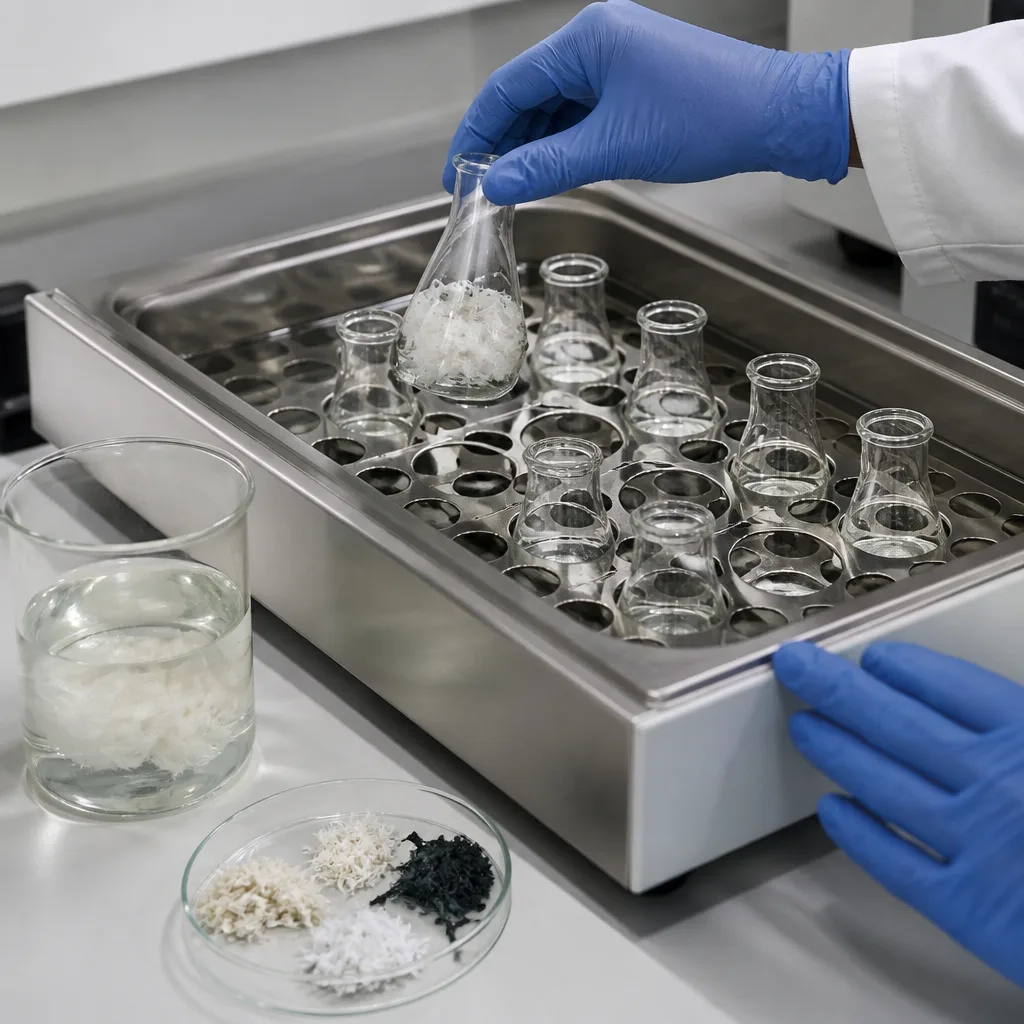
DIN 54217 standard describes a standardized test method for determining specific physical or chemical properties of textile materials under controlled laboratory conditions. This standard specifies the following:
- Sample preparation procedures for providing representative testing.
- Necessary equipment and devices
- Test conditions such as temperature, humidity, and conditioning time.
- Calculation methods for interpreting results.
- Consistent documentation and reporting requirements that allow for comparison.
By following the same method, laboratories at different institutions can obtain comparable and reproducible results.
The DIN 54217 standard is generally used in the following areas:
- Textile production for process control.
- Garment production to verify raw material quality.
- Research laboratories for materials development
- Import and export quality assurance.
- Compliance testing for customer or regulatory requirements.
The sectors that benefit from the DIN 54217 standard are as follows:
- Clothing and fashion
- Technical textiles
- Automotive textiles
- Home Textiles
- Protective clothing
The dimethylformamide method is a laboratory technique most commonly used for the extraction and quantification of chlorophyll from plant tissues, algae, or phytoplankton. Dimethylformamide acts as an effective solvent for this purpose. This technique generally has the following advantages:
- Quick and simple: It usually involves direct immersion of the tissue (grinding is not required in many protocols).
- High efficiency: It extracts chlorophyll particularly well from hard or highly pigmented samples.
- Stability: The extracts are more stable than those in acetone, and measurements remain reliable for a longer period.
- Convenience: Suitable for intact tissues or small samples.
Compared to traditional 80-90% acetone or dimethyl sulfoxide-acetone methods, this method generally performs better for specific species (e.g., green algae, chlorococcalia) and high chlorophyll concentrations.
This method simply follows these steps:
- A small quantity of fresh or ground plant/algae tissue is weighed.
- It is immersed or homogenized in pure (or high-concentration) dimethylformamide.
- Extraction is performed at room temperature or in the dark with gentle shaking (e.g., 20-30 minutes or overnight in the refrigerator).
- To obtain a clear extract, it is either centrifuged or filtered.
- Sorbent (insoluble solid or liquid substances) is measured with a spectrophotometer (typically at 664 nm and 647 nm).
- Chlorophyll concentrations are calculated using specific extinction coefficient equations for dimethylformamide.
Other applications of the dimethylformamide method include:
- Textile/analytical chemistry: Standardized methods use gas chromatography to determine the residual dimethylformamide content in fabrics, gloves, or products.
- Industrial production: This refers to the processes used to produce dimethylformamide itself.
- Extraction/separation: Dimethylformamide is used as a solvent or extractant in processes such as isoprene separation, fullerene extraction, or wastewater recovery.
- Organic synthesis: Dimethylformamide is a common polar aprotic solvent. This method can sometimes refer to specific reactions.
The DIN 54217 standard is essential because it provides a standardized chemical method for accurately determining the composition (percentage by weight) of fiber blends in which acrylic, modacrylic, and certain polyvinyl chloride (PVC/chlorofiber) fibers are mixed with other common fibers (e.g., cotton, wool, polyester).
This standard is important for the following reasons:
- Quality control and product labeling: Textile manufacturers, brands, and retailers are required to declare the exact fiber composition on labels (e.g., 70% acrylic / 30% wool). This standard provides a reliable and repeatable way to verify or dispute these percentages.
- Compliance with regulations: Many countries require accurate fiber content labeling for consumer protection, customs/import duties, and trade. Globally, such standards help meet requirements under regulations relating to textile labeling.
- Trade and dispute resolution: It serves as an objective reference method. If there is a dispute between a supplier and a buyer regarding fiber content, laboratories use this standard to resolve it.
- Selective solubility principle: This method uses dimethylformamide as a solvent that dissolves acrylic/modacrylic/PVC fibers while leaving most other fibers intact. The weight loss after processing allows for precise calculation of the percentage of soluble fibers. This is part of a family of DIN standards that use different solvents for different fiber types.
- Consistency in tests: Without standardized methods, results will vary between laboratories. The DIN 54217 standard ensures repeatability when performed under controlled conditions.
Although this standard has been withdrawn, it continues to be used as a reference, particularly in Europe and in many testing laboratories for older specifications. This is because it ensures the accurate, standardized, and legally defensible determination of fiber composition in acrylic blends, which is critical for quality assurance, labeling, trade, and consumer confidence in the textile industry.
In conclusion, the DIN 54217 standard supports the accurate assessment of textile properties through a unified methodology. Its use increases confidence in product quality, supports technical decision-making processes, and strengthens consistency across the textile supply chain.
For many years, our organization, with its competent and experienced staff, has been understanding the needs of its clients, providing the advanced testing services they require, and assisting them in the establishment, implementation, and improvement of management systems. Within this framework, we also provide testing services in accordance with the DIN 54217 standard.



