DIN 54211 Textile Tests - Quantitative Analysis of Binary Blends - Mixing of Triacetate Fibers with Other Fibers - Dichloromethane (Methylene Chloride) Method
The standard “DIN 54211 Textile tests - Quantitative analysis of binary blends - Mixing of triacetate fibers with other fibers - Dichloromethane (methylene chloride) method”, published by the German Institute for Standardization (DIN), deals with test procedures for textiles in general, and specifically with the physical or chemical properties of fibers, fabrics, yarns, or finished textile products. This standard specifies the following:
- Standardized test methods for reproducible results.
- Sample preparation requirements
- Test conditions such as temperature, humidity, or conditioning time
- Reporting format for results.
This standard, by using a common testing method, ensures that manufacturers, laboratories, buyers, and regulators can interpret results consistently.
Textiles are used in everything from clothing and upholstery to automotive interiors and technical fabrics. Small differences in testing methods can lead to very different results, causing quality disputes. In this respect, the DIN 54211 standard is considered necessary because it helps:
- It ensures product consistency: Manufacturers can verify that textile batches meet the same quality level from one production batch to the next.
- It increases comparability: A textile tested in one laboratory should yield comparable results to tests performed in another accredited laboratory.
- It supports trade and supplier approval: Buyers typically require compliance with DIN or ISO textile standards before approving materials from suppliers.
- Reduces failures in end-use: Testing helps identify weak points before products reach the market, reducing complaints about shrinkage, discoloration, loss of strength, or other defects.
- It ensures compliance with legal regulations and contracts: Many industrial contracts, particularly in the automotive, military, or technical textile sectors, directly refer to DIN standards.
The DIN 54211 standard is typically applicable in the following areas:
- Clothing manufacturing
- Home Textiles
- Technical textiles
- Automotive fabrics
- Laboratory quality control
- Supplier qualification programs
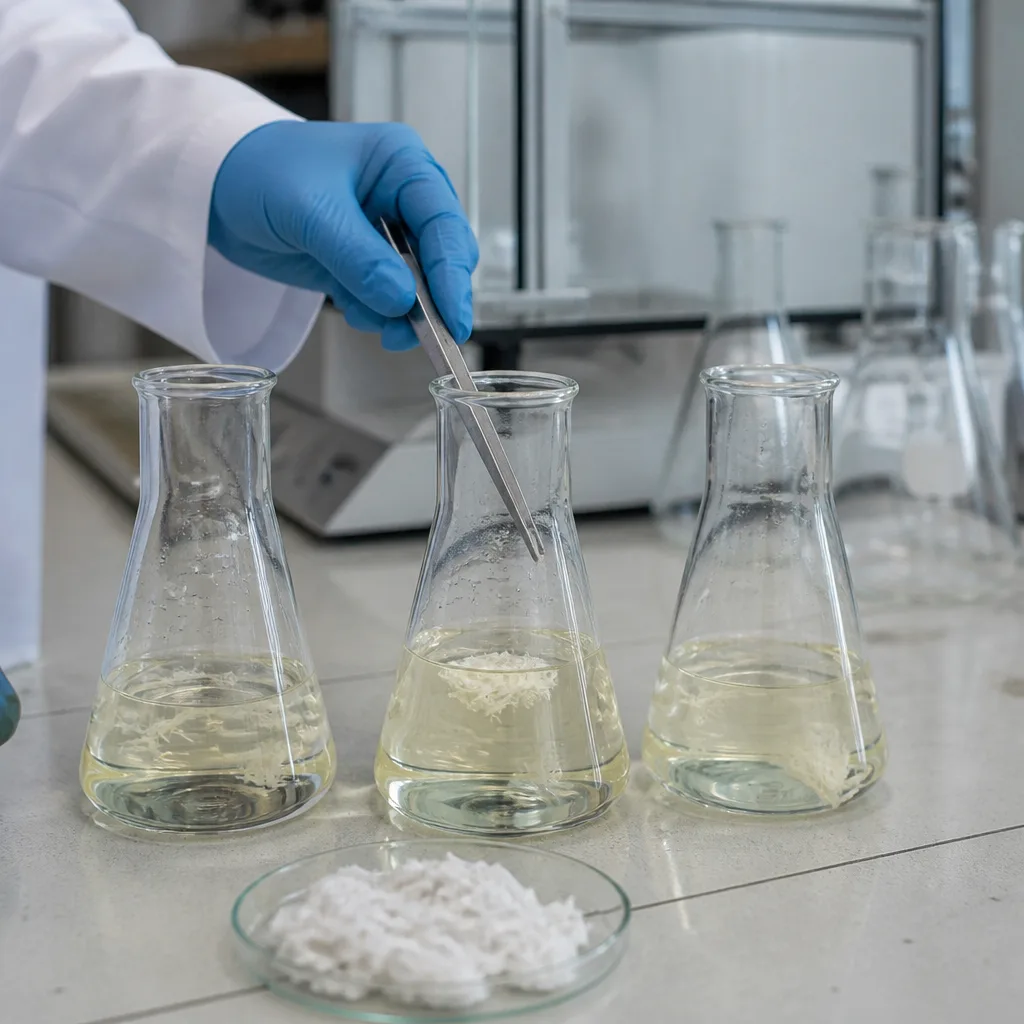
The dichloromethane (methylene chloride) method refers to a quantitative chemical analysis procedure used in the textile industry to determine the composition of fiber blends. The working principle of this method is as follows:
- Textile samples (yarn or fabric) are first pre-treated to remove non-fibrous substances (oils, waxes, finishing agents).
- The sample is weighed (on a dry basis).
- Triacetate (or polylactide) fibers are selectively dissolved by treatment with dichloromethane (methylene chloride), leaving most other common fibers (such as cotton, polyester, wool, and viscose) insoluble.
- The insoluble residue is filtered, washed, dried, and weighed.
- The percentage of dissolved component (triacetate or polylactide) is calculated from the mass loss, along with possible corrections for the small solubility of other fibers or moisture recovery.
This technique is a classic gravimetric (weight-based) analysis technique widely used in textile testing laboratories for fiber content labeling, quality control, and recycling purposes.
Dichloromethane is an effective solvent for cellulose triacetate because it can dissolve the triacetate polymer well at room temperature or slightly higher, while it has a limited effect on many other synthetic or natural fibers. It is a volatile, chlorinated solvent (boiling point around 40 degrees). However, dichloromethane is a volatile organic compound with health risks (it is a suspected carcinogen and may affect the central nervous system and produce carbon monoxide in the body).
The dichloromethane method is used in the following areas:
- Textile analysis (fiber identification, finishing extraction, coating extraction)
- Plastic tests
- Paint/coating analysis
- Adhesive tests
- Pollution analysis
- Polymer composition studies
This method can help determine the following:
- Percentage composition of the mixtures
- Presence of finishing or processes
- Removable fiber-free material
In short, the DIN 54211 standard is necessary because it is surprisingly easy to obtain incorrect results in textile testing when everyone uses their own proprietary method. Without a standard, two laboratories could test the same fabric and produce different results simply due to different sample preparation, conditioning, equipment settings, or evaluation criteria. The main reasons why the DIN 54211 standard is considered important are as follows:
- It produces reliable and repeatable results: This standard precisely defines how a textile property should be tested. This reduces variation resulting from:
- Operator technique
- Laboratory environment
- Equipment differences
- Sample processing
- Maintains product quality: Textile products must meet the following performance expectations:
- Durability
- Preserving the appearance
- Dimensional stability
- Chemical resistance
- Security requirements
The DIN 54211 standard helps identify material problems before products reach customers.
- Supports fair supplier comparison: A manufacturer sourcing fabric from multiple suppliers needs objective data. This standard allows for direct comparison because all suppliers are evaluated using the same methodology. This is particularly important in sectors with stringent quality requirements, such as:
- Automotive textiles
- Medical textiles
- Protective clothing
- Industrial fabrics
- Reduces commercial disputes: Without standardized tests, disputes between suppliers and buyers are common. This standard reduces disputes and warranty claims by providing a mutually accepted reference method.
- It ensures compliance with legal regulations and contracts: Many procurement specifications and technical contracts explicitly refer to DIN and ISO standards or customer-specific requirements. Therefore, compliance with the DIN 54211 standard may be necessary for:
- Supplier approval
- Product certification
- Export requirements
- Quality control checks
In conclusion, the DIN 54211 standard is part of a structured textile testing framework and helps laboratories and manufacturers evaluate textile materials consistently and reliably. By defining a uniform method, this standard reduces standardization ambiguity, improves quality assurance, and strengthens trust in textile supply chains.
For many years, our organization, with its competent and experienced staff, has been understanding the needs of its clients, providing the advanced testing services they require, and assisting them in the establishment, implementation, and improvement of management systems. Within this framework, we also provide testing services in accordance with the DIN 54211 standard.



