

The standard “DIN 53530 Testing of organic materials - Separation test of bonded fabric layers”, published by the German Institute for Standardization (DIN), describes a separation (peeling or delamination) test method for determining the adhesion strength between fabric layers bonded together using elastomers (e.g., rubber) or other adhesive layers.
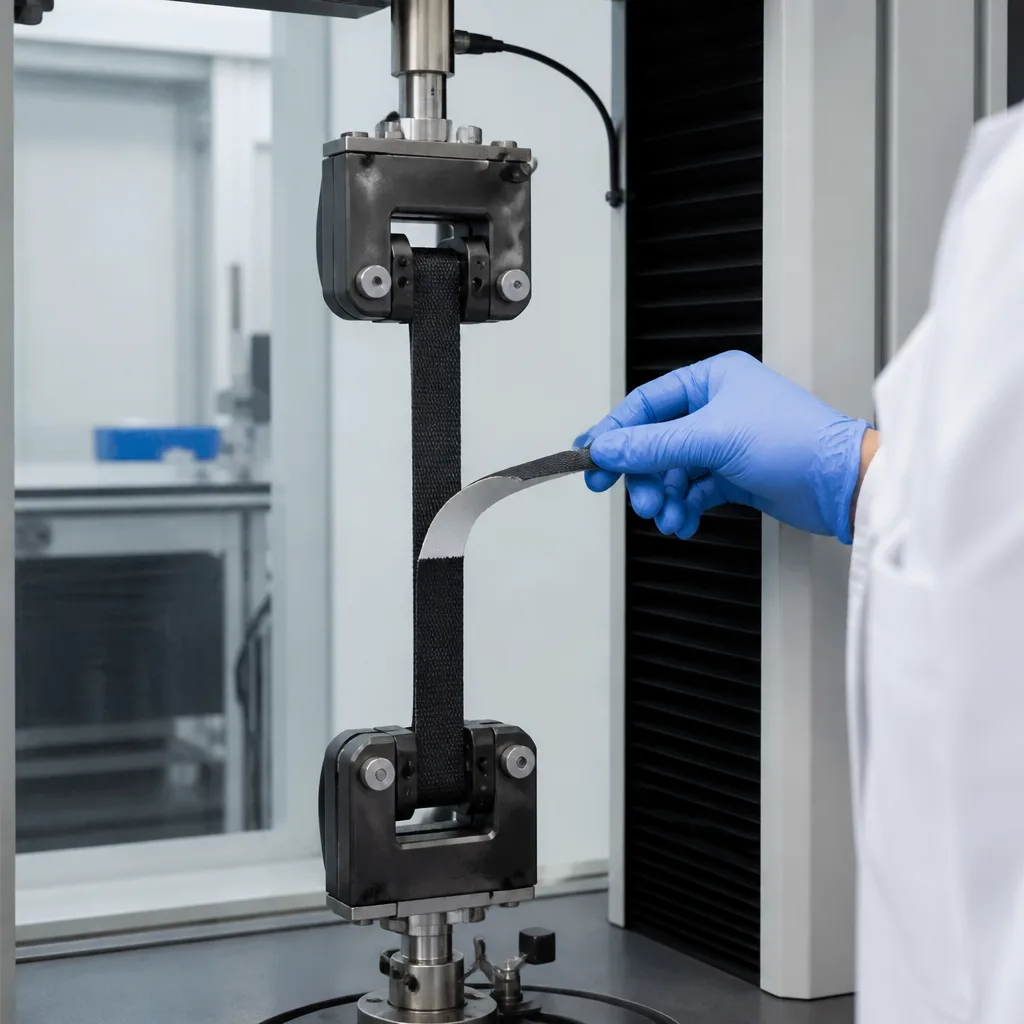
This standard is used to evaluate how well multiple layers of fabric (or fabric bonded with elastomeric materials) adhere in bonded composites. This is critical for products where delamination can lead to failure. For example,
This test method measures the force required to separate bonded layers and provides a quantitative value for adhesion strength (usually expressed in N/mm³ or similar units). This method is sometimes also called a T-peel or separation test.
This testing process generally follows these steps:
This method is particularly important for quality control in the rubber and technical textile industries. Today, it is still used as a reference in testing laboratories for technical textiles, protective clothing, and rubber products.
The DIN 53530 standard is often used in conjunction with other rubber testing standards, such as those listed below:
International equivalents are generally found under the ISO or ASTM series for rubber adhesion tests.
This standard is generally applied in the following areas:
Accredited laboratories for physical textile and rubber testing frequently offer the DIN 53530 standard as part of their service portfolio.
In short, DIN 53530 is an industry standard that specifies methods for determining the tear resistance of rubber materials. Tear resistance is a critical mechanical property that indicates how well a rubber product can resist the formation of cuts, cracks, or notches under tension.
The primary purpose of the DIN 53530 standard is to provide a standardized and repeatable method for evaluating how rubber behaves when subjected to tear forces. This standard provides:
The DIN 53530 standard applies to a wide variety of rubber materials, including the following:
The test defined in the DIN 53530 standard measures the force required to propagate a tear in a prepared rubber sample.
The DIN 53530 standard includes different test configurations depending on the material and application:
Each method is designed to simulate different real-world stress conditions.
The main parameters measured by this test are:
This standard is important for the following reasons:
Factors affecting tear resistance include:
In conclusion, the DIN 53530 standard is a fundamental standard for evaluating the tear resistance of rubber materials and ensures durability, safety, and performance in a wide variety of industrial applications. By providing a consistent test methodology, it supports both quality assurance and material innovation in the rubber industry.
For many years, our organization, with its competent and experienced staff, has been understanding the needs of its clients, providing the advanced testing services they require, and assisting them in the establishment, implementation, and improvement of management systems. Within this framework, we also provide testing services in accordance with the DIN 53530 standard.
To get an appointment, to get more detailed information or to request an evaluation, you can ask us to fill in our form and reach you.

