

The German Standards Institute (DIN) standard, “DIN 54040 Color fastness of textiles - Determination of color fastness of dyes and prints to alkaline grinding (mild)”, describes a laboratory test method for evaluating how well dyed or printed textiles (especially wool and wool blend fabrics) resist color change and staining when exposed to mild alkaline grinding conditions. This method is used in wool processing, where grinding, a traditional wet finishing process, involves mechanically agitating fabrics in alkaline solutions to tighten, shrink, and soften them.
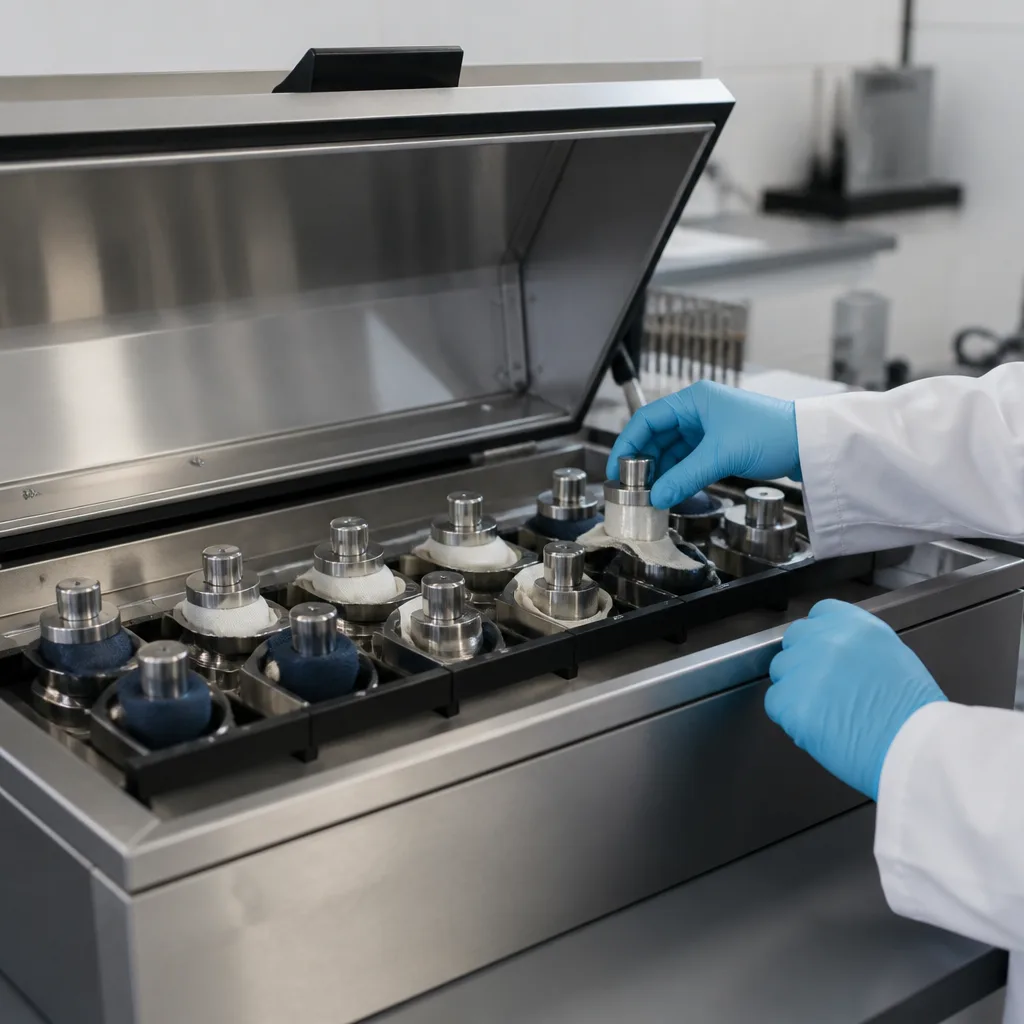
The DIN 54040 standard and similar color fastness tests ensure that dyed textiles retain their appearance and performance during production, finishing, and end-use. Alkaline scouring is a critical step in wool fabric production. Poor fastness can lead to:
This testing method is particularly important for high-quality woolens, worsteds, and blends used in clothing, blankets, and interior textiles where alkaline treatment is common.
This method simulates real-world alkaline grinding under controlled, mild conditions:
This test method is deliberately mild to represent less aggressive alkaline processing conditions compared to more aggressive felting or heavy grinding.
Although this standard has been withdrawn, it is still referenced. In practice, the “DIN EN ISO 105-E12 Textiles - Color fastness tests - Part E12: Color fastness to grinding: alkaline grinding” standard is recommended as a replacement. This ISO standard is technically equivalent and is the globally recognized version used by laboratories worldwide.
The DIN 54040 standard is part of a broader framework of textile testing standards and is commonly used in conjunction with:
Together, these standards provide a comprehensive understanding of textile durability.
Although the DIN 54040 standard is no longer an active standard, it remains an important historical reference for understanding alkali milling fastness in wool and wool blend textiles. Today, laboratories and manufacturers rely on the existing ISO 105-E12 method, which continues to ensure that dyed textiles can withstand the rigors of traditional wool finishing processes without compromising color quality.
In short, the DIN 54040 standard focuses on testing the color fastness and resistance properties of textiles, particularly under specific environmental or chemical conditions. This standard defines test methods used to evaluate the behavior of dyed or printed textiles when exposed to specific agents or conditions. These may include:
The aim is to determine whether a textile's color possesses the following characteristics:
The DIN 54040 standard specifies the following under controlled test conditions:
This ensures reproducibility and comparability between laboratories.
Tests conducted according to the DIN 54040 standard typically involve adjacent fabrics (e.g., cotton, wool, synthetic fibers). The grey scales used for evaluation identify color change and staining.
Results are generally evaluated using internationally accepted scales that are consistent with the following:
The DIN 54040 standard is widely used in the following areas:
The DIN 54040 standard addresses real, recurring problems in textile production and use. Without this standard, manufacturers would struggle to prove that their materials behave reliably when exposed to chemicals or real-life conditions. The main reasons why this standard is considered so necessary are as follows:
DIN 54040 is essential because it ensures that textiles maintain color integrity under realistic conditions, while providing the industry with a reliable, standardized way to test and compare performance. Otherwise, quality becomes inconsistent, risks increase, and confidence in textile products decreases.
Many industries (particularly the automotive and export apparel sectors) require compliance with recognized standards such as DIN 54040 to meet contractual or regulatory requirements.
In conclusion, the DIN 54040 standard plays a crucial role in ensuring the color fastness and reliability of textiles under specific conditions. By providing a structured and repeatable testing method, it supports manufacturers, suppliers, and quality engineers in delivering products that meet both technical specifications and customer expectations.
For many years, our organization, with its competent and experienced staff, has been understanding the needs of its clients, providing the advanced testing services they require, and assisting them in the establishment, implementation, and improvement of management systems. Within this framework, we also provide testing services in accordance with the DIN 54040 standard.
To get an appointment, to get more detailed information or to request an evaluation, you can ask us to fill in our form and reach you.

