

The ASTM D5199 standard test method for measuring the nominal thickness of geosynthetics, developed by the American Society for Testing and Materials (ASTM), describes a test method for measuring the nominal thickness of geosynthetics, except for textured and some structured geomembranes where the entire surface of the pressure foot cannot achieve full contact with the geosynthetic surface. This test method does not provide thickness values for geosynthetics under varying normal compressive stresses. This test method determines the nominal thickness, not the minimum thickness.
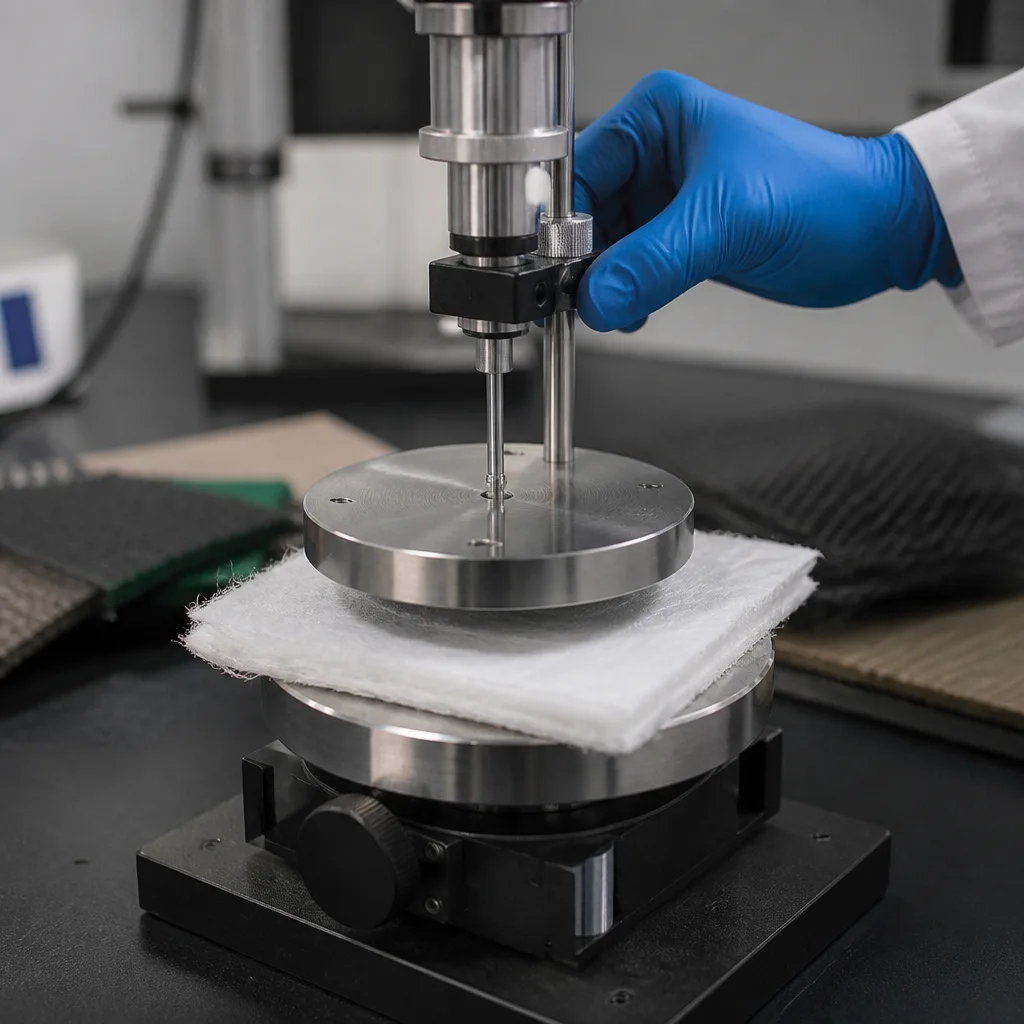
Thickness is one of the fundamental physical properties used to control the quality of many geosynthetics. Thickness values may be necessary for calculating some geosynthetic properties such as permeability and tensile stress. The thickness of some geosynthetics can vary significantly depending on the applied normal load. In this method, the specific pressures and surfaces to which they are applied are specified to ensure that all results are comparable.
This test method can be used for acceptance testing of commercial geosynthetic shipments where this method is applicable. The compressibility, rebound properties, and other factors of some materials can affect the thickness of geosynthetics after rolling, shipping, and storage.
ASTM D5199 is a widely used test standard developed for determining the nominal thickness of geosynthetic materials. This method provides a consistent procedure for measuring thickness under specified loading conditions, allowing manufacturers, laboratories, engineers, and end-users to compare products using standardized data.
Values reported as nominal thickness provide accurate and repeatable thickness measurements. Unlike the procedure described here, since many geosynthetics are compressible and their thicknesses vary under load, the ASTM D5199 standard specifies precise loading conditions to improve consistency between laboratories. This method is also used to evaluate field performance. It is also used for the specification and evaluation of geosynthetic materials.
In short, the ASTM D5199 standard contains the standard test method used to determine the nominal thickness of geosynthetics. Thickness is a fundamental physical property used in quality control, in calculating specific mechanical and hydraulic properties (such as permeability), and in ensuring compliance with engineering specifications.
This testing method is applicable to most geosynthetics, but specific equipment parameters vary depending on the type of material:
For structured or highly textured geomembranes, or some thicker geocomposites, alternative standards may be required to address irregular surface profiles (such as ASTM D5994 or ASTM D6525 standards).
Testing equipment and basic parameters The test uses a thickness gauge (pressure foot assembly) that applies a specific and controlled pressure to the sample. Since geosynthetics (especially non-woven geotextiles) are compressible, the applied pressure and foot size are tightly regulated to ensure reproducible results. Standard loading conditions are as follows:
To avoid spring tension variations found in standard handheld micrometers, pressure should be applied via a weighted system. The measuring device should be able to provide readings with an accuracy of at least 0,01 mm.
The testing procedure generally follows these steps:
The key aspects of this standard are as follows:
Although thickness may seem like a simple dimension, it is a critical fundamental property in geotechnical engineering. For geosynthetics, nominal thickness is a way to determine how a material will perform under structural loads and fluid flow. This standard is considered so important for the following reasons:
Consequently, without the ASTM D5199 standard, there cannot be a standardized method for verifying the physical dimensions of compressible polymers. This standard provides the legal and technical basis to ensure that the material specified in an engineer's plan matches the material delivered to the construction site.
For many years, our organization, with its competent and experienced team, has been understanding the needs of its clients, providing the advanced testing services they require, and assisting them in the establishment, implementation, and improvement of management systems. Within this framework, we also provide testing services in accordance with the ASTM D5199 standard.
To get an appointment, to get more detailed information or to request an evaluation, you can ask us to fill in our form and reach you.

