

The standard “DIN 54220 Textile Tests - Quantitative analysis of binary blends - Mixture of polyamide 6.6 or polyamide 6 fibers with other fibers - Formic acid method”, published by the German Institute for Standardization (DIN), describes a chemical method for quantitatively determining the ratio of polyamide 6 (PA 6, nylon 6) or polyamide 6.6 (PA 6.6, nylon 6.6) fibers in binary textile blends with other fiber types.
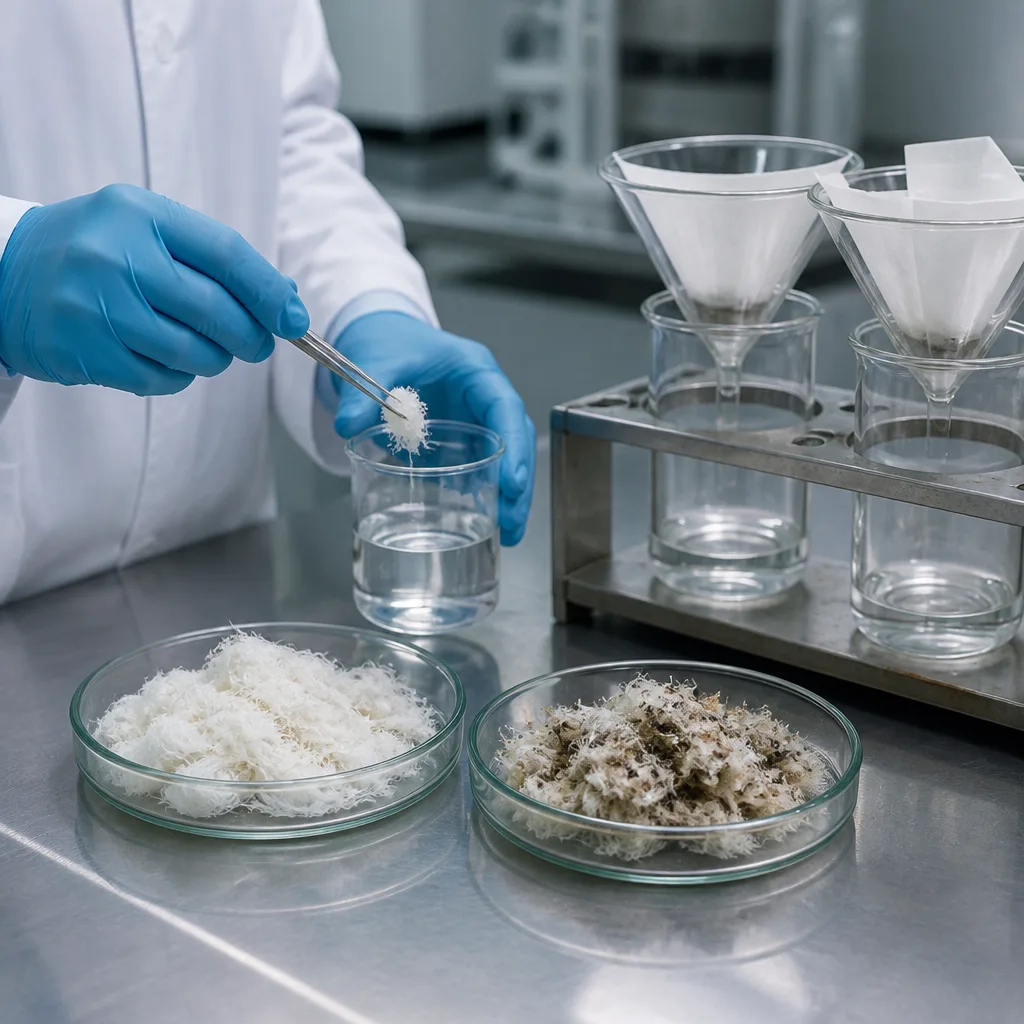
This method uses formic acid to selectively dissolve polyamide fibers while leaving other fibers (such as cotton, wool, and polyester) largely intact. The mass difference before and after dissolution allows for the calculation of the percentage composition. This standard is part of a series of DIN standards developed for the quantitative chemical analysis of textile fiber blends using various solvents.
In the textile industry, the correct fiber composition is essential for:
Polyamides are commonly used in blends for flexibility, strength, or softness, and this method provides a reliable way to verify the ratios.
DIN 54220 is an older national standard and has been largely replaced or harmonized with the international “EN ISO 1833 Textiles - Quantitative chemical analysis” series of standards. Specifically, it is equivalent to the standard “EN ISO 1833-7 Textiles - Quantitative chemical analysis - Part 7: Mixtures of polyamide with certain other fibers (using the formic acid method)”. Many laboratories and manufacturers now refer to this version for global harmonization, but the basic formic acid dissolution principle remains the same.
The evaluation typically uses grayscale grading systems to measure the following:
Full details, safety precautions (formic acid is corrosive), and correction factors are included in the standard.
In short, the DIN 54220 standard is an industry standard used in the textile sector to evaluate how textile materials react when exposed to artificial perspiration. Because clothing, upholstery, and many textile products are in direct or prolonged contact with human skin, they are regularly exposed to perspiration containing salt, acid, and moisture. This standard helps manufacturers determine whether fabrics and dyes can withstand these conditions without unacceptable changes.
The primary aim of this standard is to simulate the effects of human sweat on textiles under controlled laboratory conditions. Sweat can affect fabrics in a variety of ways:
This standard provides a repeatable method for exposing textiles to artificial acidic or alkaline sweat solutions and then evaluating changes in the material.
According to the DIN 54220 standard, textile samples are treated with artificial sweat solutions designed to mimic the chemistry of real sweat. Two types are commonly used:
The DIN 54220 standard is particularly important for testing the following products:
Products that are exposed to excessive sweating, friction, or prolonged skin contact will particularly benefit from this test.
The DIN 54220 standard is necessary because perspiration is one of the most common real-world stress factors affecting textiles. If proper testing is not carried out,
The DIN 54220 standard helps to standardize the sweat resistance test, thereby ensuring the following:
In conclusion, the DIN 54220 standard plays a significant role in textile quality assurance by providing a standardized way to test the behavior of textiles under exposure to perspiration. As consumers increasingly demand durable, colorfast, and skin-friendly textiles, this standard remains a useful tool for manufacturers, testing laboratories, and quality control professionals.
For many years, our organization, with its competent and experienced staff, has been understanding the needs of its clients, providing the advanced testing services they require, and assisting them in the establishment, implementation, and improvement of management systems. Within this framework, we also provide testing services in accordance with the DIN 54220 standard.
To get an appointment, to get more detailed information or to request an evaluation, you can ask us to fill in our form and reach you.

