

The "BS 4745 Determination of heat resistance of textile materials - Two-plate method: constant pressure procedure, two-plate method: constant gap procedure and single-plate method" standard, developed by the British Standards Institute (BSI), is aimed at determining the heat resistance of textiles.
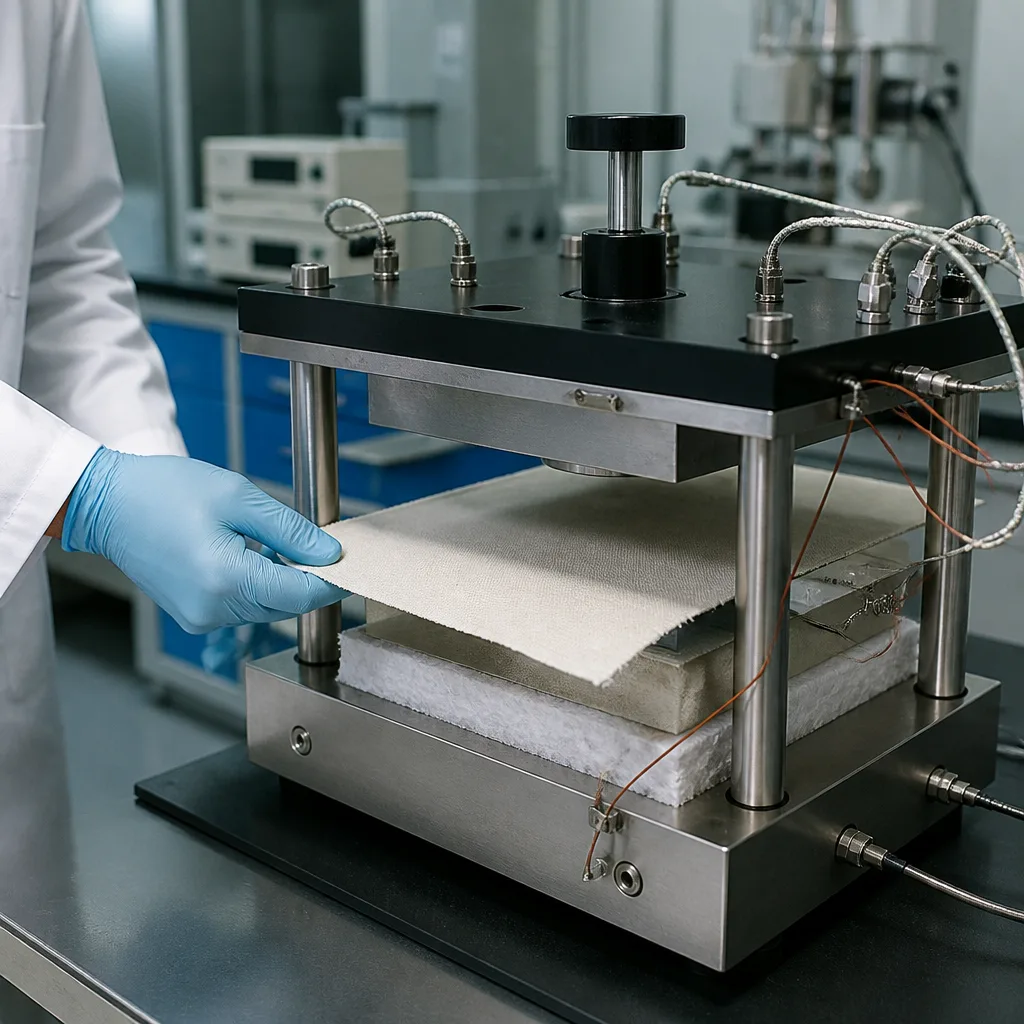
The BS 4745 standard specifies three methods for determining the resistance of fabrics, fabric aggregates, or sheet fiber aggregates to heat conduction under steady-state conditions:
These methods are applicable to materials with a thermal resistance of approximately 0,2 m² · K/W. These methods are suitable for materials up to 20 mm thick (beyond this thickness, edge losses become significant). Recommendations on suitable components for the device's construction and methods for calculating thermal conductivity are included in the standard annex (Annex A and Annex B).
Either two-plate method is suitable for materials whose outer surfaces are protected from ambient air during use (e.g., a blanket covered with a bedspread). The single-plate method is suitable for materials whose outer surfaces are exposed to ambient air during use (e.g., bedspreads and outerwear). Two-plate methods are generally preferred for their accuracy and repeatability.
In short, the BS 4745 standard includes laboratory methods for determining the heat resistance of textiles. Heat resistance is one of the most important performance characteristics of fabrics because it measures how effectively a textile resists heat flow and provides insulation. This standard is widely used by textile manufacturers, testing laboratories, research institutions, and quality assurance organizations to evaluate the thermal comfort of fabrics designed for clothing, bedding, upholstery, technical textiles, and insulation products.
The primary aim of the BS 4745 standard is to provide a consistent and repeatable method for measuring how well a textile material resists heat transfer under constant conditions. Heat resistance directly affects:
This standard standardizes the testing process, allowing manufacturers and customers to compare products using the same measurement criteria.
The BS 4745 standard applies to the following:
The methods are suitable for materials with heat resistance up to approximately 0,2 m² · K/W and thicknesses up to approximately 20 mm. Beyond this thickness, edge heat losses may affect measurement accuracy.
The BS 4745 test measures the amount of heat that passes through a textile sample placed between heated and cooled plates. When thermal equilibrium is reached:
The BS 4745 standard defines three test methods:
The single-plate method generally better represents real-world use cases for exposed textiles.
Prior to testing, samples are conditioned under controlled laboratory conditions to minimize the effects of humidity and environmental variability. Standard atmospheric conditioning ensures that results from different laboratories remain comparable.
In general, the tests follow these steps:
Thermal resistance is calculated according to the formula given in the standard. Higher values indicate better thermal insulation.
The BS 4745 standard is widely used in the evaluation of the following:
The sectors that benefit from the BS 4745 standard are as follows:
The BS 4745 standard offers several advantages:
The BS 4745 standard is closely aligned with the “ISO 5085-1 Textiles - Determination of heat resistance - Part 1: Low heat resistance” standard, which specifies similar methods for measuring textile thermal resistance.
In conclusion, the BS 4745 standard is important for determining the thermal resistance of textiles under controlled laboratory conditions. By providing standardized methods using two-plate and single-plate devices, it enables accurate assessment of textile insulation performance in a wide variety of products. This standard supports manufacturers in product development, quality assurance, and regulatory compliance, while helping consumers and industries compare textile materials based on objective thermal performance data.
For many years, our organization, with its competent and experienced staff, has been understanding the needs of its clients, providing the advanced testing services they require, and assisting them in the establishment, implementation, and improvement of management systems. Within this framework, we also provide testing services compliant with the BS 4745 standard.
To get an appointment, to get more detailed information or to request an evaluation, you can ask us to fill in our form and reach you.

