

The standard “DIN 54206 Textile tests - Quantitative analysis of binary blends - Mixture of protein fibers with other fibers - Hypochlorite method”, published by the German Institute for Standardization (DIN), describes a chemical method for quantitatively determining the composition of binary fiber blends containing protein fibers (such as wool, silk or other animal fibers) and other fibers (e.g., cellulosic fibers such as cotton or viscose, synthetics such as polyester).
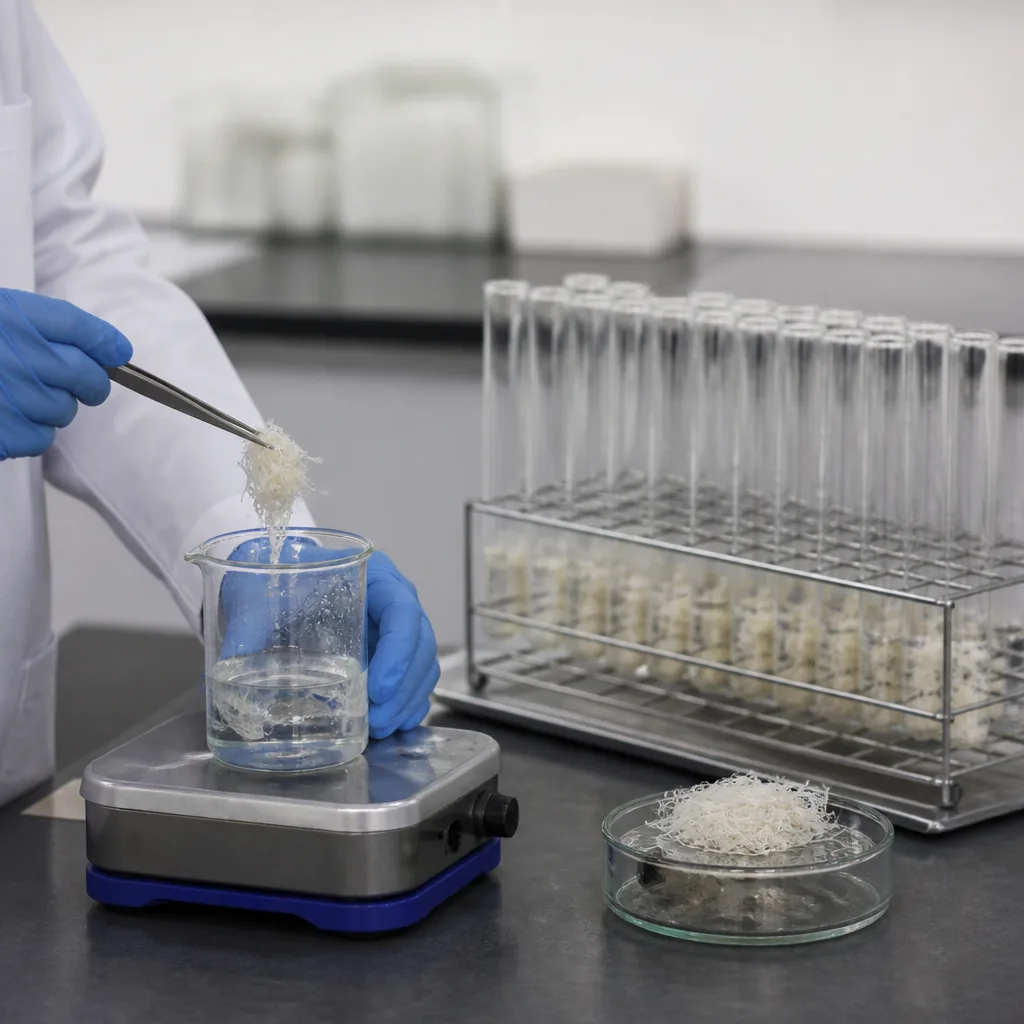
This method is based on the hypochlorite method. A sodium hypochlorite solution selectively dissolves or breaks down protein fibers while leaving most non-protein fibers largely intact. By weighing the sample before and after processing (and applying correction factors for the small dissolution of the non-protein component), laboratories can calculate the exact percentage of each fiber type in the mixture.
This standard belongs to a set of DIN methods for the quantitative chemical analysis of textile fiber blends. Different reagents target specific fiber types:
These types of tests are important in the textile industry for the following reasons:
This method involves treating a conditioned sample with an alkaline sodium hypochlorite solution under controlled conditions (time, temperature, concentration). After the protein component dissolves, the residue is rinsed, dried, and weighed. The results are expressed as a percentage by mass, with corrections applied for the partial solubility of the second fiber type.
In short, the DIN 54206 standard is an industry standard used in the textile industry to evaluate how fabrics react when exposed to artificial perspiration. Since clothing, upholstery, and other textiles regularly come into contact with human sweat, this standard helps manufacturers assess whether materials maintain their appearance, color, and structural integrity under realistic conditions of use.
The main purpose of the DIN 54206 standard is to determine the perspiration resistance of textile products, focusing particularly on the following:
Human sweat contains salts, acids, and other compounds that can accelerate textile degradation or cause discoloration. The DIN 54206 standard simulates these conditions in a controlled laboratory environment.
According to the DIN 54206 standard, textile samples are generally treated with an artificial perspiration solution prepared in one of the following solutions:
This method generally follows these steps:
The typical rating range is as follows:
A higher rating indicates better sweat resistance.
The DIN 54206 standard is widely used in the following areas:
Manufacturers typically conduct this testing during product development to ensure compliance with customer specifications and retailer requirements.
The DIN 54206 standard is necessary because perspiration is one of the most common real-life stress factors for textiles. A fabric may look perfect when new, but if its dyes bleed, fade, or stain after contact with sweat, its practical value quickly decreases. This standard is considered important for the following reasons:
This is especially important for dark-colored clothing, sportswear, and denim fabrics.
In conclusion, the DIN 54206 standard provides a practical and reproducible method for evaluating textile behavior under exposure to perspiration. By simulating realistic perspiration conditions, the standard supports manufacturers in producing textiles that are more durable, have higher color stability, and are suitable for everyday and performance applications.
This standard has been repealed and replaced by the “ISO 1833 Textiles - Quantitative chemical analysis” standard.
For many years, our organization, with its competent and experienced staff, has been understanding the needs of its clients, providing the advanced testing services they require, and assisting them in the establishment, implementation, and improvement of management systems. Within this framework, we also provide testing services in accordance with the DIN 54206 standard.
To get an appointment, to get more detailed information or to request an evaluation, you can ask us to fill in our form and reach you.

