

The standard “DIN 53814 Textile tests - Determination of water retention capacity of fiber and yarn segments”, published by the German Institute for Standardization (DIN), describes a test method for measuring the water retention value, also known as water retention power or water retention capacity, of textile fibers and short yarn segments.
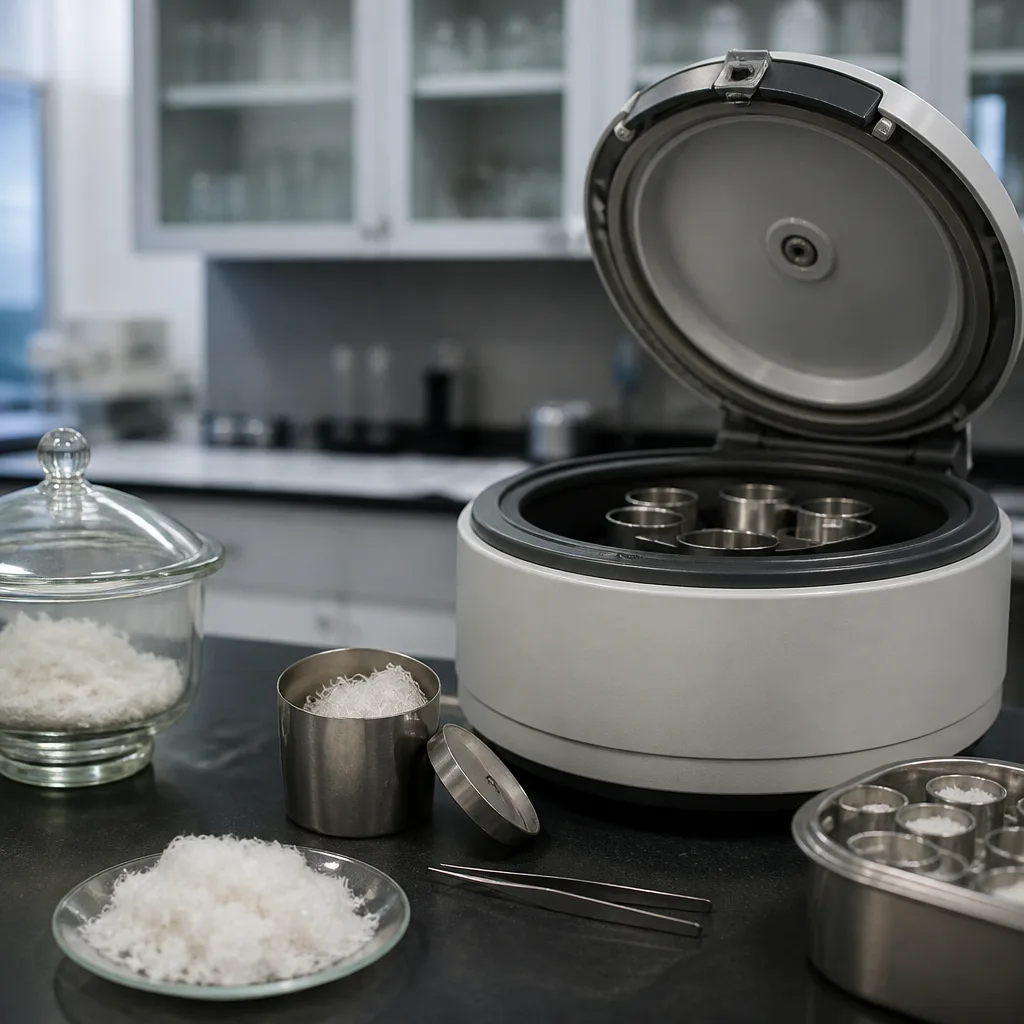
Water retention value measures the amount of water that fibers can retain internally (within the fiber structure, including swelling) after excess surface and interfiber water (held by capillary forces) has been removed by centrifugation. This method serves as an important indicator for:
This method is particularly applicable to natural and synthetic cellulose fibers, but it has been applied to various fiber types in research and quality control.
The testing method generally follows these steps:
Typical water retention values vary greatly depending on the fiber type. For example, highly absorbent regenerated viscose fibers may show values between 70-110 percent, while other fibers may range from 6-50 percent in certain applications.
This test separates the internal (swelling) water from the external capillary water, making it useful for characterizing fiber morphology and processing effects (e.g., beating/refining in pulp or fibrillation in lyocells).
The DIN 53814 standard has been repealed; however, it is frequently referenced in scientific papers, patents, and textile research (especially for cellulose and regenerated fibers) as a historical or practical method for determining water retention values.
Today, the “ISO 23714 For Celluloses - Determination of Water Retention Value” standard is equivalent to this standard and uses a similar centrifuge principle.
Researchers and manufacturers use this method in the following areas:
In short, the DIN 53814 standard outlines a methodology focused on testing the behavior of textiles under mechanical stress, particularly regarding seam strength and fabric durability. It is widely applied in textile engineering, garment manufacturing, and quality assurance processes.
The main objectives of the DIN 53814 standard are as follows:
This standard is particularly important in industries where seam failure can lead to product failure or safety risks.
The DIN 53814 standard applies to the following:
This standard is commonly used in the following areas:
The DIN 53814 standard defines a method for determining weld strength by applying a controlled tensile force until fracture occurs. The basic parameters measured using this method are:
The DIN 53814 standard is considered important for the following reasons:
The main advantages of this standard are:
However, there are some limitations:
In conclusion, the DIN 53814 standard plays a crucial role in the textile industry by providing a reliable method for evaluating seam strength and durability. By ensuring that seamed areas perform well under stress, it supports the production of high-quality, safe, and long-lasting textile products in various sectors.
For many years, our organization, with its competent and experienced staff, has been understanding the needs of its clients, providing the advanced testing services they require, and assisting them in the establishment, implementation, and improvement of management systems. Within this framework, we also provide testing services in accordance with the DIN 53814 standard.
To get an appointment, to get more detailed information or to request an evaluation, you can ask us to fill in our form and reach you.

