

The European standard “EN 13252 Geotextiles and geotextile-related products - Requirements for use in drainage systems” describes the relevant properties of geotextiles and geotextile-related products used in drainage systems and the appropriate test methods for determining these properties.
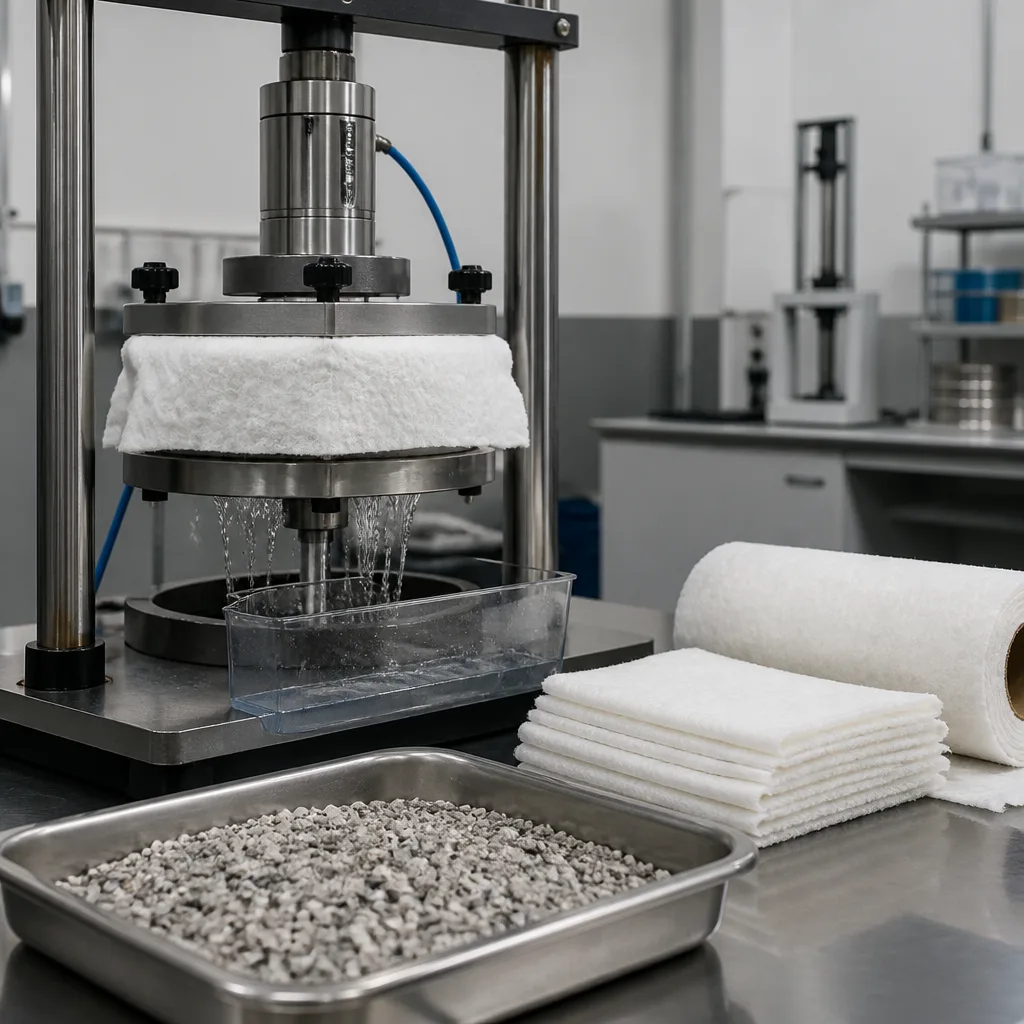
The intended use of this geotextile or geotextile-related products is to perform one or more of the following functions: filtration, separation, and drainage. The separation function is always used in conjunction with filtration or drainage. Accordingly, separation is never specified alone.
This standard does not apply to geosynthetic barriers as defined in EN ISO 10318 1. This standard provides for the evaluation and verification of the product's consistent performance according to this standard, as well as factory production control procedures.
The EN 13252 standard defines the requirements that manufacturers and distributors must meet regarding the presentation of product specifications. Specific application cases may include requirements for additional specifications and, preferably, standardized test methods, where technically relevant.
In short, the EN 13252 standard covers the relevant properties of geotextiles and geotextile-related products (e.g., geocomposites) used in drainage systems in civil engineering and geotechnical applications. This standard defines the properties these materials must possess to perform reliably and the appropriate test methods to verify these properties.
Geotextiles typically perform three main functions in drainage systems:
Separation is almost always combined with filtration or drainage and is never mentioned in isolation.
This standard applies to geotextiles and related products used in drainage systems where the material is in contact (on at least one side) with soil, other materials, or geosynthetics for fluid intake and transport. Examples include:
This standard does not directly cover erosion control functions (these are covered by separate standards such as EN 13253), but integrated systems may need to meet additional requirements.
The EN 13252 standard arranges the properties in a table according to their level of importance:
The main characteristics and their associated test methods have been defined as follows:
Additional features (relevant where applicable) include:
Durability, as assessed according to Annex B, encompasses aspects such as resistance to weathering, chemicals, biological degradation, and hydrolysis.
The main reasons why this standard is considered important are as follows:
This standard emphasizes that a specification document for a project must clearly define the required functions and conditions of use.
The EN 13252 standard is part of a harmonized family of European standards for geotextiles and geosynthetics:
For many years, our organization, with its competent and experienced staff, has been understanding the needs of its clients, providing the advanced testing services they require, and assisting them in the establishment, implementation, and improvement of management systems. Within this framework, we also provide testing services in accordance with the EN 13252 standard.
To get an appointment, to get more detailed information or to request an evaluation, you can ask us to fill in our form and reach you.

