

The standard “DIN 53359 Testing of artificial leather and similar sheet materials - Flexible cracking test”, published by the German Institute for Standardization (DIN), describes a test method for evaluating the flexible cracking resistance (repeated bending or flexible cracking behavior) of artificial leather (synthetic leather), imitation leather, and similar flexible sheet materials. These materials are commonly used in upholstery, automotive interiors, clothing, footwear, bags, and other products where the material is repeatedly bent or folded during use.
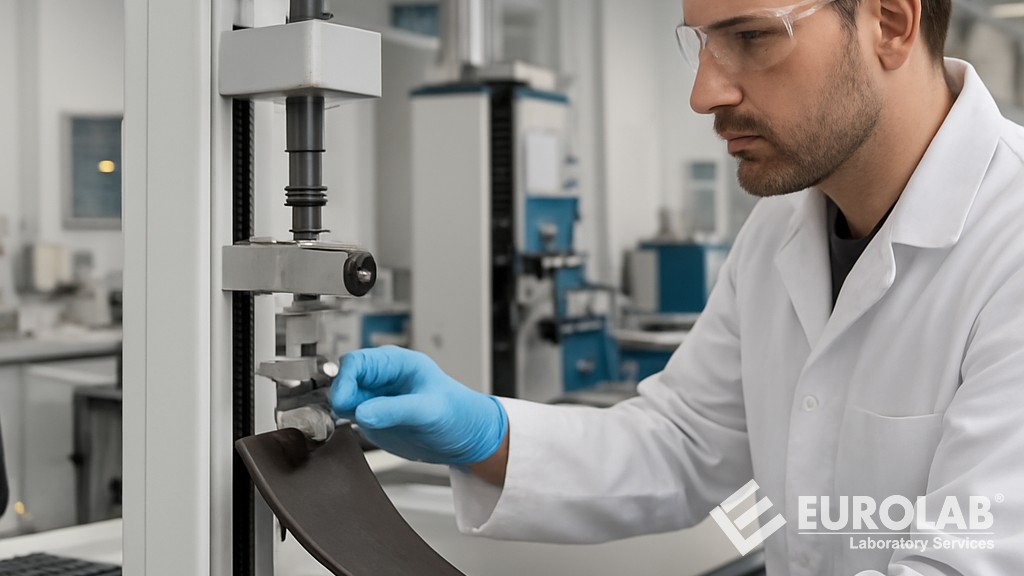
This standard helps manufacturers and quality control laboratories assess how well these coated or laminated fabrics withstand repetitive mechanical stress without cracking, breaking, or surface damage.
This testing method simulates real-world conditions where materials are subjected to repeated bending, folding, or stretching (e.g., shoe uppers, seat covers, or bags). It determines the number of flexural cycles a material can withstand before visible cracking occurs.
The results of this test can be used to evaluate products manufactured according to relevant standards such as DIN 16922 (for plastic films and sheets in some contexts).
This test involves mounting strip-shaped samples of the material onto a specialized flexible crack testing machine (in some setups a flexometer or low-temperature flexible tester). The machine repeatedly bends the sample at a specific angle (typically 180 degrees or a similar sharp fold) at a controlled frequency.
Generally, the basic parameters include the following:
The material passes or fails based on criteria such as the following:
The tests are conducted using commercial flexible crack testing machines conforming to the DIN 53359 standard. These machines compress the sample and perform thousands of repetitive stretching movements, allowing for visual inspection or automated fault detection.
The areas of application of this standard are:
Materials that perform poorly in this test can lead to premature failures in use, causing aesthetic defects (cracking) or functional problems (water leakage if the coating breaks). Compliance with the DIN 53359 standard helps ensure durability and quality, especially for products subjected to frequent bending.
Flexible crack testing is a mechanical durability test used to evaluate the resistance of materials to cracking when subjected to repeated bending or stretching. It is commonly applied to coated fabrics, synthetic leather, plastics, rubber materials, and polymer films that are subjected to continuous stretching during use.
Materials used in automotive interiors, upholstery, footwear, and protective coatings are often subjected to repeated deformation. Over time, this repeated bending can lead to surface cracks, coating failure, or structural damage. Flexible cracking testing simulates these conditions in a controlled laboratory environment.
The main purposes of flexible crack testing are as follows:
Manufacturers use the results to predict long-term performance in real-world applications.
In a flexible crack test, a specimen is repeatedly bent, folded, or stretched using a specialized testing machine called a flexometer. Generally, the testing process follows these steps:
The number of cycles a material can withstand before cracking indicates its resilience.
Typical tensile crack testing equipment includes:
This machine is designed to apply repetitive bending under controlled speed and deformation conditions.
The results are generally expressed as follows:
Some standards classify results using crack grading scales.
Flexible cracking tests are widely used in industries where materials are subjected to repeated deformation:
High elastic crack resistance provides the following:
In materials with low elastic crack resistance, visible cracks, peeling, or coating separation may occur, leading to premature product failure.
In conclusion, the DIN 53359 standard, flexible crack testing, is an important method for evaluating the durability of flexible materials under repeated bending stress. This test simulates real-life mechanical deformation, helping manufacturers design materials that provide better crack resistance, longer lifespan, and reliable performance in demanding applications.
For many years, our organization, with its competent and experienced staff, has been understanding the needs of its clients, providing the advanced testing services they require, and assisting them in the establishment, implementation, and improvement of management systems. Within this framework, we also provide testing services in accordance with the DIN 53359 standard.
To get an appointment, to get more detailed information or to request an evaluation, you can ask us to fill in our form and reach you.

