

The ASTM D2061 standard for strength testing of zippers, developed by the American Society for Testing and Materials (ASTM), describes test methods for determining the strength of zippers and zipper components. However, not all methods are suitable for all types of zippers. Any limitations are specified in the scope section of each test method. The test methods are as follows:
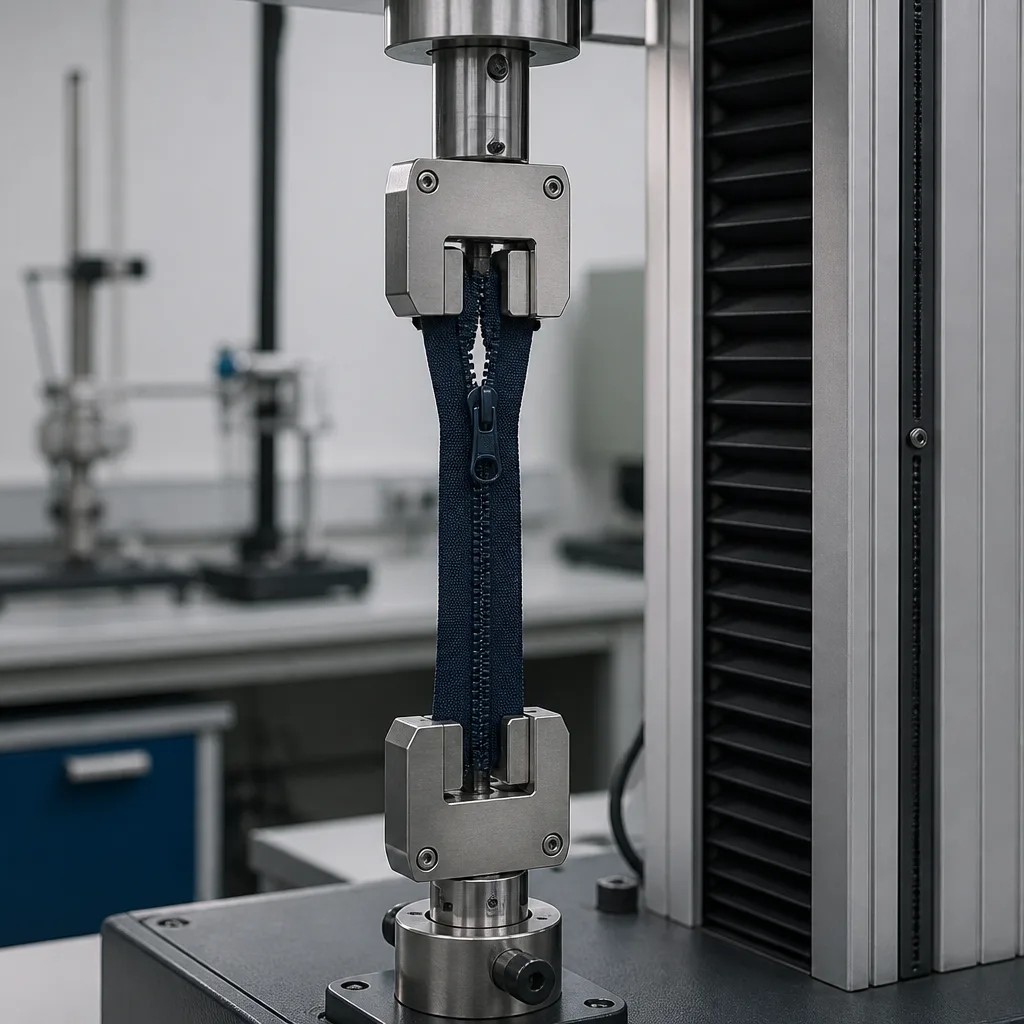
This test measures how much force the locating pin and retaining box can withstand before separating.
A permanently deformed slider may no longer make proper contact with the zipper elements.
These tests can evaluate how useful a zipper is in practice. No single test determines whether a zipper is suitable for a specific purpose. Because the tests are related, multiple tests may be needed for a complete assessment.
These methods are considered satisfactory for acceptance testing of commercial shipments because they have been widely used in the industry for this purpose, and in most cases, the available inter-laboratory accuracy estimates are at an acceptable level.
If there are differences of practical significance between test results reported by two (or more) laboratories, a comparative test should be performed to determine whether there is a statistically significant deviation between them. At a minimum, test samples should be used that are as homogeneous as possible, taken from the material from which the different test results were obtained, and randomly assigned in equal numbers to each laboratory. Other materials with established test values may also be used for this purpose. The test results from the two laboratories should be compared using a statistical test for unpaired data at a probability level chosen before the test series. If a deviation is found, either the cause should be identified and corrected, or future test results should be adjusted taking the known deviation into account.
The methods described in this standard, along with the test methods defined in ASTM D2051, ASTM D2052, ASTM D2053, ASTM D2054, ASTM D2057, ASTM D2058, ASTM D2059/D2059M, ASTM D2060, and ASTM D2062 standards, may be used. These standards can be used to assist in the evaluation of zippers without requiring extensive knowledge of zippers. The listed test methods do not provide an assessment of all zipper properties. In addition to the properties measured by these test methods, there are other properties that may be important for a zipper's satisfactory performance.
In short, the ASTM D2061 standard provides manufacturers, laboratories, and quality assurance professionals with standardized procedures for determining whether zippers can withstand the mechanical stresses encountered during normal use.
The primary purpose of this standard is to establish consistent laboratory procedures for measuring the strength of zippers and zipper components. Because zippers are used in a wide variety of products, including clothing, luggage, footwear, outdoor equipment, automotive upholstery, and protective gear, the standard helps ensure reliable performance under repeated mechanical loading.
The test methods described enable manufacturers to:
However, a single test cannot determine the overall suitability of a zipper for every application. Therefore, multiple testing methods are usually used together for a complete evaluation.
The ASTM D2061 standard covers the determination of the mechanical strength of zipper assemblies and individual zipper parts. Because different zipper constructions require different evaluations, this standard includes several independent test methods.
The ASTM D2061 standard is widely used in the following sectors:
The ASTM D2061 standard is often used in conjunction with several complementary zipper standards:
Together, these standards provide a comprehensive framework for evaluating zipper dimensions, strength, functionality, and application suitability.
The ASTM D2061 standard is important because zippers are often one of the most stressed components in textile products. A zipper failure can render an otherwise functional garment, bag, or protective item unusable. This standard helps manufacturers identify design weaknesses before products are released to the market by providing standardized methods for measuring the strength of zipper components under realistic mechanical loads. It also supports quality assurance, supplier competence, and product development by providing objective comparisons between zipper designs and materials.
For many years, our organization, with its competent and experienced team, has been understanding the needs of its clients, providing the advanced testing services they require, and assisting them in the establishment, implementation, and improvement of management systems. Within this framework, we also provide testing services in accordance with the ASTM D2061 standard.
To get an appointment, to get more detailed information or to request an evaluation, you can ask us to fill in our form and reach you.

