

The standard “DIN 53866-3 Textile tests - Shrinkage of single and multi-ply yarns - Determination of shrinkage in hot air”, published by the German Institute for Standardization (DIN), describes a test method for determining the shrinkage (dimensional change) of single and multi-ply yarns when exposed to hot air. This standard is part of the DIN 53866 series of standards on yarn shrinkage behavior. Other sections of the main standard cover topics such as shrinkage in gaseous/liquid environments.
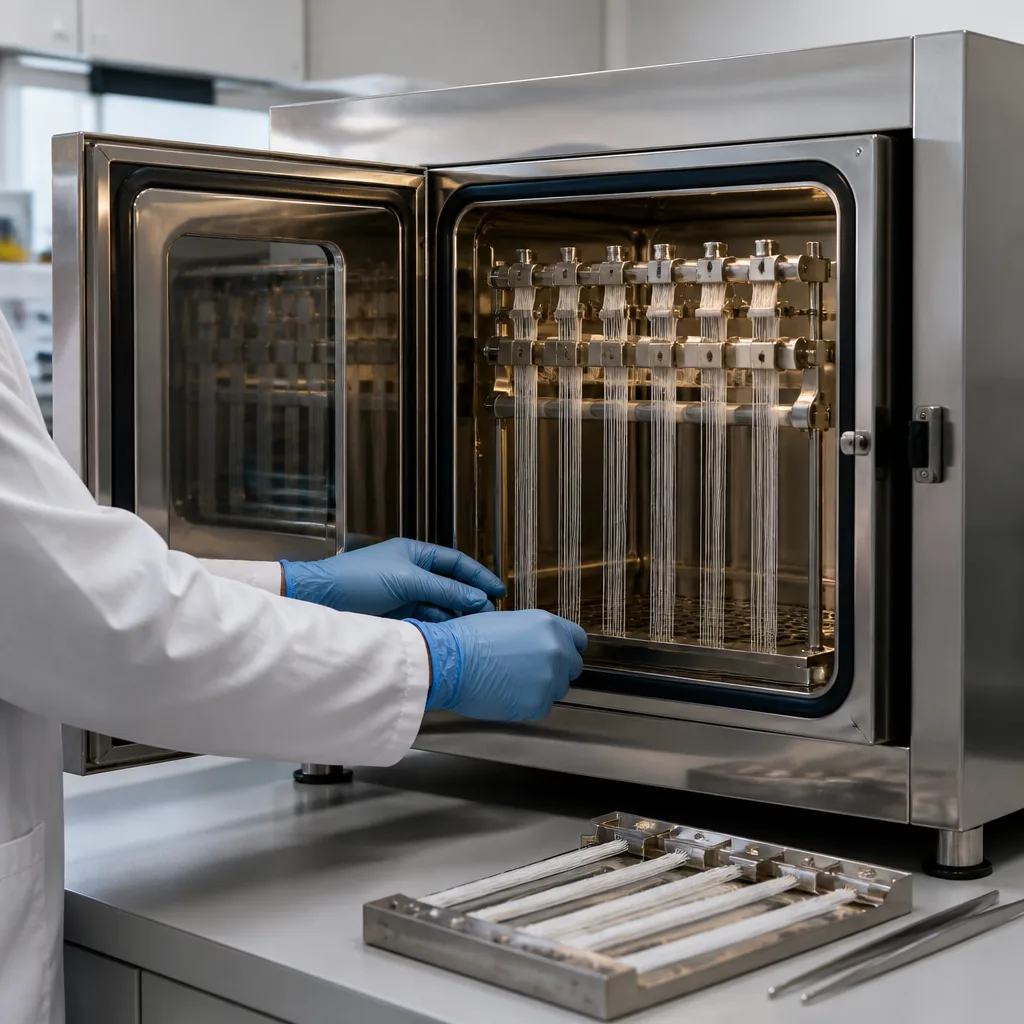
The described test method is particularly important in the textile industry for evaluating how synthetic or blended yarns perform during heat treatment, drying, or further processing, as excessive or uncontrolled shrinkage can affect fabric quality, dimensional stability, and final product performance.
This standard was later withdrawn and largely replaced by “DIN EN 14621 Textiles - Multistrand yarns - Test methods for woven or nonwoven multistrand yarns”. This new standard combines and updates methods from several older DIN standards, including DIN 53866 (shrinkage) and DIN 53840 (crimp-related tests). It provides standardized procedures for quality control of multifilament synthetic yarns, including thermal shrinkage (typically in hot air or similar conditions) and crimp shrinkage tests. Many modern textile testing laboratories now use the DIN EN 14621 standard.
The purpose of the DIN 53866-3 standard is to measure the percentage change in length of yarn samples after controlled exposure to hot air (typically at defined temperatures and durations).
This standard is particularly applicable in quality control areas in yarn production for synthetic fibers such as polyester, nylon, or textured filaments used in clothing, technical textiles, and automotive fabrics. This test method is generally applied in conjunction with linear density (yarn count), twist, tensile strength, and crimp tests.
Although the DIN 53866-3 standard is no longer active, it is still referenced in old test reports, equipment specifications, and previous documents in the textile industry.
In short, the DIN 53866-3 standard addresses how single and multi-ply yarns shrink when exposed to hot air. This standard includes a test method for determining yarn shrinkage under hot air conditions.
This standard applies primarily to single and twisted yarns. The described method focuses on measuring how yarn length changes when exposed to controlled high temperatures in air, by simulating processes encountered during thermal treatments such as heat fixing, drying, and finishing in textile production.
In general, this test follows these steps:
According to this standard, the test conditions are as follows:
These parameters ensure the reproducibility and comparability of the results.
Typical equipment used in these tests includes:
This testing method is important in evaluating yarn performance. Its main application area is as follows:
It also helps manufacturers in the following areas:
The DIN 53866-3 standard addresses a very practical problem in textile production: yarns change length when exposed to heat, and without a standard way to measure this, manufacturers face inconsistent and unpredictable results. This standard is considered necessary for the following reasons:
This standard is necessary because heat-induced shrinkage directly affects textile quality, processing, and performance. Without a defined testing method, manufacturers operate haphazardly, leading to inconsistent products and higher costs.
In conclusion, the DIN 53866-3 standard represents a significant step in the evolution of textile testing standards. By defining a method for measuring yarn shrinkage in hot air, it enabled a consistent assessment of thermal behavior, a crucial factor in textile processing and product performance. Although it has been superseded by newer standards, its methodology still forms the basis of current practices.
For many years, our organization, with its competent and experienced staff, has been understanding the needs of its clients, providing the advanced testing services they require, and assisting them in the establishment, implementation, and improvement of management systems. Within this framework, we also provide testing services in accordance with the DIN 53866-3 standard.
To get an appointment, to get more detailed information or to request an evaluation, you can ask us to fill in our form and reach you.

