

The “DIN 54281 Textile tests - Determination of alkali solubility of wool” standard, published by the German Institute for Standardization (DIN), is a concise standard that includes a chemical test method for measuring the solubility of wool in an alkaline solution. This standard serves as a quality control and damage assessment tool in the textile industry, particularly for wool processing, finishing, and damage analysis.
Alkali solubility testing evaluates changes in the chemical structure of wool keratin due to processing or damage. Wool is a protein fiber (primarily keratin) rich in disulfide bonds (cystine). The following types of processes can break these bonds, making wool more soluble in alkali:
Conversely, processes such as mild alkaline treatment or the use of crosslinking agents generally reduce solubility.
The main applications of this standard are:
Undamaged, washed wool typically shows alkali solubility in the range of approximately 9–15 percent (values may vary slightly depending on the type of wool; finer wools generally have higher values than thicker wools). Higher values indicate potential over-processing or damage.
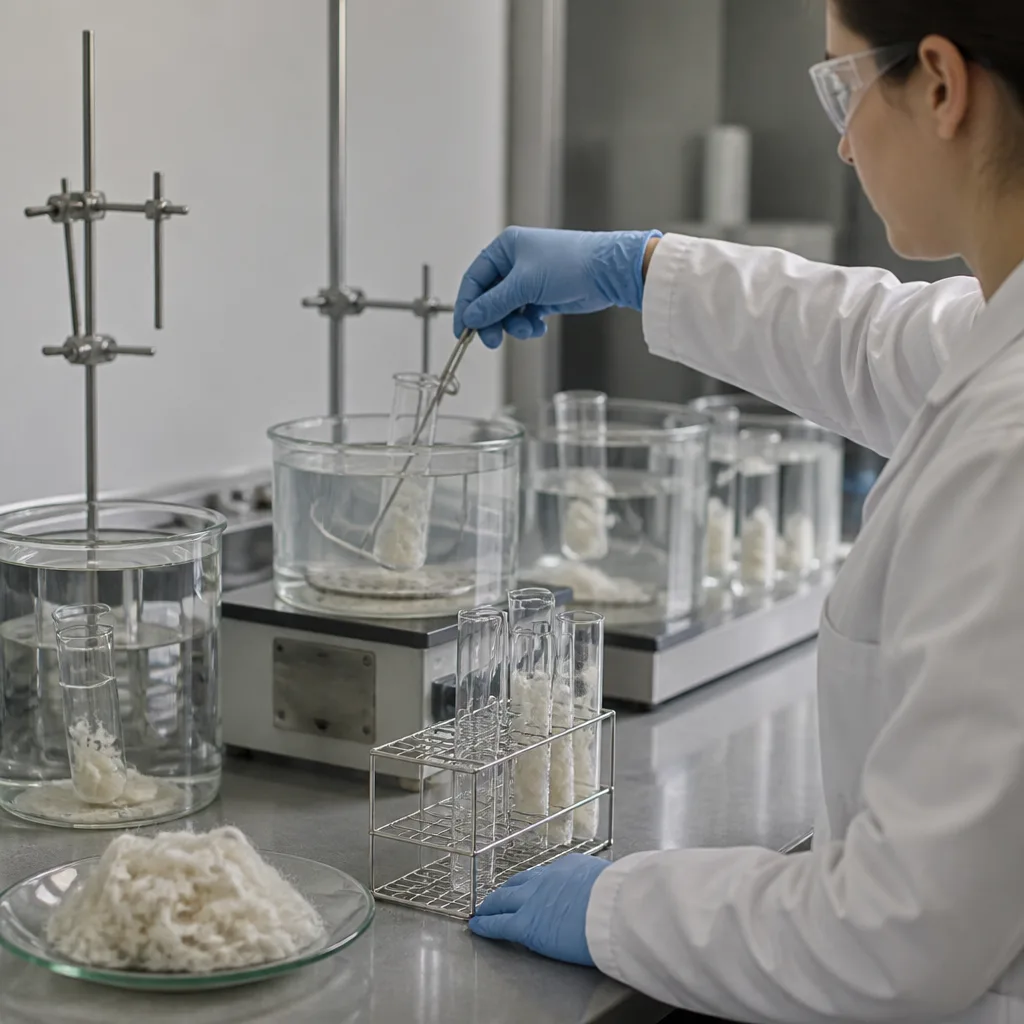
This method involves treating a conditioned, dry wool sample with a diluted sodium hydroxide solution (usually 0,1 N) under controlled conditions (typically 65 degrees Celsius for 1 hour, with a wool-to-liquid ratio of approximately 1:100). The sample is then rinsed, dried, and weighed. Solubility is calculated as the percentage loss in dry mass.
This approach is closely consistent with international equivalents such as:
This testing method remains a classic tool in wool fiber science, reflecting the sensitivity of wool's disulfide bonds to chemical and environmental influences.
In short, the DIN 54281 standard is an industry standard designed to determine the alkali solubility of wool fibers. The test measures how much wool dissolves when exposed to a standardized alkaline solution under controlled conditions. Since wool is a natural, protein-based fiber primarily containing keratin, it is sensitive to alkalis; excessive dissolution indicates fiber degradation or damage.
This standard is primarily used in textile laboratories, quality assurance departments, and research institutions to evaluate wool quality, chemical resistance, and processing damage.
The DIN 54281 standard helps to determine the following:
Wool is naturally more vulnerable to alkaline attack than many synthetic or plant fibers. Even moderate alkaline exposure can weaken the fiber structure by hydrolyzing the peptide bonds within the keratin. The DIN 54281 standard provides a consistent method for measuring this susceptibility.
This method typically follows these steps:
A higher percentage indicates higher solubility and therefore more severe fiber damage or lower alkali resistance.
The DIN 54281 standard is useful in the following areas:
The sectors that use this standard are:
The DIN 54281 standard is necessary because wool, a textile, can be easily damaged by improper alkali exposure during wet processing. Without a standardized test,
This standard enables manufacturers to detect spoilage early, reduce waste, and maintain product quality.
The advantages of the DIN 54281 standard are as follows:
However, this standard has some limitations:
In conclusion, the DIN 54281 standard is a crucial textile testing standard for evaluating the alkali resistance and chemical integrity of wool fibers. By measuring mass loss after controlled alkali exposure, it helps manufacturers, laboratories, and researchers assess fiber quality, detect damage, and ensure that wool products meet expected durability and performance requirements.
For many years, our organization, with its competent and experienced staff, has been understanding the needs of its clients, providing the advanced testing services they require, and assisting them in the establishment, implementation, and improvement of management systems. Within this framework, we also provide testing services in accordance with the DIN 54280 standard.
To get an appointment, to get more detailed information or to request an evaluation, you can ask us to fill in our form and reach you.

