

The standard “DIN 53830 Textile tests - Determination of linear density of single and multi-ply yarns”, published by the German Institute for Standardization (DIN), focuses on determining the linear density (also known as yarn count, fineness, or mass per unit length) of single and multi-ply yarns. First published as a multi-part standard in 1981, it is still used today as a reference in textile laboratories, quality control, and material specifications, particularly in European countries.
Linear density is a fundamental property of yarns. It indicates the thickness or fineness of the yarn, and knowing the linear density precisely is important for:
The DIN 53830 standard is divided into several sub-sections, each addressing specific thread types or methods:
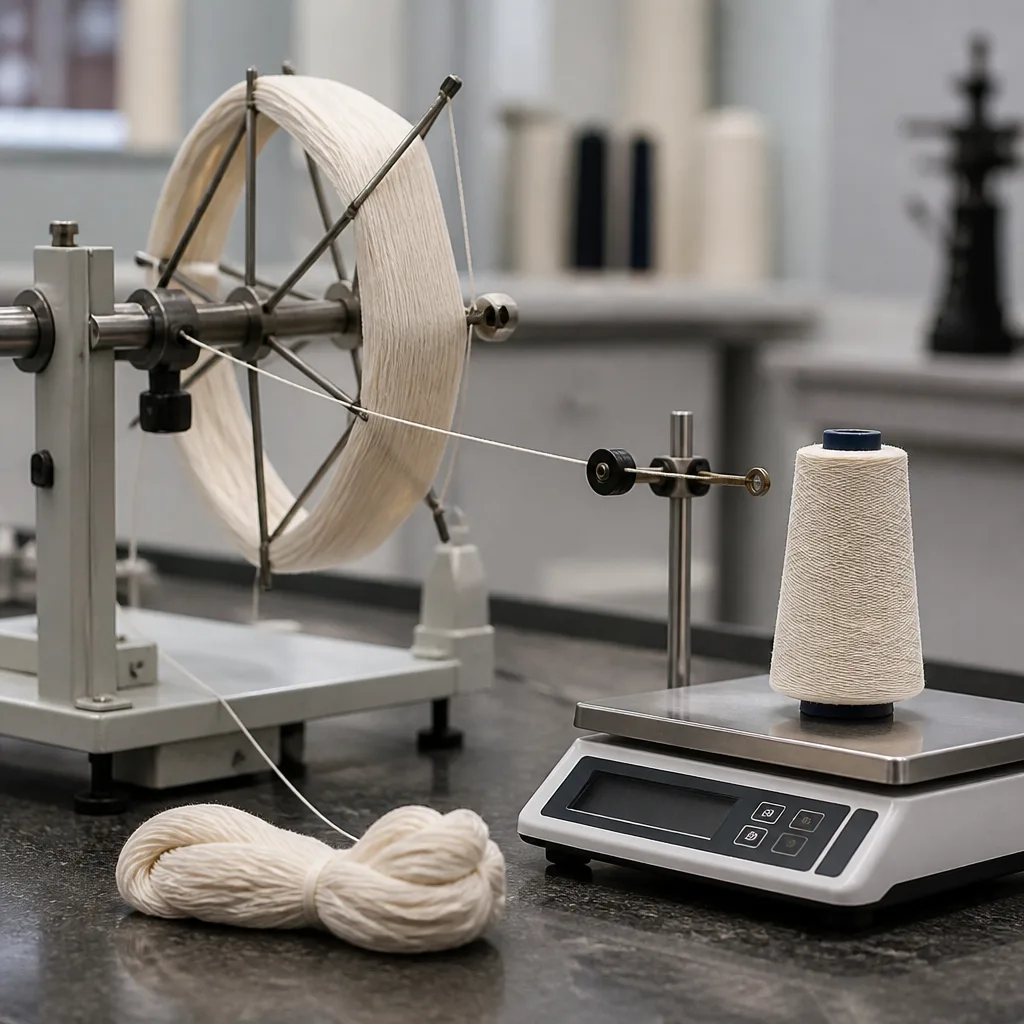
In the reel method (DIN 53830-1), the yarn is wound onto a winding spool to form a skein (bobbin) of a known length (usually 100-500 m or more), which is then weighed. The linear density is calculated from the mass and length.
The short-length method (DIN 53830-3 and DIN 53830-4) is used when sample length is limited. Short sections of yarn are precisely measured and weighed, making them suitable for laboratory analysis of woven or elastic yarns.
Equipment commonly associated with these tests includes yarn winding reels (manually operated or electronic), precision balances, and dehumidification chambers (because moisture affects the yarn mass).
DIN 53830-3 and DIN 53830-4 standards are still currently listed. Many modern textile laboratories use these standards in conjunction with ISO 2060 (for reel method) and other international equivalents.
The DIN 53830 standard is frequently used as a reference in laboratory accreditation, product technical data sheets, and testing of technical textiles, garment yarns, and industrial fabrics.
Accurate determination of yarn linear density ensures consistency in spinning, weaving, knitting, and finishing processes. Variations in fineness can affect the appearance, texture, strength, and cost of the fabric. The short-length methods described in these standards are particularly practical for testing small samples taken from production or for analyzing textured and elastic yarns that behave differently due to volume or elasticity.
The DIN 53830 standard is necessary because linear density (also called yarn count, fineness, or mass per unit length) is one of the most fundamental and critical properties of any yarn. Without a standardized, repeatable method for accurately measuring this, the entire textile production chain, from yarn mills to fabric manufacturers, garment manufacturers, and end-users, faces inconsistencies, quality issues, disputes, and inefficiencies.
Yarn linear density directly determines the following:
In short, if two yarns differ in their true fineness, the final product will not perform or appear as expected. Standards like DIN 53830 eliminate ambiguity by defining how to measure under controlled conditions (temperature and humidity are crucial because fibers absorb moisture and change weight).
The DIN 53830 standard is needed for the following reasons:
In short, the DIN 53830 standard exists because something that cannot be measured accurately and repeatably cannot be controlled, traded, or used reliably.
For many years, our organization, with its competent and experienced staff, has been understanding the needs of its clients, providing the advanced testing services they require, and assisting them in the establishment, implementation, and improvement of management systems. Within this framework, we also provide testing services in accordance with the DIN 53830 standard.
To get an appointment, to get more detailed information or to request an evaluation, you can ask us to fill in our form and reach you.

