

The standard “DIN 54287 Textile tests - Determination of alkali content of wool”, published by the German Institute for Standardization (DIN), describes a test method for determining the alkali content (or alkali solubility) in wool. This standard is primarily used in the textile industry to assess wool quality, detect damage resulting from processing (such as oxidation or chemical treatments), and evaluate the effects of bleaching, dyeing, or other processes that may alter the chemical structure of the fiber.
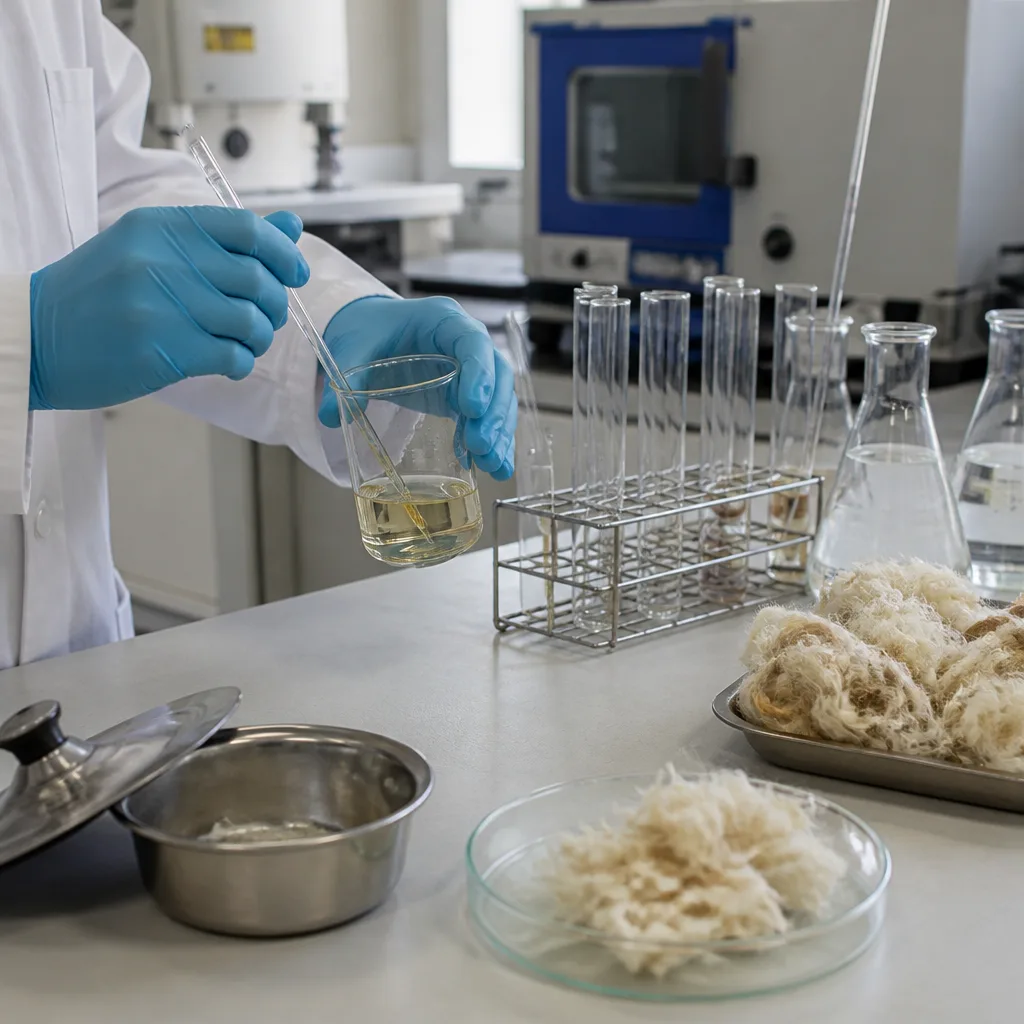
This method applies to undyed wool in various forms, including loose fibers, comb strips, wool ends, yarn, or fabric. Depending on the behavior of the dye under alkaline conditions, it can sometimes also be adapted for dyed wool. This standard is equivalent to the “ISO 2916 Wool - Determination of Alkali Content” standard.
Wool is a protein fiber (keratin) that is sensitive to alkaline conditions. Excessive alkaline solubility usually indicates the following:
Typical undamaged wool shows alkali solubility within a certain range (usually around 11-14 percent for hybrid wool using relevant methods), while higher values indicate potential problems.
The DIN 54287 standard test method generally follows these steps:
This method provides a quantitative measurement expressed as a percentage. It is often used in conjunction with other wool tests such as acid content, cystine analysis, or microscopic examination.
Common application areas for methods of determining alkali content include:
The following sectors benefit from DIN 54287 standard tests:
This standard remains valid in wool quality assurance, but in modern practice it can be used in conjunction with updated ISO or IWTO (International Wool Textile Organization) methods.
In short, DIN 54287 is an industry standard that defines a test method for determining the alkali content in wool. Determining the alkali content in wool fibers is an important analytical procedure in textile testing, used to assess whether wool fibers contain residual alkaline substances after processing. Wool is a protein-based fiber primarily containing keratin, and unlike many synthetic fibers, it is quite sensitive to alkaline chemicals. Excess alkali can degrade wool by breaking peptide bonds, weakening the fiber structure, reducing elasticity, and causing yellowing or a stiff feel.
DIN 54287 and similar standards provide methods for evaluating the chemical properties of wool, including residual alkali levels, to ensure product quality and process control.
Testing the alkaline content of wool helps manufacturers and laboratories in the following areas:
Alkali is now particularly important because wool is often treated using soaps, detergents, or alkaline additives. If these chemicals are not completely removed, they can continue to react with the fiber during storage or use.
The described test method typically involves extracting alkaline substances from a wool sample and measuring their concentrations. The results indicate whether the wool contains unacceptable levels of alkaline residue.
Monitoring the alkali content is necessary because wool can be permanently damaged by excessive alkalinity. Potential problems that may arise due to residual alkali include:
By controlling alkaline residues, manufacturers can maintain softness, durability, and appearance.
Standardized alkali content testing provides the following:
In conclusion, determining the alkali content in wool is a critical textile quality test that identifies potentially harmful residual alkaline substances in wool fibers. Laboratories can verify that the wool has been properly processed and neutralized through extraction and chemical analysis. This test supports durability, safety, and quality consistency in wool textile products.
For many years, our organization, with its competent and experienced staff, has been understanding the needs of its clients, providing the advanced testing services they require, and assisting them in the establishment, implementation, and improvement of management systems. Within this framework, we also provide testing services in accordance with the DIN 54287 standard.
To get an appointment, to get more detailed information or to request an evaluation, you can ask us to fill in our form and reach you.

