

The standard “DIN 53859-5 Textile tests - Tear growth test of textile fabrics - Trapezoidal test”, published by the German Institute for Standardization (DIN), describes a method for testing the tear resistance of textile fabrics using a trapezoidal tear test.
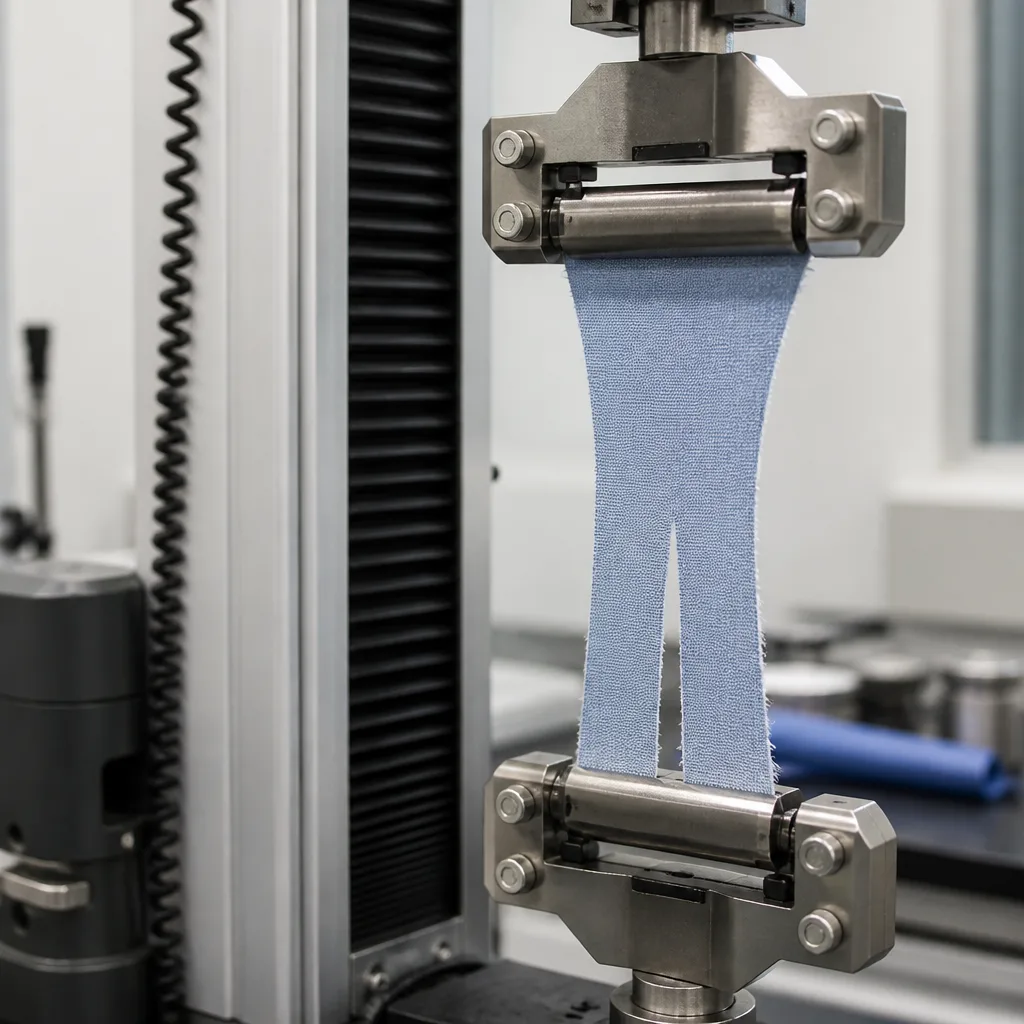
This standard belongs to the DIN 53859 series of standards covering various tear growth tests in textiles. This section specifically addresses the trapezoidal method for woven and similar textile fabrics (sometimes referenced in laboratory contexts alongside tests for nonwoven fabrics or other materials).
The trapezoidal tear test measures the force required for a tear to propagate (continue) once it has begun in a textile fabric. This method evaluates tear strength or tear resistance, a crucial property for assessing the durability of fabrics under stress, such as in clothing, upholstery, technical textiles, geotextiles, or industrial applications where fabrics may be subjected to puncture, cut, or tensile forces.
This method helps manufacturers and testing laboratories compare materials, ensure quality control, and verify compliance with performance requirements. It is particularly useful because the trapezoidal sample shape and pre-cut slit allow for a controlled stress concentration, enabling the tear to spread measurably throughout the fabric.
This method generally follows these steps:
Tear force is the maximum or peak force, and sometimes the average force during propagation.
The conditioning of the samples complies with standard atmospheric requirements (e.g., DIN 53802 standard).
The test is performed using a tensile testing machine equipped with suitable handles to prevent slipping. This method is similar to the methods described in the standards “ASTM D5587 Standard test method for determining the tear strength of fabrics by trapezoidal method” and “ASTM D4533/D4533M Standard test method for trapezoidal tear strength of geotextiles”.
In short, the DIN 53859-5 standard includes a standardized test method for determining how textiles behave when exposed to specific chemicals or finishing processes. These may include detergents, solvents, or other processing chemicals used in textile production and care.
The purpose of this standard is to:
This standard typically includes:
The DIN 53859-5 standard is widely used in the following areas:
The necessity of the DIN 53859-5 standard rests on a fundamental problem: textiles are constantly exposed to chemicals, and without a standardized method for evaluating their reactions, quality and safety become unpredictable. This standard is considered important for the following reasons:
Without this standard, results would vary from one laboratory or factory to another.
This method reduces trial and error and accelerates innovation.
Therefore, this standard standardizes the method of evaluating the chemical exposure resistance of textile products, ensuring that products are durable, safe, and consistent from the factory to the end user.
In conclusion, the DIN 53859-5 standard provides a structured and repeatable method for evaluating how textiles respond to chemical exposure. By standardizing these evaluations, it plays a crucial role in ensuring durability, safety, and performance in a wide variety of textile products.
For many years, our organization, with its competent and experienced staff, has been understanding the needs of its clients, providing the advanced testing services they require, and assisting them in the establishment, implementation, and improvement of management systems. Within this framework, we also provide testing services in accordance with the DIN 53859-5 standard.
To get an appointment, to get more detailed information or to request an evaluation, you can ask us to fill in our form and reach you.

