

The ASTM D3108 standard, developed by the American Society for Testing and Materials (ASTM), describes a test method for measuring the kinetic friction properties of a moving yarn in contact with a solid material. The ASTM D3412 standard test method is applicable for determining yarn-to-yarn friction.
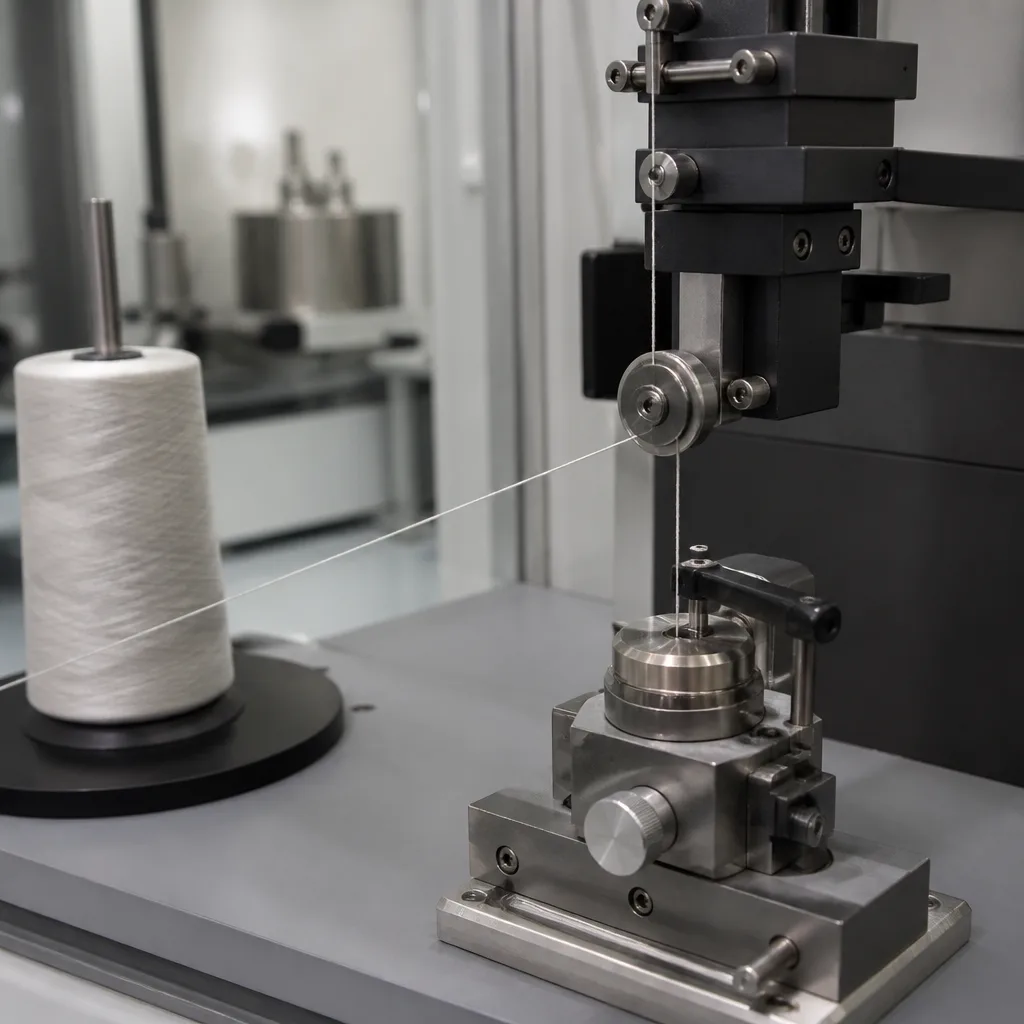
The described test method specifies a relative speed of 100 m/min. This test method can also be used at other speeds, although there may be a possible change in sensitivity and coefficient of friction.
This testing method involves measuring the kinetic friction coefficient between a yarn and a solid surface or surfaces with a constant radius in the contact area. If a yarn with a uniform coefficient is used, the friction properties of different solid materials can be compared in relation to this yarn. If a specific solid material is used, the friction properties of different yarns or yarns with different finishes can be compared in relation to this specific solid material.
This test method specifically recommends winding angles of 3,14 and 6,28 radians (180 and 360), but other winding angles may be used with a possible change in sensitivity and level. The winding angle should not be so large as to exceed the yield value of the yarn under test, especially for yarns with a high coefficient of friction. Also, in any case, the winding angle should not be less than 1,57 radians (90).
This test method is applicable to yarns with linear densities ranging from 90 to 720 denier and friction coefficients ranging from 0,1 to 0,5, but it can also be used with yarns outside these linear density and friction coefficient ranges.
The ASTM D3108 standard defines an international test method for measuring the coefficient of kinetic friction between a moving textile yarn and a solid surface. This standard covers determining the kinetic friction characteristics of a yarn sliding over a solid material (such as yarn guides, ceramic or metal surfaces, needles, or other contact points in textile machinery).
The basic parameters are:
Friction properties are critical in the textile industry because they directly affect:
Performance and lifespan of yarn guides, knitting/sewing needles, and other machine components.
This standard emphasizes that the coefficient of friction is not merely a property of the thread or surface, but measures the interaction between two bodies. This standard can be used for:
Interlaboratory sensitivity is known to be relatively low, therefore comparative testing is recommended when results differ significantly.
In principle, during the test, a piece of yarn is pulled at a constant speed over a cylindrical or curved solid surface (friction pin) at a specific winding angle. The input and output stresses are measured, and the kinetic friction coefficient is calculated using the pulley equation (Euler's formula).
The following equipment is generally used in tests:
Yarn friction affects many subsequent processes. Too much friction can lead to yarn damage, machine wear, or breakage. Too little friction can result in poor control in high-speed operations. This standard helps manufacturers optimize lubricants, select appropriate yarn guides, and ensure consistent performance across production batches.
In short, ASTM D3108 is a widely used textile testing standard that defines a method for measuring the coefficient of kinetic friction between a moving yarn and a solid material surface. This standard is important in textile engineering because yarn friction directly affects processing efficiency, yarn quality, machine wear, and final product performance.
This standard provides a controlled procedure to determine how easily a thread slides across a solid surface under defined conditions. This helps manufacturers evaluate the following:
Friction behavior is critical because excessive friction can lead to:
Conversely, very low friction can lead to imbalances in handling or poor yarn control during production.
This standard covers the measurement of the kinetic friction properties of a yarn moving across a solid material. The method is primarily designed for textile yarns, but can also be applied in research and development work involving specialized fibers or industrial yarns. This standard specifies the following:
When a thread passes over a cylindrical or curved friction element, stresses are measured on both sides. The kinetic friction coefficient is calculated from these measurements.
The ASTM D3108 standard is applicable to many types of yarn, including:
In conclusion, the ASTM D3108 standard is a fundamental textile testing standard for evaluating the frictional interaction between yarns and solid surfaces. By standardizing the measurement of kinetic friction, this method helps textile manufacturers optimize yarn finishes, increase machine efficiency, reduce wear, and maintain consistent product quality.
For many years, our organization, with its competent and experienced team, has been understanding the needs of its clients, providing the advanced testing services they require, and assisting them in the establishment, implementation, and improvement of management systems. Within this framework, we also provide testing services in accordance with the ASTM D3108 standard.
To get an appointment, to get more detailed information or to request an evaluation, you can ask us to fill in our form and reach you.

