

Developed by the American Iron and Steel Institute (AISI), AISI 321 is a titanium-stabilized austenitic stainless steel widely recognized for its excellent resistance to intergranular corrosion and superior performance in high-temperature environments. Essentially, it is a modified version of AISI 304 with the addition of titanium to prevent carbide precipitation during welding or exposure to high temperatures.
AISI 321 belongs to the 300 series of austenitic stainless steels. The addition of titanium (typically at least 5 times the carbon content, up to 0,70%) forms titanium carbides by bonding with carbon and prevents the formation of chromium carbides at grain boundaries. This stabilization ensures resistance to sensitization and intergranular corrosion in the temperature range of 425-850 degrees.
In annealed conditions, it offers corrosion resistance similar to AISI 304, but performs superiorly in oxidative environments with intermittent use up to 900 degrees or continuous use up to 925 degrees. The material is non-magnetic in the annealed state, but may become slightly magnetic after cold working.
Equivalent standards include:
The composition of AISI 321 conforms to the “ASTM A240/A240M Standard specification for chrome and chrome-nickel stainless steel sheet, plate and strip for pressure vessels and general applications” standard.
AISI 321 is ideal for high-temperature and corrosive environments, including:
AISI 321 exhibits excellent weldability using standard methods. For better results, 347 filler wires are used because titanium does not transfer well across the arc. The machining level is medium, and it tends to harden upon machining. It possesses good cold and hot formability properties. In terms of heat treatment, it requires annealing at 950-1150 degrees followed by rapid cooling.
AISI 321 remains a versatile and reliable option for demanding applications requiring high-temperature stability and corrosion resistance. Its titanium stabilization distinguishes it from AISI 304 grades, making it a preferred choice in industries such as aerospace, automotive, and chemical processing.
In short, AISI 321 is a stabilized austenitic stainless steel in the 300 series, very similar to AISI 304 but alloyed with titanium to improve its high-temperature performance.
The elements that make AISI 321 special are:
Consequently, it is resistant to intergranular corrosion, especially after welding or exposure to high temperatures.
Its main features are as follows:
Common uses include:
Consequently, AISI 321 is preferred when, in addition to the corrosion resistance of AISI 304, better performance is required at high temperatures or after welding.
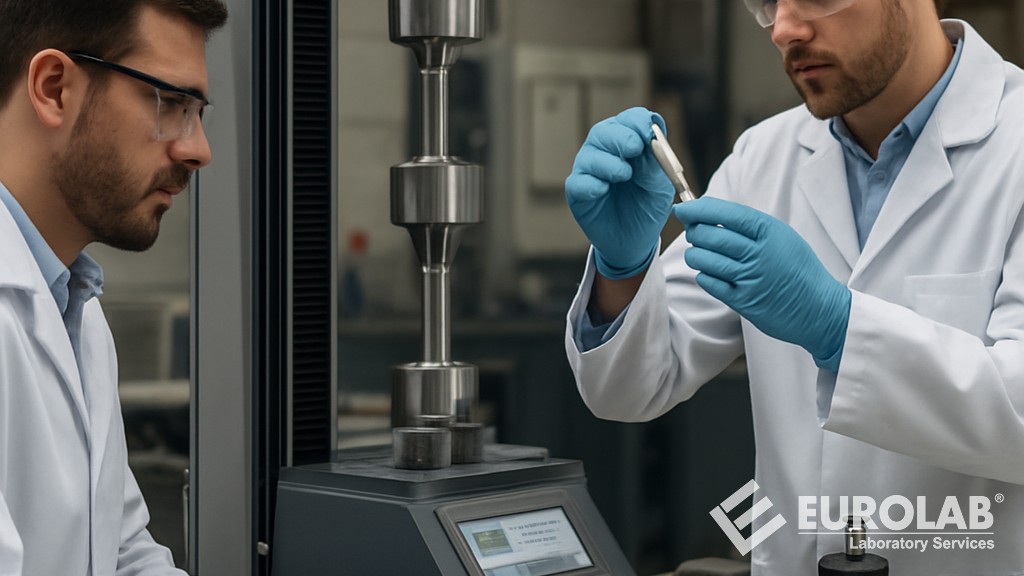
For many years, our organization, with its competent and experienced team, has been understanding the needs of its customers, providing the advanced testing services they require, and assisting in the establishment, implementation, and improvement of management systems. Within this framework, AISI 321 testing services are also provided to businesses.
To get an appointment, to get more detailed information or to request an evaluation, you can ask us to fill in our form and reach you.

