

The standard “DIN 53428 Testing of cellular materials - Determination of resistance to liquids, vapors, gases and solids”, published by the German Institute for Standardization (DIN), describes the test methods used to determine the changes and behavior of cellular plastics when exposed to liquids, vapors, gases, and solids under specific conditions (such as temperature, time, and pressure).
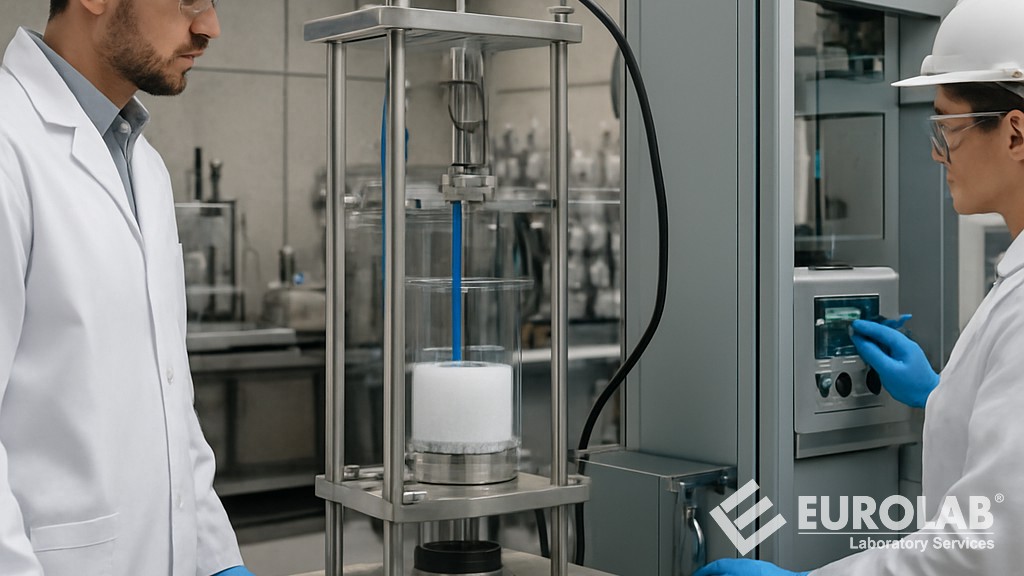
These test methods specifically refer to determining changes in the mass and dimensions of test specimens, changes in their appearance, and, where applicable, changes in other physical properties (e.g., compressive stress). Comparisons between values of changes in mass, dimensions, and other characteristics can only be made using test specimens of the same dimensions and taken under the same conditions (e.g., test specimens with a molding surface). Unless otherwise agreed, no external forces should act on the test specimens.
The DIN 53428 standard includes test methods for evaluating the resistance (or behavior) of cellular materials, particularly foams and cellular plastics, when exposed to various aggressive environments. These include liquids, vapors, gases, and solids.
This standard defines procedures for evaluating how these materials change or behave under defined exposure conditions (temperature, time, pressure, concentration). This helps determine the suitability of foams for applications where they come into contact with chemicals, solvents, fuels, water, oils, cleaning agents, gases, or solid particles.
This is especially true for closed-cell and open-cell foams (e.g., polyurethane, polyethylene, EVA, or other polymer-based cellular plastics) used in the following areas:
Test methods typically assess changes after exposure. For example,
Exposure can occur in the following ways:
Conditions are precisely controlled (e.g., temperature, duration ranging from hours to weeks, sometimes under pressure).
This standard is continuously revised to reflect improved testing accuracy and compliance with modern material requirements.
Manufacturers of flexible and rigid foams frequently specify the DIN 53428 standard in their technical data sheets, especially for the following properties:
Low values indicate excellent resistance (particularly important for closed-cell materials that should not absorb water or chemicals).
DIN 53428 standard is one of the most widely referenced foam chemical resistance/liquid compatibility test methods in Europe.
In short, the DIN 53428 standard includes methods for evaluating the resistance of cellular materials (foams) when exposed to liquids, vapors, gases, and certain solids. It is widely used in the plastics and foam industry to assess the chemical and environmental stability of flexible and rigid cellular materials.
Cellular materials such as polyurethane foams, rubber foams, and other expanded plastics are often used in environments where they may come into contact with oils, fuels, water, gases, or other chemicals. The DIN 53428 standard helps to determine these.
These assessments enable manufacturers and engineers to predict long-term durability and compatibility with operating environments.
The DIN 53428 standard applies to both flexible and rigid cellular plastics and foam materials. This standard is particularly important in industries where foams are exposed to chemicals or environmental factors.
Typical applications include:
Tests conducted according to the DIN 53428 standard guarantee that these materials maintain their performance and safety under service conditions.
The test involves exposing foam samples to specified substances and monitoring the resulting changes. The evaluation is performed under controlled temperature, exposure time, and sometimes pressure conditions. In general, the testing process follows these steps:
For valid comparisons, test specimens should have the same dimensions and preparation conditions, and external mechanical forces should generally be avoided during exposure.
The resistance of the cellular material is determined by the following analyses:
Smaller modifications mean greater chemical resistance and stability.
The DIN 53428 standard plays an important role in material qualification because:
By providing a uniform testing method, it enables reliable comparisons between different cellular materials and manufacturers.
For many years, our organization, with its competent and experienced staff, has been understanding the needs of its clients, providing the advanced testing services they require, and assisting them in the establishment, implementation, and improvement of management systems. Within this framework, we also provide testing services in accordance with the DIN 53428 standard.
To get an appointment, to get more detailed information or to request an evaluation, you can ask us to fill in our form and reach you.

