ASTM F2665-21 Standard Specification for Total Ankle Replacement Prosthesis
The “ASTM F2665-21 Standard specification for total ankle replacement prosthesis” standard, developed by the American Society for Testing and Materials (ASTM), describes the requirements for total ankle replacement prostheses used to provide functional articulation using talus and tibial components that allow at least 15 degrees of dorsiflexion and 15 to 25 degrees of plantar flexion as determined by non-clinical testing.
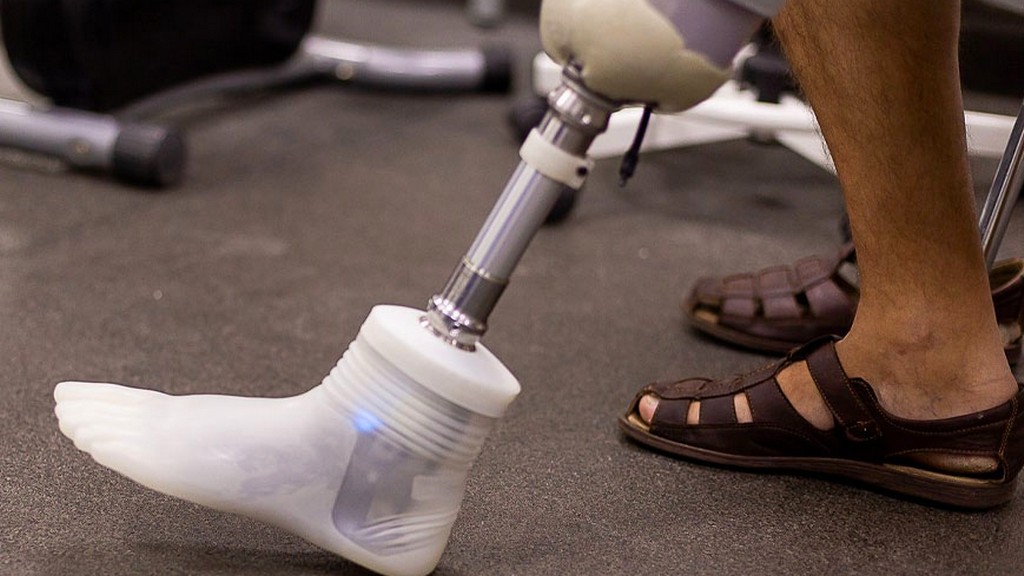
The scope of this standard includes ankle components for primary and revision surgery with modular and non-modular designs, bearing components with fixed or mobile bearing designs, and components for cemented or uncemented use.
This standard aims to provide basic descriptions of the material and geometry of the prosthesis. In addition, properties determined to be important for the in vivo performance of the prosthesis are defined.
The following classification is recommended by degree of restriction for all total joint prostheses, including total ankle replacement systems, based on concepts adopted by the U.S. Food and Drug Administration (FDA) (21 CFR 888.6):
- Constrained: A constrained joint prosthesis prevents displacement of the prosthesis in more than one anatomic plane and consists of a single, flexible, cross-joint component or multiple components attached or in close proximity to each other.
- Semiconstrained: A semiconstrained joint prosthesis limits translation or rotation, or both translation and rotation, of the prosthesis in one or more planes through the geometry of its articular surfaces. Its components have no connections across the joint.
- Unconstrained: An unrestricted joint prosthesis minimally restricts the movement of the prosthesis in one or more planes. Its components do not have inter-joint connections.
Currently, most ankle designs are considered semiconstrained or nonconstrained. Most moving bearing ankle components are considered nonconstrained. The ankle joint metal/polymer semiconstrained cemented prosthesis is defined in 21 CFR 888.3110 and the ankle joint metal/polymer nonconstrained cemented prosthesis is defined in 21 CFR 888.3120.
For the purposes of this standard, the following terms and definitions apply:
- Constraint refers to the relative inability of a total ankle prosthesis to displace further in a given direction under a given set of loading conditions, inherent in its geometric and material design.
- Dorsiflexion refers to the rotation of the tibial component toward the anterior talus surface.
- Flexion refers to the rotation of the talar component about the medial-lateral axis with respect to the tibial component. Flexion is considered positive when there is dorsiflexion and negative when there is plantar flexion.
- IE rotation refers to the rotation of the tibial component about the tibial axis with respect to the talar component. IE rotation is considered positive when the tibial component rotates inward (clockwise when viewed proximally at the left ankle). IE rotation is considered negative when the tibial component rotates outward.
- Interlocking refers to a mechanical design feature (i.e., component locking mechanism for modular components) used to increase the capture of one component within another and to limit unwanted displacement between components.
- Plantar flexion refers to the rotation of the tibial component toward the posterior talus surface.
- Radiographic marker refers to a nonstructural wire or bead designed to be visible on X-rays taken after implantation for components that would otherwise not be visible on such X-rays.
- The talus component is the bearing element fixed to the talus for articulation with the tibial component. This may be metallic or other suitable hard surface material.
Among the numerous testing, measurement, analysis and evaluation studies that our organization has provided for businesses in various sectors, it also provides testing services defined in the "ASTM F2665-21 Standard Specification for Total Ankle Replacement Prosthesis" standard with its trained and expert staff and advanced technological equipment.



