

The standard “ASTM D4060-19 Standard Test Method for Abrasion Resistance of Organic Coatings with Taber Abrasive” developed by the American Society for Testing and Materials (ASTM) describes a test method for determining the resistance of organic coatings to abrasion caused by Taber Abrasive on coatings applied to a flat, hard surface, such as a metal panel.
For the purposes of this standard, in addition to the terms and definitions described in "ASTM D16-16 Standard Terminology for Paint and Related Coatings, Materials, and Applications", the following definitions apply:
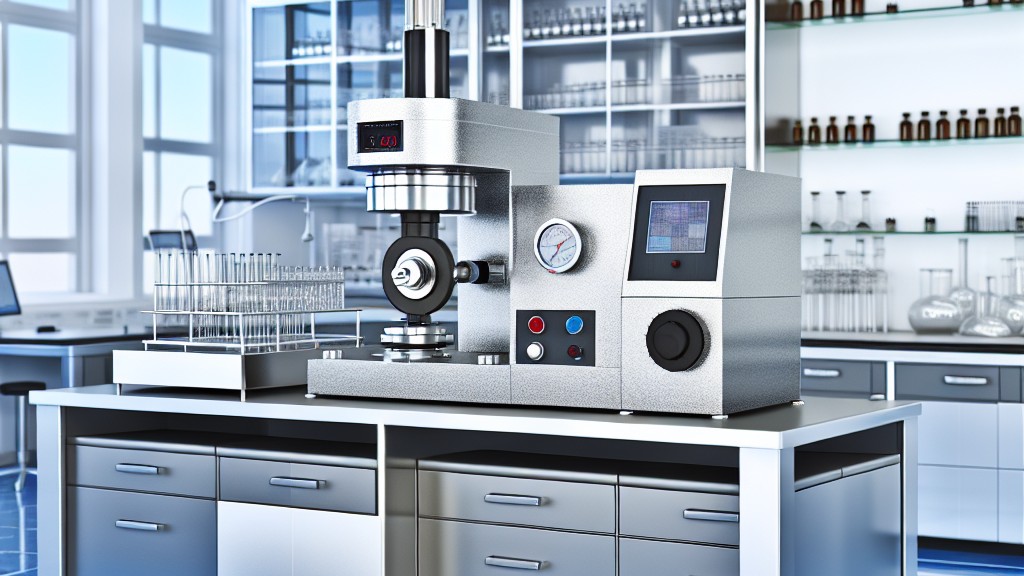
In the test, the organic coating is applied in uniform thickness to a flat, rigid panel and after curing, the surface is abraded using a rotary friction motion under controlled pressure and abrasive action. The test specimen, mounted on a rotating platform, rotates about a vertical axis against the sliding rotation of two abrasive wheels. The wheels should be mounted so that they rotate in opposite directions when in contact with the rotating test specimen. One abrasive wheel rubs the specimen outward toward the periphery, the other inward toward the center. The resulting abrasion marks form a pattern of crisscrossing arcs over an area of approximately 30 cm2.
Wear resistance is calculated as the weight loss over a specified number of wear cycles, average weight loss per thousand wear cycles, or the number of cycles required to remove one unit of coating thickness.
Coatings on substrates can be damaged by abrasion during their service life. This test method has been useful in evaluating the abrasion resistance of coatings. The ratings produced by this test method correlate well with the ratings produced by the falling abrasive values in “ASTM D968-22 Standard test methods for abrasion resistance of organic coatings by falling abrasive.”
For some materials, abrasion tests using the Taber abrasive may be subject to change due to changes in the abrasive properties of the wheel during testing. Depending on the type of abrasive and the test specimen, the wheel surface may change (i.e. become clogged) due to adhesion of debris formed during testing and should be resurfaced at more frequent intervals as agreed by the parties involved. To determine if more frequent resurfacing is required, the total weight loss is plotted every 50 cycles. If a significant negative change in slope is observed before 500 cycles, the point at which the slope changes determines the frequency of resurfacing.
When evaluating the wear resistance of two or more coatings, other factors may need to be considered for a fair comparison. Flexible coatings containing air entrainment bubbles may change the mass loss during comparison tests. Coatings containing dense fillers may cause greater mass loss but less change in coating thickness. Coatings containing silica, metal oxides, or other extremely dense particles may wear the abrasive wheel. Wear debris containing extremely dense particles may cause three-body wear that contributes to coating breakdown if not removed by the vacuum suction system.
Coatings with a greater hardness value or coefficient of friction than the abrasive wheel may cause the abrasive wheel to break down more quickly. Coatings with different coefficient of friction ratings should be taken into account during comparison tests.
Examples of coatings that may be affected include, but are not limited to: epoxies, polymethyl-methacrylate (PMMA), polyurethane-methacrylate (PUMA), methyl-methacrylate (MMA), and carbon resin.
Our organization has a strong staff that closely follows the developments in the world in the field of science and technology and constantly improves itself. Among the numerous test, measurement, analysis and evaluation studies provided for businesses in various sectors, there are also test services in accordance with the "ASTM D4060-19 Standard Test Method for Abrasion Resistance of Organic Coatings with Taber Abrasive" standard.
To get an appointment, to get more detailed information or to request an evaluation, you can ask us to fill in our form and reach you.

