

The standard "ISO 11443 Plastics - Determination of fluidity of plastics using capillary and slit die rheometers" published by the International Organization for Standardization (ISO) describes methods for determining the fluidity of plastic melts subjected to shear stresses at speeds and temperatures close to those occurring in plastic processing. Testing plastic melts in accordance with these methods is of great importance because the fluidity of plastic melts often depends not only on temperature but also on other parameters, especially shear rate and shear stress.
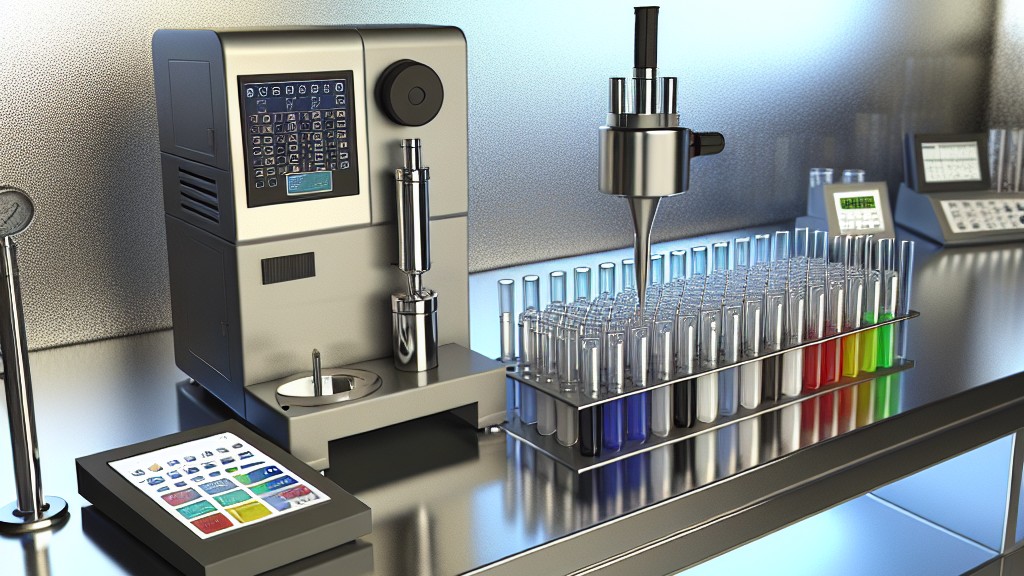
The methods described in this standard are useful for determining melt viscosities between 10 Pa*s and 107 Pa*s, depending on the measurement range of the pressure and force transducer and the mechanical and physical properties of the rheometer. Shear rates occurring in extrusion rheometers range from 1 s −1 to 10⁶ s −1 . Elongation effects at the die inlet cause extrudete swelling at the die outlet. Methods for evaluating extrudete swelling are also included.
The rheological techniques described are not limited to the characterization of thermoplastic melts that adhere to walls. For example, thermoplastics and thermosetting plastics that exhibit shear effects can be included. However, the methods used to determine shear rate and shear viscosity are invalid for materials that do not adhere to walls. Nevertheless, this standard can be used to characterize the rheological behavior of such liquids for a given geometry.
For the purposes of this standard, the following terms and definitions apply:
When testing, the plastic melt is forced through a capillary or slit die of known dimensions. Two basic methods can be used:
These methods can be used with capillary molds (method A) and slit molds (method B). A full description of the test method options is shown in the table provided in the standard.
Measurements can be made using a range of values of a preset parameter (the applied test pressure in method 1 or the volume flow rate in method 2). If a slit die is used with pressure transducers positioned along its length and upstream of the die inlet, the inlet and outlet pressure drop values can be determined. If capillary dies of the same radius but different lengths are used, the sum of the inlet and outlet pressure drops can be determined. A slit die with pressure transducers positioned along its length is particularly suitable for automatic measurements using on-line computer evaluation. Recommended values for the capillary die dimensions and the flow rates and temperatures to be used in the test are given in this standard and in ISO 11403-2. When a slit die is used, the aspect ratio between the thickness and width of the slit is small or a correction for this ratio is necessary (Annex A). In the latter case, the quantities calculated depend on the assumptions made in deriving the correction formulas used, in particular that elastic effects are negligible.
The apparatus used in these tests consists of a heatable barrel, the bore of which is closed at its lower end by a replaceable capillary or slot die. The test pressure is applied to the melt contained in this barrel by means of a piston, screw or gas pressure.
The rheometer barrel used in the tests shall be made of a material resistant to wear and corrosion up to the maximum temperature of the heating system. The barrel may have a lateral hole for the placement of a melt pressure transducer near the die entrance. The permissible deviations in the average hole diameter along the length of the barrel shall be less than plus/minus 0,007 mm. The barrel shall preferably be manufactured using techniques and materials that produce a Vickers hardness of at least 800 HV 30 and a surface roughness of less than 0,25 µm (mean arithmetic deviation according to ISO 4287).
Nitrided steel has been found suitable for temperatures up to 400 degrees. Materials with lower hardness values than specified but with adequate corrosion and wear resistance have been found to be acceptable for the construction of barrels and dies.
Increasing the barrel diameter increases the number of measurements that can be made with a single barrel charge and increases the shear rate range of the instrument. The disadvantages of using a larger barrel diameter are that larger sample masses are required and the time required to achieve temperature equilibrium throughout the sample is longer. Commercially available rheometers have barrel diameters ranging from 6,35 mm to 30 mm.
Our organization, which has been trying to support businesses from every sector with its testing, measurement, analysis and evaluation studies carried out in a wide range for years, has a strong staff that closely follows the developments in the world in the field of science and technology and constantly improves itself. In this context, testing services in accordance with the standard “ISO 11443 Plastics - Determination of the fluidity of plastics using capillary and slit mold rheometers” are also provided to businesses.
To get an appointment, to get more detailed information or to request an evaluation, you can ask us to fill in our form and reach you.

