

The standard "ASTM D5963-22 Standard test method for rubber property - Abrasion resistance (rotary drum abrasive)" published by the American Society for Testing and Materials (ASTM) describes a test method for measuring the abrasion resistance of rubbers (vulcanized thermoset rubbers and thermoplastic elastomers) subjected to abrasive/abrasive wear in actual service.
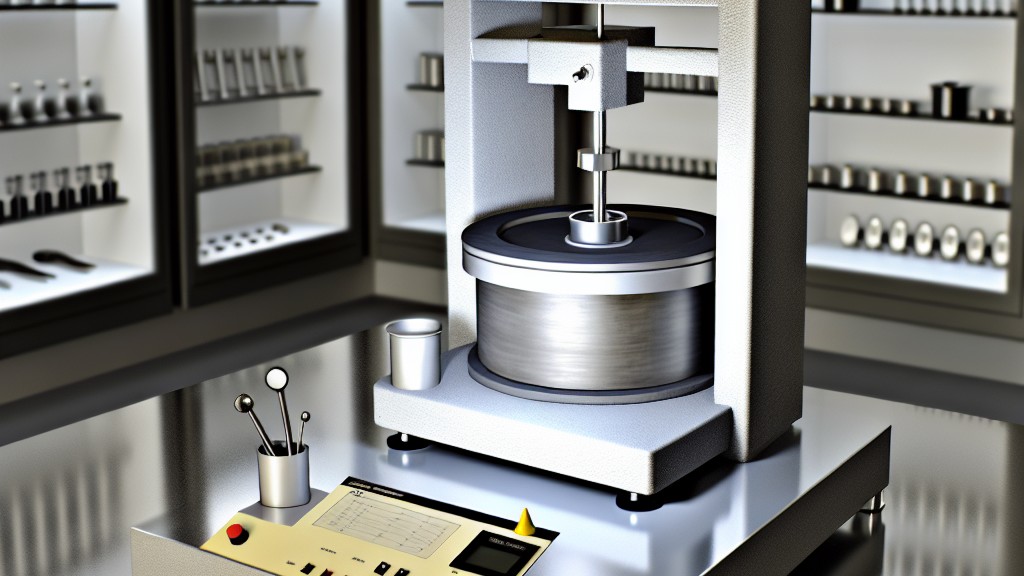
Abrasion resistance is measured by moving a test piece across the surface of an abrasive plate mounted on a rotating drum and is expressed as volume loss in cubic millimeters or as a percentage as the abrasion resistance index. A smaller number for volume loss indicates better abrasion resistance, while a smaller number for the abrasion resistance index indicates poorer abrasion resistance. However, it should not be assumed that the test results obtained with this test method are representative of the abrasion behavior to which rubber products are subjected in actual use.
Abrasion resistance is an extremely important performance factor for many rubber products, such as tires, conveyor belts, power transmission belts, hoses, shoes and floor coverings. A test that can measure the resistance of rubber to abrasion, including the uniformity of wear behavior under abrasive/frictional service conditions, is therefore in high demand.
This test method can be used to estimate the relative abrasion resistance of different rubbers. Since abrasive wear conditions in service are complex and vary widely, a direct relationship between this accelerated test and actual performance cannot be assumed.
This test method is suitable for comparative testing, quality control, specification conformance testing, referee purposes and research and development studies.
The test method detailed in this standard is used to evaluate the abrasion resistance of thermoplastic elastomers and vulcanized thermoset rubbers during performance cycles. The test procedure involves moving a specimen across the surface of a rotating drum with an abrasive sheet.
This test method measures the uniformity of wear in rubbers under abrasive conditions. This accelerated test can be used to evaluate abrasion resistance in a variety of rubbers, but abrasive wear conditions vary greatly and the actual performance of rubber products during the performance cycle cannot always be predicted.
The types of products or materials generally tested with this method are:
For the purposes of this standard, the following terms and definitions apply:
This test method includes procedures for preparing cylindrical test pieces of specified dimensions from vulcanized thermoset rubbers or thermoplastic elastomers and evaluating their abrasion resistance by sliding a test piece across the surface of an abrasive sheet attached to a rotating drum. It also describes the preparation and compatibility testing of standard rubber.
The test is carried out under the conditions of specified contact pressure, sliding distance and moving speed of the test piece, rotation speed of the drum and degree of abrasiveness of the abrasive layer.
The abrasiveness of the abrasive layer is defined by the loss in mass in milligrams of a test piece prepared from standard rubber when tested under the same specified conditions.
Four different methods can be used to test abrasion resistance. Method A uses a non-rotating test piece using standard rubber as a reference, and Method B uses a rotating test piece. Methods C and D use a non-rotating and rotating test piece and standard rubber as a reference, respectively. Rotating test pieces provide, in many cases, a more uniform wear pattern.
The abrasion resistance obtained in accordance with Method A is reported as the abrasion (volume) loss in cubic millimetres calculated as the mass loss of the test piece, the density of the test rubber and the abrasiveness of the abrasive layer relative to the nominal abrasiveness, with 200 mg of mass lost. A smaller number indicates a higher resistance to abrasion.
The abrasion resistance obtained in accordance with Methods A, B, C and D is reported as the abrasion resistance index in percentage calculated from the mass losses and densities of the standard rubbers and the test rubbers. A smaller number indicates lower resistance to abrasion.
The mass loss obtained by different methods may vary and therefore the same method should be used if mass (and volume) losses are to be compared directly.
Our organization has a strong staff that closely follows the developments in the world in the field of science and technology and constantly improves itself. Among the numerous tests, measurements, analyses and evaluation studies provided for businesses in various sectors, there are also testing services in accordance with the standard “ASTM D5963-22 Standard test method for rubber properties - Abrasion resistance (rotary drum abrasive)”.
To get an appointment, to get more detailed information or to request an evaluation, you can ask us to fill in our form and reach you.

