

The “NORSOK M-650 Qualification of Special Material Manufacturers” standard, developed by the Norwegian oil industry, outlines a set of qualification requirements to verify that a manufacturer possesses sufficient competence and experience in the relevant material classes and has the necessary facilities and equipment to produce these materials in the required shapes and sizes with acceptable properties.
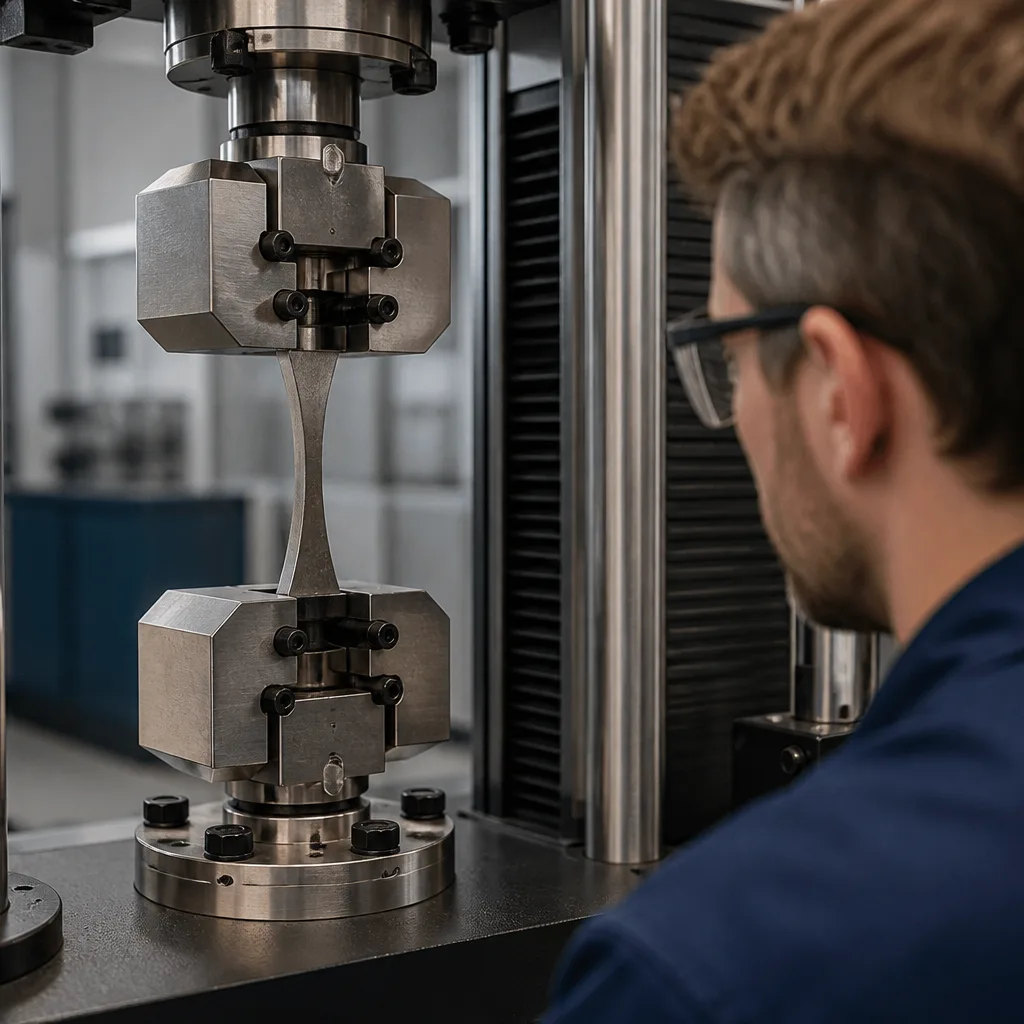
This standard is a globally recognized industry standard that primarily defines qualification requirements for manufacturers of specialized materials used in the offshore oil industry. Its primary purpose is to verify that a manufacturer possesses the necessary competence, equipment, and documented procedures to consistently produce materials with acceptable properties for harsh environments.
The NORSOK M-650 standard applies to high-performance materials used especially in harsh environments and includes the following:
This NORSOK standard also applies to critical components or product forms in other materials and special manufacturing/production processes, e.g. titanium and nickel alloys in product forms other than casting, carbon steel and low-alloy steel products, and induction/cold bending.
To be NORSOK approved, a manufacturer must demonstrate control over several critical production areas. The NORSOK M-650 standard defines the following key qualification requirements:
The main purpose of this standard is as follows:
The primary purpose of the NORSOK M-650 standard is to qualify not only materials but also manufacturers. It verifies that a supplier:
This approach reduces risk in critical offshore applications where material failure could have serious consequences.
In short, the NORSOK M-650 standard is a key standard developed to enable manufacturers of specialty metallic materials to consistently produce products that meet the stringent requirements of offshore applications. It is widely used, particularly in oil and gas projects on the Norwegian Continental Shelf, where environmental and operational conditions are extremely challenging.
This standard ensures reliability, traceability, and repeatability by focusing not just on the final product, but on the entire production process.
This standard covers a wide range of products, including:
This standard can also be applied to other critical materials and specific manufacturing processes where necessary.
The basic features and requirements of this standard are as follows:
Any significant changes (e.g., material quality, equipment, or process) require re-qualification.
Tests must be performed by accredited laboratories.
The NORSOK M-650 standard is particularly closely linked to the following standards:
Together, these standards provide a comprehensive framework for offshore material integrity.
The NORSOK M-650 standard is considered important for the following reasons:
In conclusion, the NORSOK M-650 standard is more than a material specification; it is a comprehensive manufacturer qualification system. By focusing on process control, testing, and documentation, it ensures that critical materials used in offshore oil and gas applications meet the highest standards of safety, reliability, and performance.
For manufacturers, achieving NORSOK M-650 qualification demonstrates technical excellence and provides access to high-value offshore projects. For operators, it provides confidence that the materials will perform under the most demanding conditions.
For many years, our organization, with its competent and experienced staff, has been understanding the needs of its clients, providing the advanced testing services they require, and assisting them in the establishment, implementation, and improvement of management systems. Within this framework, we also provide testing services in accordance with the NORSOK M-650 standard.
To get an appointment, to get more detailed information or to request an evaluation, you can ask us to fill in our form and reach you.

