

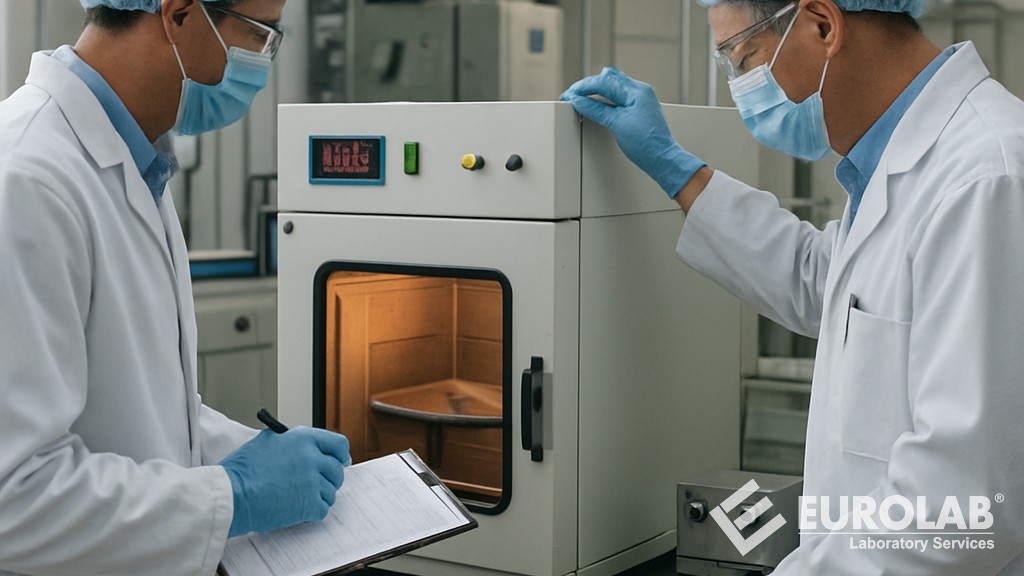
Artificial aging tests were developed to accelerate deterioration and study the behavior of a material under controlled environmental conditions in a reasonably rapid period of time. The following standards define the parameters and conditions to be used in the equipment used in artificial aging tests:
This standard also provides information on the interpretation of data obtained from artificially accelerated weathering or artificially accelerated irradiation exposures.
In principle, the samples to be tested are exposed to laboratory light sources under controlled environmental conditions. The described methods include the requirements that must be met for the measurement of radiation and radiation exposure in the sample plane, the temperature of the specified white and black sensors, the room air temperature, and the relative humidity.
When conducting exposure tests in devices using laboratory light sources, it is important to consider how well the accelerated test conditions simulate the actual use environment for the paint or varnish being tested. Furthermore, when setting up exposure tests and interpreting results from artificially accelerated weathering or artificially accelerated irradiation exposures, it is essential to consider the effects of variability in both accelerated testing and actual exposures.
Samples are exposed to filtered xenon arc light under controlled conditions (temperature, humidity, and wetting). Various xenon arc lamps and filter combinations can be used to meet all requirements for testing different materials. Sample preparation and evaluation of results are addressed in other standards for specific materials. For xenon arc exposures to plastics, the ISO 4892-2 standard applies.
In principle, a xenon arc lamp equipped with suitable filters and properly maintained is used to simulate the spectral power distribution of daylight in the ultraviolet (UV) and visible regions of the spectrum.
Samples are exposed to various radiation levels (radiation exposure), heat, relative humidity, and water under controlled environmental conditions. Exposure conditions can be varied depending on light filters, radiation level, temperature during light exposure, relative humidity of the room air during light and dark exposures, type of wetting, water temperature and wetting cycle, and timing of the light/dark cycle when test conditions requiring humidity control are used.
Artificial aging (accelerated aging) is a laboratory-based testing method used to simulate the long-term effects of environmental factors on materials. By exposing samples to intense light, heat, humidity, and sometimes other factors, researchers and manufacturers can predict, in a much shorter time, how products such as plastics, coatings, paints, woods, and textiles will degrade over years of real-world use.
Natural weathering occurs slowly through exposure to sunlight (especially UV radiation), temperature fluctuations, humidity, rain, and pollutants, leading to fading, cracking, chalking, loss of strength, or discoloration in materials. Artificial weathering accelerates this process by recreating and reinforcing these stressors in controlled chambers.
The aim of this method is to evaluate material durability, improve formulations (e.g., add UV stabilizers), and ensure products meet standards for outdoor applications such as automotive parts, building materials, or packaging.
Common equipment includes:
These chambers provide precise control. Intense UV exposure, high humidity, water spraying, and high-temperature cycles mimic years of outdoor conditions within weeks or months.
The basic methods and standards are as follows:
The cycles typically alternate light/on durations with darkness, condensation, or spray to simulate day/night and dew/rain.
No artificial method can perfectly replicate nature due to variables such as pollution or biological factors, but correlations are established by comparing laboratory results with outdoor exposures at specific reference points.
Exposure to weathering primarily causes photo-oxidation. UV light breaks molecular bonds, leading to chain breakage, cross-linking, or carbonyl formation. Visible changes include:
Before and after samples from the tests show dramatic deterioration. In polymers like polyethylene, unstabilized samples quickly become brittle, while additives like carbon black increase resistance.
Artificial aging is very important in the following industries:
This method enables faster product development, quality control, and lifecycle predictions, which is vital as demand for durable, sustainable materials in harsh climates increases.
In conclusion, artificial aging helps bridge the gap between laboratory efficiency and real-world performance, creating longer-lasting products while reducing failures due to environmental impacts.
For many years, our organization, with its competent and experienced team, has been understanding the needs of its clients, providing the advanced testing services they require, and assisting in the establishment, implementation, and improvement of management systems. Within this framework, we also provide artificial aging testing services to businesses.
To get an appointment, to get more detailed information or to request an evaluation, you can ask us to fill in our form and reach you.

