

The American Society for Testing and Materials (ASTM) standard, "ASTM C581 Standard Practice for Determining Chemical Resistance of Thermoset Resins Used in Glass Fiber-Reinforced Structures for Liquid Applications," describes a procedure for evaluating the chemical resistance of thermoset resins used in the production of reinforced thermoset plastic laminates in an unstressed state. This practice allows for the determination of changes in the following properties of test specimens and the test reagent after exposure to the reagent: specimen hardness, weight change in thickness, specimen appearance, immersion media appearance, and flexural strength and modulus.
This application is also useful in evaluating other factors such as the effect of surface coatings and resin additives on the chemical resistance of the resin.
The results obtained from this application serve as a guide for selecting the thermoset resin to be used in a reinforced thermoset plastic structure, but they are not the sole basis. No attempt has been made to incorporate all the various factors that could potentially affect the serviceability of a reinforced thermoset plastic structure when exposed to chemical environments. These factors may include stress, different resin-to-glass ratios, and multiple screens.
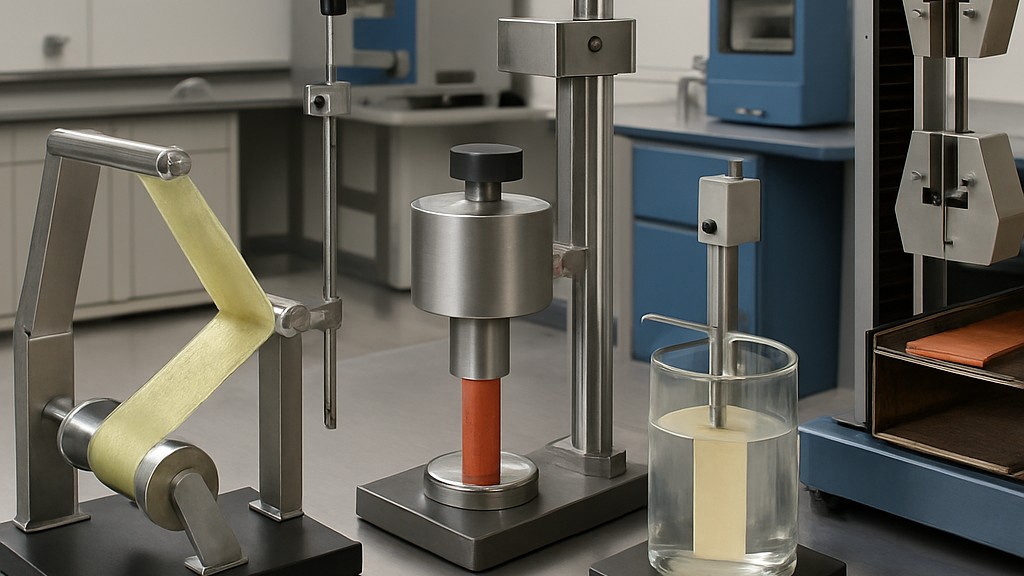
Equipment used in the tests includes:
In the world of materials engineering, selecting the right resin is crucial, especially in applications involving corrosive environments. ASTM C581 provides a systematic approach for evaluating the chemical resistance of thermoset resins. These resins are widely used in fiberglass-reinforced plastic structures designed for fluid service, such as pipes, tanks, and vessels that handle aggressive chemicals. Created to guide engineers and manufacturers, this standard ensures that materials can withstand exposure to a variety of fluids without premature failure. This standard addresses the need for reliable testing in industries such as chemical processing, water treatment, and oil and gas, where failures can lead to costly repairs or environmental hazards.
Thermosetting resins such as epoxies, polyesters, and vinyl esters form the matrix of glass-fiber-reinforced composite structures. These materials are valued for their strength, durability, and corrosion resistance, but their performance varies under chemical attack. Factors such as temperature, concentration, and duration of exposure can cause swelling, cracking, or loss of mechanical properties.
The ASTM C581 standard was created to standardize the evaluation process and provide a comparative tool rather than an absolute measure of conformity. The results obtained from this application serve as a guide for selecting a thermoset resin for use in a (reinforced thermoset plastic) structure, but are not the sole basis for doing so. Real-world conditions often involve complex interactions, such as mechanical stresses or cyclic exposures, that cannot be fully captured in laboratory testing.
ASTM C581 applies to thermoset resins designed for use in fiberglass-reinforced structures exposed to liquids. It covers:
This practice focuses on the inherent resistance of the resin, specifically excluding the reinforced structures themselves, and does not address exposures to gaseous or non-liquid environments. It also assumes the resin is fully cured before testing.
The procedure described in ASTM C581 is designed for repeatability using simple equipment such as glass jars, ovens, and analytical balances. This procedure generally includes the following steps:
To measure resistance, percentage retention or change is calculated.
This standard recommends at least three replicate tests under all conditions for statistical reliability. Tables within the standard provide guidance on exposure times and acceptance criteria, such as less than 5 percent weight change for excellent resistance.
The true value of the ASTM C581 standard lies in its practical application. The results help rank resins for specific chemicals; for example, vinyl esters generally outperform polyesters against strong acids. In design, engineers use this data to select resins that extend service life by reducing maintenance in harsh environments such as desalination plants or chemical storage. However, this standard highlights limitations: it does not simulate full-scale service (e.g., pressure or flow effects) and must be paired with field trials. No single test can cover all variables, so holistic material selection is key.
Industries that rely on this standard include:
Ultimately, the ASTM C581 standard is the cornerstone of ensuring the reliability of thermoset resins in harsh liquid environments. By providing a controlled and repeatable method for measuring chemical resistance, it empowers materials scientists and engineers to make informed choices that improve safety and efficiency. As composite technologies evolve, these and similar standards continue to evolve to meet new sustainability and performance challenges.
Our organization, which has been serving for many years and meticulously following global developments in science and technology, employs a team of experienced professionals and a broad infrastructure to conduct testing, measurement, and analysis in a wide range of areas for businesses across all sectors. In this context, we also provide testing services in accordance with ASTM C581 Standard Practice for Determining the Chemical Resistance of Thermoset Resins Used in Glass Fiber-Reinforced Structures for Liquid Applications.
To get an appointment, to get more detailed information or to request an evaluation, you can ask us to fill in our form and reach you.

