

The standard "ASTM D2380-04 Standard Test Method for Methanol Content of Formaldehyde Solutions" developed by the American Society for Testing and Materials (ASTM) describes a test method for calculating the methanol content of commercially available 37 percent formaldehyde solutions based on the specific gravity relationship to formaldehyde and methanol content. This standard provides separate equations for three methanol ranges:
The test method described provides a measurement of the methanol content of formaldehyde solutions. The results of these measurements can be used for specification acceptance. This test method is applicable to 0 percent formaldehyde solutions containing 2 to 6 percent, 8 to 12 percent, or 15 to 37 percent methanol.
Formaldehyde and formaldehyde solutions are hazardous. Exposure and contact should be minimized to avoid acute effects and possible sensitization. Consult the supplier's material safety data sheet for specific hazard information.
When the temperature of the sample and water is 25 degrees, the apparent specific gravity of the material is determined by a method accurate to the fourth decimal place. In this regard, the standard "ASTM D268-22 Standard Guide for Sampling and Testing Volatile Solvents and Chemical Intermediates for Use in Paints and Related Coatings and Materials" is taken as basis. In addition, the formaldehyde content of the material is determined in accordance with the standard "ASTM D2194-02 Standard Test Method for Concentration of Formaldehyde Solutions".
Calculate the methanol content as described in this standard using the appropriate equation for the expected methanol range.
Formaldehyde is an important and versatile chemical used in many value-added chains, such as resin production. Formaldehyde is highly reactive and is therefore usually stored and processed in aqueous solutions containing methanol. Methanol can originate from the formaldehyde production process, but is also added as a stabilizer to prevent para-formaldehyde precipitation. Formaldehyde is an important chemical that is usually processed in aqueous solutions containing methanol. Solutions of formaldehyde in other alcohols are also used.
The density of these solutions is an important thermophysical property and is required in many stages of research and in the design and operation of industrial processes. The density of formaldehyde-containing solutions is difficult to model, so only a few models are available in the literature. However, all existing models of the density of formaldehyde-containing solutions have shortcomings such as poor accuracy or limited range of applicability. Therefore, a new model of the density in systems of the type “formaldehyde + water + alcohol” was developed. The alcohols currently included in the new model are methanol, 1-propanol and isoprenol.
Methanol is considered the simplest candidate molecule because of its representative structure, which contains carbon-hydrogen, carbon-oxygen, and oxygen-hydrogen bonds. Approximately 40 percent of industrial methanol is converted to formaldehyde and then to various products such as plastics, plywood, paint, and fiber. The remaining formaldehyde is consumed in the production of textiles, paper, fertilizers, and various resinous products. Formaldehyde is commercially produced by the catalytic selective oxidation of methanol. The most common processes for converting methanol to formaldehyde use supported silver or molybdenum-iron catalysts.
Formaldehyde solution is a saturated solution of formaldehyde, water, and typically another agent, most commonly methanol. In its typical form, formalin is 37 percent formaldehyde by weight (40 percent volume), 6–13 percent methanol, and the remainder water. It contains 37–50 percent formaldehyde by mass, with varying amounts of methanol added to prevent precipitation of formaldehyde polymers.
Formaldehyde, solution, appears as a colorless aqueous solution of formaldehyde, which is a flammable, normally gas. It has a sharp, irritating odor. Its flash point varies between 50 degrees and 61 degrees. It is denser than water. Its vapors are heavier than air and are highly irritating to the nose. Toxic if swallowed. It can cause serious injury on contact with skin drying, cracking and flaking. It is used to make plastics, other chemicals and fertilizers. It is used as a preservative and corrosion inhibitor.
Pure formaldehyde is a gas and is not processed commercially because it tends to polymerize exothermically and can ignite. Vapor from formalin solution is flammable and presents an explosion hazard when exposed to flame or heat.
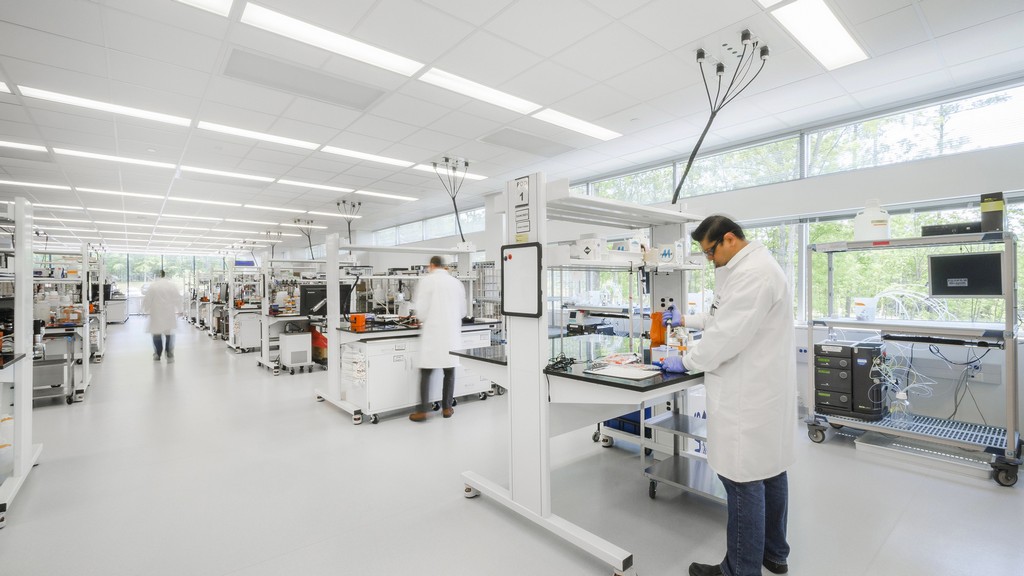
Among the numerous testing, measurement, analysis and evaluation studies that our organization has provided for businesses in various sectors, it also provides testing services defined in the "ASTM D2380-04 Standard Test Method for Methanol Content of Formaldehyde Solutions" standard with its trained and expert staff and advanced technological equipment.
To get an appointment, to get more detailed information or to request an evaluation, you can ask us to fill in our form and reach you.

