

The standard "ASTM F3161-16 Standard test method for finite element analysis (FEA) of metallic orthopedic total knee femoral components under closure conditions" developed by the American Society for Testing and Materials (ASTM) describes the requirements and considerations for numerical simulation of metallic orthopedic cemented and uncemented total knee femoral components using finite element analysis (FEA) techniques for estimating stresses and strains. This standard is applicable only to stresses below the yield strength as stated in the material certificate.
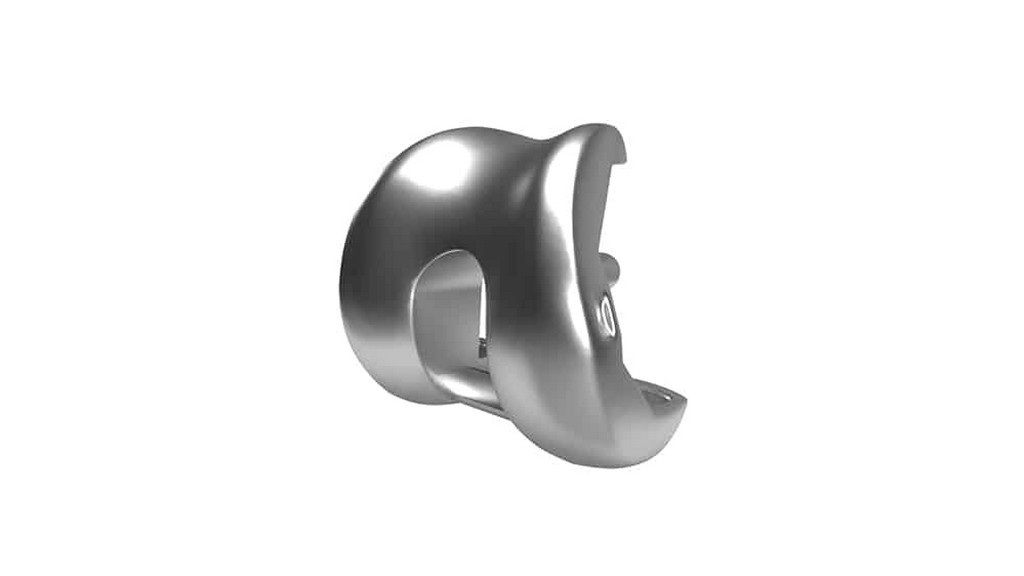
This test method includes requirements for the development of finite element models used in the evaluation of metallic orthopedic total knee femoral component designs for the purpose of estimating static implant stresses and strains. This procedure is used for worst-case evaluation within a family of implant sizes to provide efficiency in the amount of physical testing to be performed. Recommended procedures for performing model checks and validation are provided to help determine if the analysis follows recommended guidelines. Finally, recommended content for an engineering report covering mechanical simulation is presented.
In terms of limitations, this standard is limited to static structural analysis of metallic orthopedic total knee femoral components (excludes prediction of fatigue strength).
Finite element analysis (FEA) is the process of predicting the behavior of an object based on calculations performed using the finite element method (FEM). The finite element method is a mathematical technique, while finite element analysis is the interpretation of the results provided by the finite element method. Finite element analysis helps engineers make more informed design decisions by providing insights into complex systems and structures.
The finite element method uses mathematics to break down complex systems into smaller, simpler parts or elements. It then uses the power of computers to apply differential equations to each element individually, dividing and then solving engineering problems. Finite element analysis is the basis of many simulation software programs. It is used to validate and test designs safely, quickly and economically by creating virtual models of real-world assets. These models are used to solve a variety of conditions and scenarios in a variety of industries, especially those with complex or high-risk environments such as aerospace and biomechanics.
Implants are made of metal alloys, ceramic material and strong plastic parts. In total knee replacement, up to three bone surfaces can be replaced:
The components are designed so that the metal always interfaces with the plastic, resulting in smoother movement and less wear on the implant.
Among the numerous testing, measurement, analysis and evaluation studies that our organization has provided for businesses in various sectors, our organization also provides testing services defined in the standard “ASTM F3161-16 Standard test method for finite element analysis (FEA) of metallic orthopedic total knee femoral components under closure conditions” with its trained and expert staff and advanced technological equipment.
To get an appointment, to get more detailed information or to request an evaluation, you can ask us to fill in our form and reach you.

