

The ASTM C201 Standard Test Method for the Thermal Conductivity of Refractories, developed by the American Society for Testing and Materials (ASTM) , describes a test method for determining the comparative thermal conductivity of refractories under standard test conditions. This test method is designed for refractories with a conductivity factor not exceeding 28,8 W/m·K and a thickness of 25 mm.
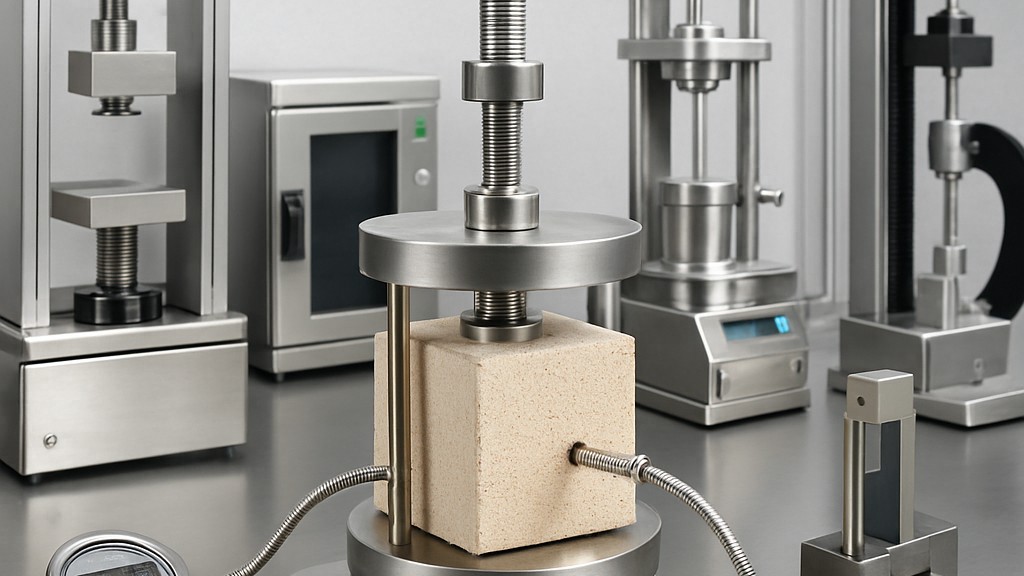
Other detailed ASTM test methods to be used in conjunction with this test method in testing specific types of refractory materials are:
The thermal conductivity of refractories is a necessary property for selecting thermal conductivity properties. Users select refractories that will meet specified heat loss and cold face temperature conditions without exceeding the refractory's temperature limitation. This test method allows testing of refractories' thermal conductivity using a calorimeter.
This test method requires a large thermal gradient and steady-state conditions. Results are based on an average temperature. Data obtained from this test method are suitable for specification acceptance and design of multilayer refractory construction. Use of this data requires consideration of the actual application environment and conditions.
The test specimen should consist of three 228 mm plain bricks and six 228 mm x 64 mm x 57 mm soapstone bricks representative of the material being tested. Additional instructions for sample preparation and placement of the protection brick are provided in the test methods for specific materials. These bricks should be selected for uniformity of structure and bulk density, and should be free of broken corners or edges. One brick should be used as the test specimen, and two other bricks should be used as protection bricks, one on each side of the specimen.
Six soapstone bricks should be placed along the edges of the test sample and the protection brick to prevent heat from flowing sideways. The test sample and protection brick cover an area of approximately 456 mm x 342 mm. A total of nine 228 mm plain bricks can be submitted for testing, six of which are cut to form the soapstone brick.
When preparing the test specimen, the surfaces of three flat bricks (228 mm x 114 mm) and the surfaces of the soap brick (228 mm x 57 mm) should be ground flush and parallel, with a thickness of no more than 60,3 mm. The thickness should not exceed 76 mm and no less than 51 mm. The contact edges should be ground flush and at right angles to the surface of the brick and the surface of the soap brick.
The test specimen shall be dried for 12 hours at a temperature of 105°C to 110°C. At the end of this period, the bulk density shall be determined in pounds per cubic foot (or kilograms per cubic meter) in accordance with ASTM C134. However, thickness measurements shall be made in accordance with these methods.
When performing testing, procedures are used to test specific types of refractory materials described in the following test methods: ASTM C182, ASTM C202, ASTM C417, and ASTM C767 standards.
During the test, the following data is recorded:
Calculations are made according to the formula given in the standard.
The report to be prepared should include the following information:
When requested, recorded data should be included in the report.
In short, ASTM C201 provides a precise method for determining the thermal conductivity of refractory materials under controlled conditions. This property is crucial for applications in high-temperature environments such as furnaces, ovens, incinerators, and reactors. The primary purpose of this standard is to measure the thermal conductivity of dense and insulating refractories. Thermal conductivity is a key parameter in determining a refractory material's heat transfer performance. Lower thermal conductivity indicates better insulation, which helps increase energy efficiency and reduce heat loss.
The ASTM C201 standard applies to:
Testing is typically conducted at elevated temperatures (from room temperature to approximately 1650 degrees Celsius) to simulate real-world application conditions.
The ASTM C201 test method generally includes the following steps:
This standard is important for the following reasons:
The limitations of this method are:
Our organization, which has been supporting businesses across all sectors for years through a wide range of testing, measurement, analysis, and evaluation activities, has a strong team of employees who closely follow global developments in science and technology and are constantly improving themselves. In this context, we also provide testing services in accordance with the "ASTM C201 Standard Test Method for Thermal Conductivity of Refractories" standard.
To get an appointment, to get more detailed information or to request an evaluation, you can ask us to fill in our form and reach you.

