

The standard "ASTM E831-19 Standard Test Method for Linear Thermal Expansion of Solid Materials by Thermomechanical Analysis" published by the American Society for Testing and Materials (ASTM) describes a test method for determining the technical coefficient of linear thermal expansion of solid materials using thermomechanical analysis techniques. This test method is applicable to solid materials that exhibit sufficient hardness throughout the test temperature range so that the sensing probe will not indent the specimen. The recommended lower limit for the coefficient of linear thermal expansion measured by this test method is 5 µm/(m degree). The test method can be used with less accuracy and sensitivity at lower (or negative) expansion levels. This test method is applicable to the temperature range of minus 120 degrees to plus 900 degrees. The temperature range may be further extended depending on the instrumentation and calibration materials used.
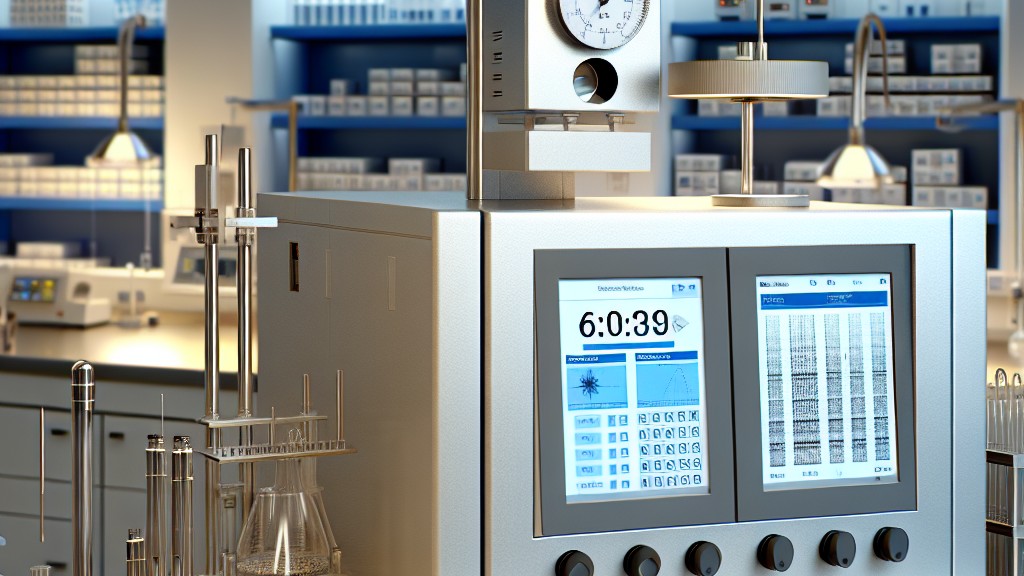
All terms and definitions given in the standards “ASTM E473-21a Standard Terminology for Thermal Analysis and Rheology” and “ASTM E1142-11 Standard Terminology for Thermophysical Properties” are valid for this test method, including thermal analysis terms, coefficient of linear thermal expansion, thermodilatometry and thermomechanical analysis. Also, the average coefficient of linear thermal expansion, the change in length with respect to the sample length at ambient temperature, the change in a unit temperature defined by the temperature of the midpoint of the measurement temperature range.
This test method uses a thermo-mechanical analyzer or similar device to determine the linear thermal expansion of solid materials when subjected to a constant heating rate. The change in specimen length is recorded electronically as a function of temperature. The coefficient of linear thermal expansion can be calculated from these recorded data.
Coefficients of linear thermal expansion are used, for example, for design purposes and to determine whether failure due to thermal stress will occur when a solid body composed of two different materials is subjected to temperature changes. This test method is comparable to the standard “ASTM D3386-00 Standard Test Method for Coefficient of Linear Thermal Expansion of Electrical Insulating Materials” for testing electrical insulating materials, but covers a more general group of solid materials and defines the test conditions more specifically. This test method uses a smaller sample and a significantly different apparatus than the test methods defined in ASTM E228-22 and ASTM D696-16. This test method can be used in research, specification acceptance, regulatory compliance, and quality assurance.
Thermomechanical analyzers are used in these tests. The minimum thermomechanical analytical or thermodilatometric capability required for this test method includes:
Cooling capacity is also required in the tests to maintain subambient sample temperature (if subambient measurements are to be made) or to accelerate the cooling of the sample from elevated temperatures.
Specimens should be between 2 mm and 10 mm long and have straight and parallel ends to plus7minus 25 µm. Lateral dimensions should not exceed 10 mm. Specimens of other dimensions may be used but the dimensions should be reported. It has been found that this level of straightness and parallelism cannot be achieved in some materials. Specimens that do not meet these requirements may result in increased loss of accuracy. Specimens are usually measured as received. If some heat or mechanical treatment is applied to the specimen prior to testing, this should be stated in the report. Some materials, particularly composites, may require heat treatment to condition the specimen prior to testing to remove stresses or distortions. Any such heat treatment should be included in the report.
Our organization, which has been trying to support businesses from every sector with its testing, measurement, analysis and evaluation studies carried out in a wide range for years, has a strong staff that closely follows the developments in the world in the field of science and technology and constantly improves itself. In this context, testing services in accordance with the "ASTM E831-19 Standard test method for linear thermal expansion of solid materials by thermomechanical analysis" standard are also provided to businesses.
To get an appointment, to get more detailed information or to request an evaluation, you can ask us to fill in our form and reach you.

