

The standard "ASTM D7136/D7136M-12 Standard Test Method for Measuring Damage Resistance of Fiber-Reinforced Polymer Matrix Composite to a Drop-Weight Impact Event" published by the American Society for Testing and Materials (ASTM) describes a test method for determining the damage resistance of multi-directional polymer matrix composite laminates subjected to a drop-weight impact event. Composite material forms are limited to continuous fiber compressed polymer matrix composites with a range of acceptable test laminates and thicknesses defined in this standard. Instructions for modifying these procedures to determine the damage resistance properties of sandwich structures are included in ASTM D7766/D7766M.
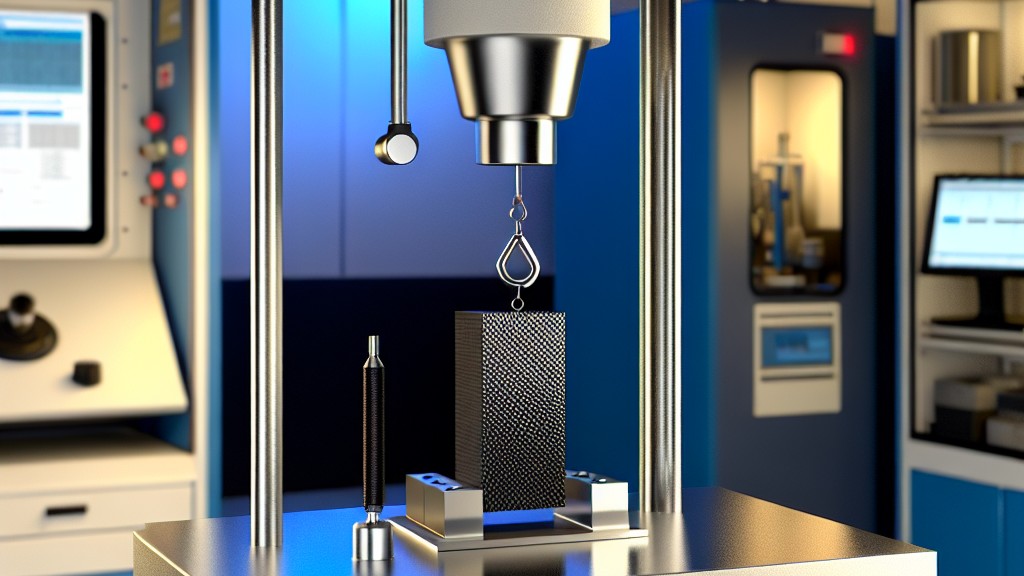
A flat, rectangular composite plate is subjected to an intense out-of-plane impact using a drop weight device having a hemispherical impactor. The potential energy of the impacting weight, as defined by the mass of the impactor and the drop height, is specified prior to testing. Equipment and procedures are provided for optional measurement of the contact force and velocity during the impact event. Damage resistance is quantified in terms of the extent and type of damage produced in the specimen.
This test method can be used to screen materials for damage resistance or to damage a specimen for subsequent damage tolerance testing. When the impact plate is tested according to the ASTM D7137/D7137M standard test method, the general test sequence is usually referred to as the post-impact compression method. Quasi-static indentation according to the ASTM D6264/D6264M standard test method can be used as an alternative method of creating damage from an out-of-plane force and measuring damage resistance properties.
The damage resistance properties generated by this test method are highly dependent on various factors such as specimen geometry, layering, impact geometry, impact mass, impact force, impact energy, and boundary conditions. Therefore, the results are generally not scalable to other configurations and are specific to the combination of geometric and physical conditions tested.
For the purposes of this standard, the following terms and definitions apply:
A drop weight impact test is performed using a balanced, symmetric laminated plate. Damage is imparted by an out-of-plane, concentrated impact (perpendicular to the plane of the laminated plate) using a hemispherical tipped drop weight. Damage resistance is quantified in terms of the extent and type of damage produced in the specimen. Damage response is a function of the test configuration; comparisons between materials cannot be made unless the same test configurations, test conditions, and similar conditions are used.
Optional procedures are provided for recording the impact velocity and applied contact force against time history data. The preferred damage states resulting from impact are located at the center of the plate, far enough from the plate edges so that local stress states at the edges and at the impact location do not interact during the damage event.
Susceptibility to damage from concentrated out-of-plane impact forces is a primary design concern for many structures constructed from advanced composite laminates. Knowledge of the damage resistance properties of a laminated composite plate is useful for product development and material selection.
Drop weight impact testing can serve the following purposes:
Properties obtained using this test method can provide guidance on expected damage resistance.
Our organization, which has been trying to support businesses from every sector with its testing, measurement, analysis and evaluation studies carried out in a wide range for years, has a strong staff that closely follows the developments in the world in the field of science and technology and constantly improves itself. In this context, testing services are also provided to businesses in accordance with the standard "ASTM D7136/D7136M-12 Standard test method for measuring the damage resistance of fiber-reinforced polymer matrix composite to falling weight impact event".
To get an appointment, to get more detailed information or to request an evaluation, you can ask us to fill in our form and reach you.

