

The standard “PI-53 Fatigue testing of stemmed femoral total knee arthroplasty (THK) components” developed by PI Medical Implants describes a test method to determine the mechanical durability of stemmed femoral total knee arthroplasty (THK) components loaded under assumed worst-case conditions. The femoral component and stem should be assembled according to the customer’s instructions and tightened with a calibrated torque wrench if necessary.
The load should be applied at a 25 degree angle to the neutral position of the femoral component as specified by the client. This simulates a slightly flexed knee position. A varus misalignment should be simulated with a 5 degree inclination of the specimen holder. This alignment loads only the medial condyle. The recommended level of stem insertion (if applicable) is 80 mm.
For dynamic tests, it is recommended to use a load of 10 N at a rate of at least 2.000 Hz. Modular implants should be tested in Ringer solution at 37 degrees. The operating period criterion should be determined as 10 million cycles.
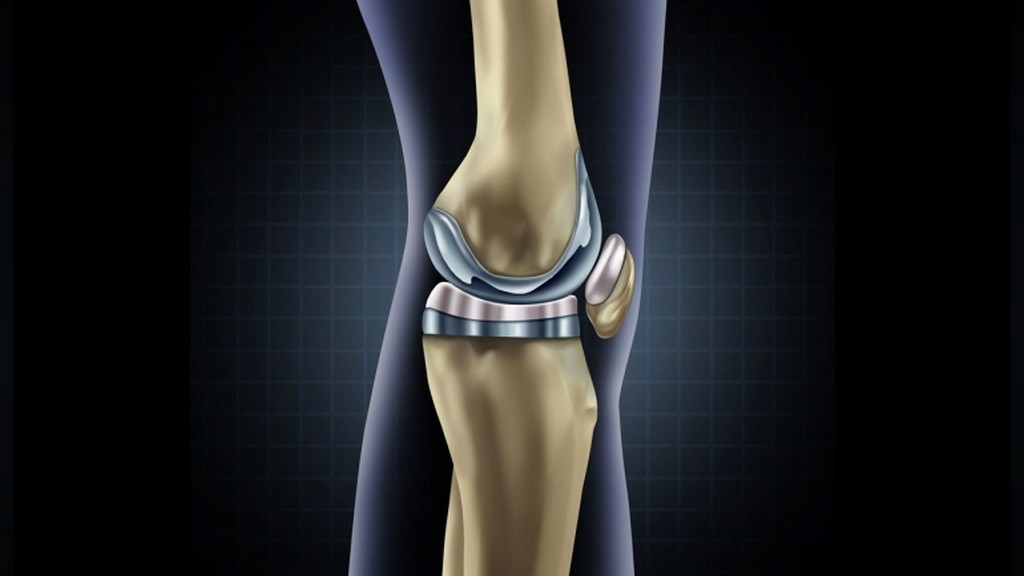
The metal femoral component curves around the end of the femur (thigh bone). It is grooved so that the kneecap can move smoothly up and down against the bone as the knee bends and straightens. The tibial component is usually a flat metal platform with a cushion of strong, durable plastic called polyethylene. Some designs do not have the metal portion and instead the polyethylene is bonded directly to the bone. For additional stability, the metal portion of the component may have a stem that is placed in the center of the tibia.
A standard total hip replacement consists of four separate components: the stem, hip cup, ball, and liner. The femoral stem is the part of the prosthesis that fits into your thigh bone. Long ago, it was made of titanium or cobalt-chromium metals. In the modern era of hip replacements, cemented stems, which are placed with surgical bone cement, are made of cobalt-chromium metals. Cementless stems (implants where bone grows into metal) are routinely made of titanium. Both designs have produced excellent long-term results as part of total hip replacement systems.
Both titanium and cobalt-chromium implants are considered highly biocompatible, meaning they are well tolerated by the human body with little risk of side effects. In fact, both materials have been shown to be quite effective at being stable in bone. The upper end of the femoral stem is specially shaped to hold the new ball of the artificial joint. Whatever the material of the ball, ceramic or cobalt/chrome, the head and stem fit here.
Stems are primarily divided into five classes: cemented, tapered, fit and fill, modular, and wedge. Most cementless femoral stems are manufactured from wrought titanium alloys using conventional manufacturing processes such as rolling, forging, machining, surface modification, finishing, cleaning, and sterilization.
In short, the femoral stem component replaces most of the bone in the femur and is therefore the load-bearing portion of the implant. In order to carry this load, it must have a Young's Modulus similar to that of cortical bone. If the implant is not as stiff as the bone, the remaining bone surrounding the implant will be subjected to increased stress. If it is stiffer than the bone, a phenomenon known as stress shielding will occur.
Among the numerous tests, measurements, analyses and evaluation studies that our organization has carried out for businesses in various sectors, our organization also provides testing services defined in the “PI-53 Fatigue test of femoral total knee arthroplasty (TKA) components with handle” standard with its trained and expert staff and advanced technological equipment.
To get an appointment, to get more detailed information or to request an evaluation, you can ask us to fill in our form and reach you.

